Tuesday, January 03, 2006

the english harem


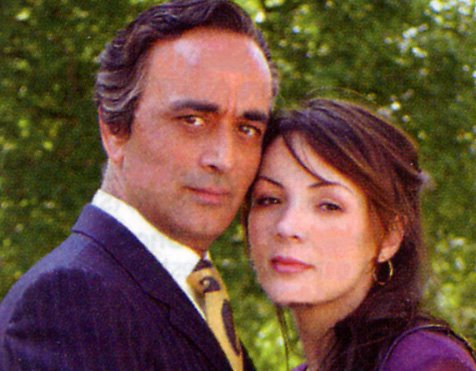
The premise of the drama “The English Harem” sounds potentially salacious. A young English woman Tracy, who works as a cashier at a supermarket, and constantly retreats into dreams of Oriental romance, fails to detect shoplifters and is sacked. She persuades the prosperous Persian owner of a restaurant in the Kensington area of London to take her on as a waitress, and the two fall in love. The Persian, Sami, already has two wives, but she agrees to become his third wife and to move into the palatial family house – hence the title of the drama.

In fact in the ITV drama, which was a highlight of the intensive TV viewing season over Christmas, Tracy only agrees to marry Sam after he assures her that he has no marital relations with his two wives whom he married only out of duty.

The first wife had been married to Sam’s brother, and when his brother died he married her and took on her four children. His second wife was his first wife’s best friend, and married him after her husband too died. The wives work in Sam’s restaurant and egg their husband on to form a relationship with Tracy, to whom they have given their seal of approval.

“The English Harem” was adapted by New Zealand-born writer Anthony McCarten from his novel of the same title. A major draw for viewers was the presence of two of Britain’s most popular actors, Melanie McCutcheon and Art Malik, in the lead roles.

McCutcheon first made her name in the soap opera EastEnders, playing the character of Tiffany Mitchell. She is known internationally for her role in the film “Love, Actually” as 10 Downing Street tea-girl Natalie who becomes the subject of the affections of the prime minister, played by Hugh Grant.

The Pakistani-born actor Art Malik had his major breakthrough in 1984 when he starred as ill-fated young Indian Hari Kumar in the TV series “The Jewel in the Crown”. Most recently he has been playing doctor Zubin Khan in the medical series “Holby City”.

The major obstacles to Tracy and Sam’s marriage come from Tracy’s father and her racist ex-boyfriend Ricky. Tracy dumped thuggish Ricky when she caught him with another woman, but he desperately wants her back and is ready to do anything to sabotage her relationship with Sam.

Thanks to the efforts of Tracy’s father and Ricky, social services remove the children of Sam’s first wife. A masked Ricky then assaults Sam so violently that he suffers a life-threatening brain aneurysm.

The tone of “The English Harem” is an at times awkward mixture of romantic comedy and harsh reality, but the strong cast carries the drama off and the twists in the plot sustain interest. However, it can’t be said that the drama sheds much light on Muslim life in Britain, nor is it a serious exploration of the polygamy that does occur to some extent.

the mozart controversy


The 250th anniversary year of the birth of Austrian composer Wolfgang Amadeus Mozart has got off to a quarrelsome start following the refusal of the controller of the BBC classical music station Radio 3 to play the entire works of the composer back to back.

Last June Radio 3 carried out the first experiment of this kind when it played the entire works of Beethoven over six days. Following the success of this experience, it broadcast all the works of Bach in ten days over Christmas, to a rapturous reception. In September the station played the entire oeuvre of the composer Anton Webern – admittedly only five and a half hours in all.

So why, in his quarter-millennium anniversary year, is Mozart being denied a Radio 3 accolade of the type accorded Beethoven, Bach and Webern? The station’s controller Roger Wright says: “With Mozart end to end, the overall effect would be detrimental to the music. The music could wrongly be seen as slightly more chocolate-boxy than it really is.”

The term “chocolate-boxy” with its connotations of froth, sweetness, predictability and insubstantiality, touched a particular nerve among Mozart loyalists. Perhaps Radio 3 was also deterred by the fact that it would take around 14 days to broadcast Mozart in his entirety.

The music critic Norman Lebrecht fuelled the controversy when, in a piece headed “Too much Mozart makes you sick”, he wrote: “Mozart is the superstore wallpaper of classical music, the composer who pleases most and offends least. Lively, melodic, dissonance-free: what’s not to like?”

Lebrecht claimed: “The coming year of Mozart feels like a term at Guantanamo Bay without the sunshine. There will be no refuge from neatly resolved chords, no escaping that ingratiating musical grin.”

The comments of Wright and Lebrecht have led to furious reactions. Catherine Sprague wrote: “The greatest minds in the history of western civilization have studied Mozart’s spiritual depths and mastery of composition and have concluded exactly the opposite as Mr Lebrecht.”

She asserted that not just composers, but nearly all great philosophers, writers, poets and musicologists consider Mozart to be the greatest musical genius that ever lived. “This does not just mean that Mozart was a prodigy, which he was. Or virtuoso which he was. It means, in plain English, that his music is deep, musically, technically and spiritually. Kierkegaard, Stendhal, Bertrand Russell, George Bernard Shaw etc etc and on down the list have argued such.”

Mozart died at the age of only 35, having produced well over 600 works. To some extent he has been a victim of his own success, and some of his best-loved compositions have become almost too well-known.

But it is unfair to pillory Mozart as predictable and as having failed to move music onwards. There are numerous examples of depths in his music – as shown by for example the opera “Don Giovanni”, the piano sonatas, the sublime string quintets, the Requiem.

In Austria, the capital Vienna and Mozart’s birthplace Salzburg are gearing up for a dizzying year of celebrations. In Britain “Mozart 250” will be marked by many concerts, CD releases and radio and TV programmes. Even if Mozart is not played back to back in his entirety by Radio 3, the station will during the year play very many of his compositions.

Susannah Tarbush
Saudi Gazette 3 January 2006

palestine's children: silent witnesses


Images of Conflict

The photographic book “Silent Witnesses: the Lives of Palestine’s Children” brings home to the reader the traumatic conditions in which many Palestinian children live, but it also conveys their spirit and resilience.

The photographs, mostly in black and white, take us into the streets, homes, families and schools of Palestinian refugee camps and towns. Some show scenes of confrontations and demonstrations, with children having apprehensive, fearful or glowering expressions. In others, children dance, study, stand with arms round friends or family, protect siblings and smile at the camera. Interspersed with the photographs are colourful drawings by children, which reflect the violent conditions under which the children are growing up.

The handsomely produced 240-page book is a project of the Al-Madad Foundation, the UK-registered charity founded in 2000 by Faiza Alreza of Saudi Arabia with the help of her daughters Basma and Yasmin. The book is published by Elliott & Thompson of London and was launched in collaboration with Boucheron, the jewellers. The majority of the photographs were taken by the internationally renowned fashion photographer Stefano Massimo.

Al-Madad has a track record in aiding projects for the Palestinians, including Action Around Bethlehem Children with Disability (ABCD) and Spafford Children’s Center in East Jerusalem.

The charity also co-produced the film “Seeds of Peace” about the work of the Seeds of Peace camp in the US, which brings together young people from regions of conflict including Palestine and Israel.

One of Al-Madad’s earliest projects was to help Birzeit University Photographic Library. “Silent Witnesses” is a further development in this process, with its photographs coming not only from Stefano Massimo, but also from Rula Halawani, Ali Karakrah, Ameer Shata, Baker Atari and Birzeit’s Photographic Department.

In his introduction to the book, Prince El Hassan bin Talal of Jordan writes: “The voice of the silenced majority, including that of the youth, has to be raised in our traumatised part of the world.”

The only fault of the Palestinian children portrayed in the book is “the fact that they were born under an occupation that erects hundreds of check points, roadblocks, trenches and earthen walls to block their way to school and to normality. It is not normal to witness the death of friends, the firing into schools and the razing of homes.”

Prince El Hassan states: “As political, economic and security plans are designed, the voices of the children are stifled behind the Wall, but it is initiatives such as this book that will carry their clear voices to the world with the message that every child is born free, without a label.”

Susannah Tarbush
Saudi Gazette 3 January 2005

Tuesday, December 27, 2005

meetings with remarkable Muslims


In compiling the collection of personal reminiscences “Meetings with Remarkable Muslims”, editors Barnaby Rogerson and Rose Baring were driven by a wish to get away from the stereotyped images of the Islamic world all too prevalent in the Western media and to arrive at a broader, truer picture.

The resulting book, published by Eland Publishing of London, is a rich harvest of human encounters in different parts of the Islamic world. The standard of writing is high, and the approach of the authors intimate and engaging.

The 39 contributors are a varied group. Some are scholars turned travel writers, such as William Dalrymple and Tim Mackintosh Smith. The contributors also include Persian writer, singer and songwriter Shusha Guppy, historian Philip Mansel, researcher and translator Bruce Wannell, Palestinian activist and writer Ghada Karmi, author and expert on textiles and Islamic art Philippa Scott, and writer and founder of the Travel Bookshop in London, Sarah Anderson.

A few of the “remarkable Muslims” are well-known personalities. Mark Hudson writes on the Senegalese singing star Youssou N’Dour, and Justin Marozzi recalls meeting the charismatic Ahmed Shah Massoud, “The Lion of the Panshir”, who was assassinated in 2001. Ghada Karmi gives a touching personal profile of her BBC broadcaster and dictionary compiler father Hasan Karmi who is now 100 years old.

Some of the encounters involve historical figures. Philippa Scott begins her piece “Ziryab on my Mind”, with the words: “Looking back, it seems inevitable, kismet, that Ziryab, father of cante jondo and the Andalusian guitar, should enter my life.” This eighth century musician, whose nickname Ziryab means “black songbird”, has been “an invisible but sometimes almost palpable presence, a wise companion and guide, a happy haunting.”

Other encounters came from chance meetings. Tahir Shah tells of how his friendship with Moroccan Hicham Harras, an inhabitant of a shantytown in Casablanca, grew out of Hicham’s passion for postage stamps. Horatio Clare recalls a Moroccan family to which he was introduced by two high-spirited girls. Tunisian writer and Islamic art expert Sabiha al Khmeir writes of the old man with whom she worked in the Ben Youssef library in Marrakesh.

The writers’ accounts provide windows into the diverse, complex Islamic world. It would be good if “Meetings with Remarkable Muslims” found a readership among those who are so ready to generalise and pontificate about Muslims and Islam without ever bothering to meet Muslims like those they might find in the pages of this book.

Susannah Tarbush
Saudi Gazette
27 December 2005

Banipal launches Arabic translation prize


The status and practice of literary translation from Arabic into English has received a boost with the announcement of the launch of the annual Banipal Prize for Arabic Literary Translation, worth £2000. The prize has been established by Banipal, the London-based magazine of modern Arab literature founded in 1998, and by the Banipal Trust for Arab Literature, established in September 2004.

The prize’s patron is the secretary general of the Abu Dhabi Cultural Foundation, Mohammed Ahmad al-Sowaidi, a poet and well-known patron of the arts. Al-Sowaidi says: “The aim of sponsoring the prize in its first year is to participate in building bridges between Arab culture and the Western reader. We consider this participation to be very necessary at this time, even for existential reasons. For literature plays the role of narrating the self in a world of numerous narrations, a world that no longer permits the isolation of cultures.”

The prize will be awarded for the first time next year, and the closing date for entries is 27 January. The prize is for the translation of a full-length imaginative and creative work of literary merit published in English. It will celebrate the works of contemporary Arab authors as well as honouring the work of translators in bringing the work of Arab writers to the attention of the wider world.

The prize is administered by the Translators Association of the Society of Authors in London. It joins the ranks of other prestigious translation prizes administered by the Society, including the Scott Moncrieff Prize for translation from French, and prizes for translation from Dutch, German, Greek, Italian, Portuguese, Spanish and Swedish.

To qualify for entry, the original Arabic should have been published no more than 34 years preceding submission for the prize. For the first year the entries must have first been published in English during 2004 or 2005. For successive years, entries must have first been published in English in the year prior to the award. Although the entries can have been published in English anywhere in the world, they must be available for purchase in the UK.

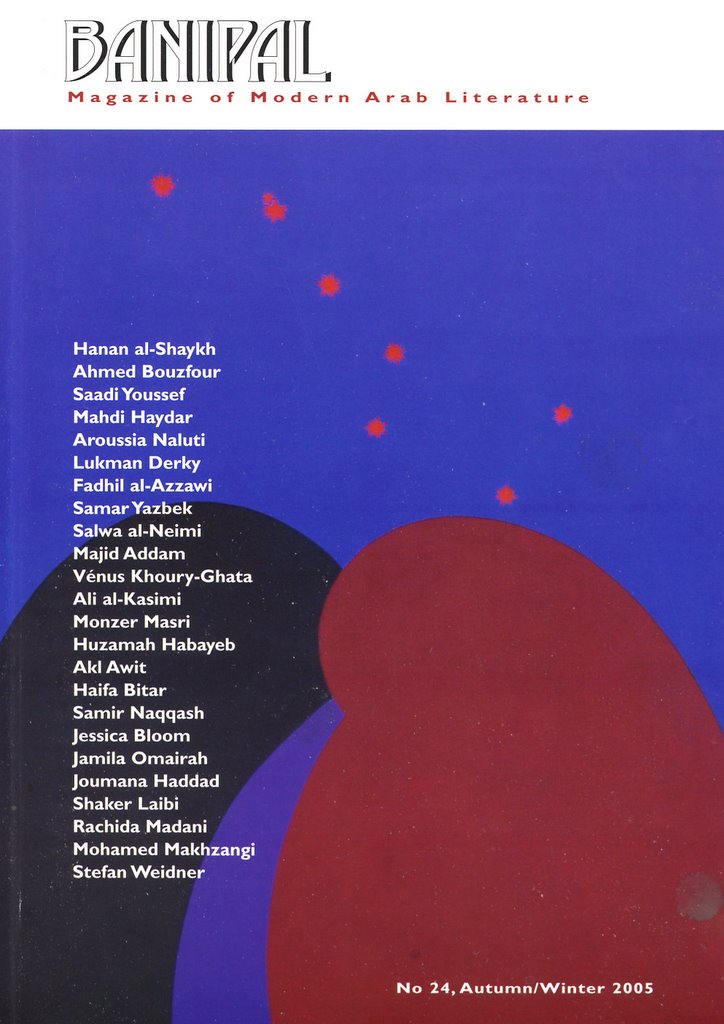
Since its creation eight years ago, Banipal has been played a unique role in bringing translations of Arab literature from Arabic, and sometimes French, to the English-reading public. Its latest issue includes an extract, in English translation by Roger Allen, from “Hikayati Sharhun Yatool” (“My Story is Too Long to Tell”), the new novel of Lebanese author Hanan Al-Shaykh.

There is also an extract, translated by Christina Phillips, of the novel “Salsal” (“Clay”) by the Syrian writer Samar Yazbek. The book reviews section of Banipal includes reviews of the novels “The Poor Man’s Son” by Algerian writer Mouloud Feraoun and “The Yacoubian Building” by Egyptian author Alaa Al Aswany.

Susannah Tarbush
Saudi Gazette
27 December 2005

Saudi blogosphere expands

(logo right is the Saudi Blog icon)


One of the most striking developments in Arab cyberspace in 2005 has been the growth in the number of Arab blogs – online diaries to which readers can add comments. Blogs typically include links to other bloggers, and posts from one blog can spread quickly through the global blogosphere.

The Arab blogosphere got going two years ago, and so far Iraqi, Egyptian, Lebanese, Bahraini, Syrian and Palestinian bloggers have been among its most active components. The Saudi blogosphere has taken longer to make an impact, but in the past few months it has been expanding by leaps and bounds.

Blogs such as “Saudi Jeans” and “Farah’s Sowaleef” are read widely outside Saudi Arabia, and Farah’s blog was chosen by the London-based Independent newspaper in June as its “blog of the week”.

The author of “Saudi Jeans” is a King Saud University student who refers to himself only by the name Ahmed. “Farah’s Sowaleef” is written by a female KSU student, who blogs under the name Farooha. The two jointly set up the blog “Saudi Blogs” which is both a directory of Saudi blogs, and the official blog of the Saudi blogger community. Saudi bloggers can if they wish add a “Saudi Blog” icon to their blogs.

“Saudi Blogs” started posting on 5 July and it now lists around 86 Saudi blogs. Some are in English and others in Arabic, while a number are in both languages. A message posted a month ago asked Saudi bloggers not listed to contact the site. The message attracted 52 comments, many of them from bloggers asking to be added to the list of blogs.

Some bloggers have been keen to meet in real life, and in the past two months several “blogger meets” have been held in Riyadh and Jeddah.

As well as having his own blog and being co-author of the “Saudi Blogs” site, Ahmed writes a weekly “Pulse of the Saudi Blogosphere” roundup for the “Global Voices Online” website. Helpfully, in addition to references to blogs in English he includes excerpts translated from Arabic Saudi blogs.

The decision of whether to blog in English or Arabic has proved controversial. Farooha says she writes in English because “we belong to a global community, why not write in a language the globe understands?” And to those who have attacked her blog for its criticisms of Saudi society, she says it is beneficial for any society to discuss its flaws as well as its more positive aspects.

The blogger TYT, who writes the blog “Annoyed Saudi”, observed recently that more Saudi females than males seem to blog in English. In his view, Saudi females with English blogs have formed a close group, sharing opinions and supporting each other.

The Saudi blogosphere is a diverse place, whose overwhelmingly young members give through their blogs fascinating glimpses into their lives and their society. Saudi bloggers already seem able to exert some pressure as a cohesive force. For example they protested via their blogs and through contacting other bloggers when the Internet Service Unit (ISU) in October blocked the website of blogger.com, the service through which many Saudi bloggers set up their blogs, and its “blogspot domain”. The blocking was subsequently reversed.

Ahmed wrote on the “Saudi Blogs” site: “I did not expect them to respond this fast, but for me, it was not only about the blockage; it was about making a stand for Saudi bloggers, making ourselves heard. I wanted to let them know that they cannot shut us, and they cannot stop us. This is our freedom, these are our rights, and we will never give them up.”

Susannah Tarbush
Saudi Gazette
27 December 2005

Zoe Rahman's new album


Fresh, Energetic and all that Jazz

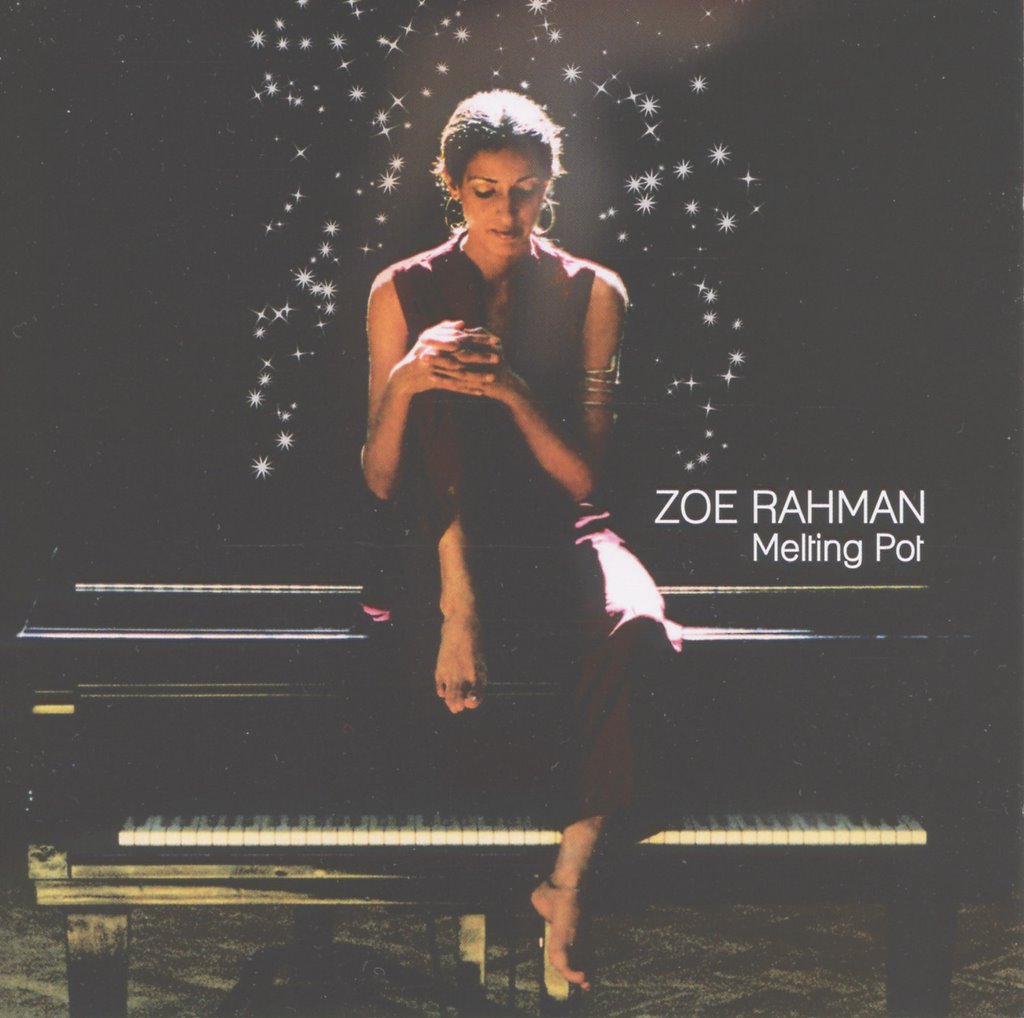
With the release of her second album, “Melting Pot”, the jazz pianist and composer Zoe Rahman has further confirmed her place as one of the most talented and inspiring young musicians on the contemporary British jazz scene. It is a real pleasure to listen to Rahman’s assured musicianship with its freshness of spirit creating intriguing rhythms and haunting melodies.

Rahman’s performance with the other members of her trio, American drummer Gene Calderazzo and double bass player Oli Hayhurst, has a driving sense of energy, yet also a reflective and transcendent quality.

The tracks have a variety of styles and moods; the third, “Shiraz”, is compelling with its poignant repeated melody from which Rahman’s playing soars. On track 4, the jauntily choppy piece “The Calling”, Rahman is joined by Patrick Illingworth on drums and Jeremy Brown on double bass.

All but one of the tracks were written by Rahman. The exception is the final track, the Bengali song “Muchhe Jaoa Dinguli”, written by the singer and composer Hemant Mukherjee. Zoe’s brother Idris renders the vocal line on clarinet, and Brazilian percussionist Adriano Adewale Itauna plays the udu drum.

Rahman was born in the city of Chichester, near the southern English coast, to a father from Bangladesh and an English mother. She studied music at Oxford University, and her classical music training is in evidence in the excellence of her technique.

After Oxford she went to Berklee College of Music in Boston, USA, where she had lesson with the legendary pianist JoAnne Brackeen. While in the USA she formed her own trio, with bassist Joshua Davis and the drummer Bob Moses.

In 1999 Rahman won the Perrier Young Jazz Musician of the Year Award. As a result of that award she recorded three tracks on a Jazz FM-produced compilation CD with drummer Daniel Crosby and bassist Orlando Le Fleming.

Her debut trio album, “The Cynic”, with drummer Winston Clifford and bassist Jeremy Brown, was short-listed for the BBC Radio 3 jazz album of the year review in 2001. She was then nominated in the “Rising Star” category of the 2001 BBC Jazz Awards.

Rahman is a graceful presence on stage, with her slender form, fine features and wide smile. As well as performing with her own trio and other ensembles, she performs records and tours with a range of other artists. Recent CDs on which she appears include the Clark Tracey Quintet’s “The Calling”, Palestinian singer Reem Kelani’s “Sprinting Gazelle”, Soothsayers’ “Tangled Roots”, Tony Bianco’s “In A Western Sense” and Gary Boyle’s “Games”.

She also co-wrote and played piano in the jazz-based theatre show “I’m a Fool to Want You”, based on the life of the French novelist, poet, jazz musician and surrealist Boris Vian.

Excerpts from “Melting Pot” can be heard at www.zoerahman.com

Susannah Tarbush
Saudi Gazette
20 December 2005

Saturday, December 03, 2005

Thursday, December 01, 2005

US said to subvert Iraqi papers and journos

New York Times reports that the US is paying for propaganda articles to be planted in Iraq newspapers, and also has around a dozen "friendly" Iraqi journalists on its payroll, paying each several hundred dollars a month.

"Even as the State Department and USAID pay contractors millions of dollars to help train journalists and promote a professional and independent Iraqi media, the Pentagon is paying millions more to the Lincoln Group for work that appears to violate fundamental principles of Western journalists," the NYT says.


A PR company, the Lincoln Group, is paid by the Pentagon to translate articles into Arabic and to submit them to Iraqi newspapers or advertising agencies without revealing the Pentagon's role.

"One article about Iraq's oil industry opened with three paragraphs taken verbatim, and without attribution, from a recent report in Al Hayat, a London-based Arabic newspaper. But the military version took out a quotation from an oil ministry spokesman that was critical of American reconstruction efforts. It substituted a more positive message, also attributed to the spokesman, though not as a direct quotation."

Yet another echo of the bad old days. Saddam was generous in rewarding publications and journalists, Iraqi and other Arab, and is said to have given journalists watches with his face on them.

Sunday, November 27, 2005

Iraq to be "tourist haven"

There are plans to turn Iraq into a tourist haven, including a theme park in Saddam's Tikrit Palace complex, according to the Sunday Telegraph. The article, in the newspaper's tourism section, enthuses that Iraq has antiquities, 102 airports and "a coastline that gets a lot of sun". That'll be all the heavily militarised 80kms of it then! Just the place for a spot of sunbathing. At the same time former Prime Minister Iyad Allawi has complained to the Observer that torture and killings under interrogation in secret bunkers are worse than under Saddam. A theme park on the lines of the Chamber of Horrors or the London Dungeon perhaps, Iraq past and present. What does Tony Blair's human rights envoy to Iraq Ann Clwyd make of the human rights abuses now practised in the new Iraq? She's not been exactly vocal in her condemnation so far.

Tuesday, November 22, 2005

Open Bethlehem


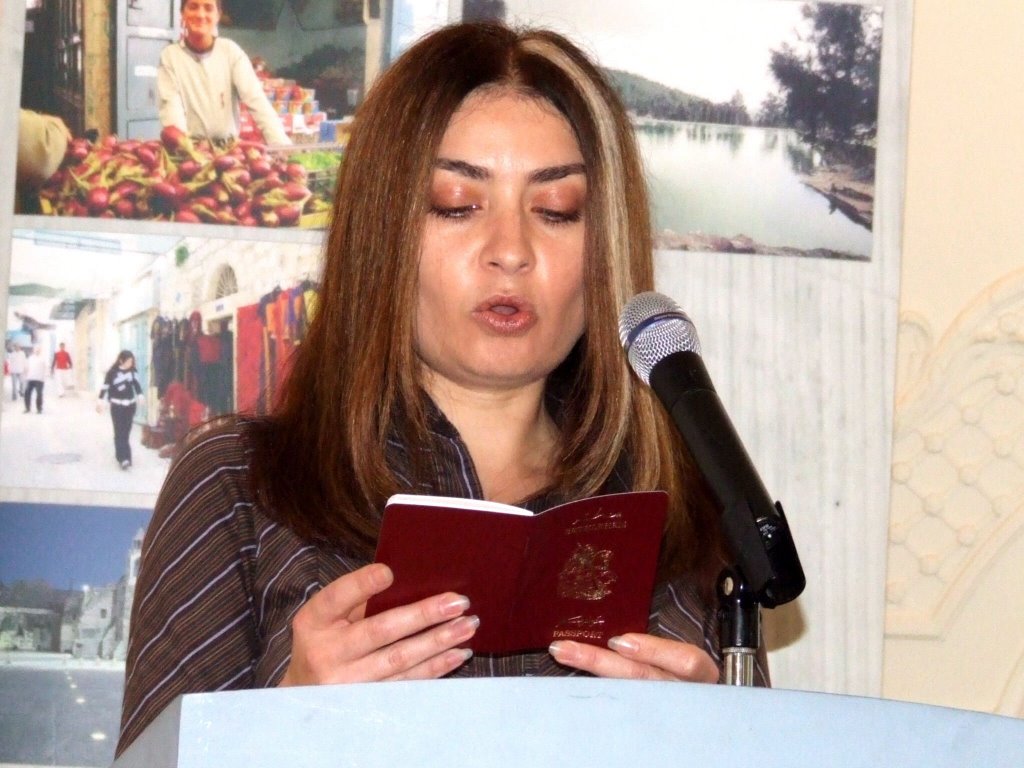
(left) Leila Sansour with Bethlehem passport

It is perhaps unprecedented for a city to issue its own passport, but this is what Bethlehem has done in order to draw international attention to the devastating impact of political instability and of Israel’s so-called security barrier.

The passport was unveiled at a press conference at the Foreign Press Association in central London a few days ago. The event was held to mark the launch of Open Bethlehem, a project that is spearheading an international campaign to save the West Bank city.

Open Bethlehem’s chief executive, the Palestinian filmmaker Leila Sansour, described the passport as a declaration of self-determination. “We are telling the world that our city is open to anyone who wishes to come and live with us.”

The Mayor of Bethlehem, Victor Batarseh, travelled to London for the Open Bethlehem launch. “My city is dying because it is imprisoned,” he said. A combination of walls and fences completely surrounds the urban core of the Bethlehem region. “This is not, as the Israelis claim, a security barrier. It cuts through villages within the Bethlehem area, separating Palestinians from Palestinians. In a strict and literal sense, it is a ghetto wall, and Bethlehem is a prison town.”

The mayor pointed out that the multi-faith character of Bethlehem makes it a working model for local democracy in the Middle East. “If Bethlehem dies, one of the brightest hopes for a democratic Middle East dies with it.”

The vital tourist traffic on which the city’s economy largely depends slumped from an average of nearly 92,000 tourists a month in 2000 to only 7,249 a month in 2004. Four hundred Christian families have left the city since 2000.

The mission of Open Bethlehem, which is headquartered at Bethlehem University, is to strengthen the city’s economic base. The “people-to-people and city-to-city” approach will operate through Bethlehem’s elected bodies, civic institutions, university, museums, churches and mosques. The aim is to encourage investment, to reach out to the diaspora of Palestinians, and to promote Bethlehem around the world. Artists, journalists, filmmakers and writers are encouraged to visit, perform or work in Bethlehem.

Open Bethlehem is supported by some eminent personalities, including Archbishop Desmond Tutu, Noam Chomsky and former US President Jimmy Carter. At a presentation at the Frontline Club, the speakers included veteran BBC journalist Martin Bell, former International Development Secretary Clare Short and left-wing comedian Jeremy Hardy.

Presentations were also made at the Royal Institute of International Affairs, the House of Commons All-Party Palestine Group, the Middle East Association and the World Travel Market. From London, Sansour travelled to the US to make a presentation at the National Press Club in Washington.

The situation on the ground is growing ever more difficult. The Times newspaper reported on Saturday that Bethlehem has been sealed off from Jerusalem, just in time for Christmas, by an 8-meter wall and huge iron gate resembling a nuclear shelter.

Open Bethlehem’s website is at www.openbethlehem.org

Susannah Tarbush
Saudi Gazette
22 November 2005

Tuesday, October 25, 2005

literary and literal giants

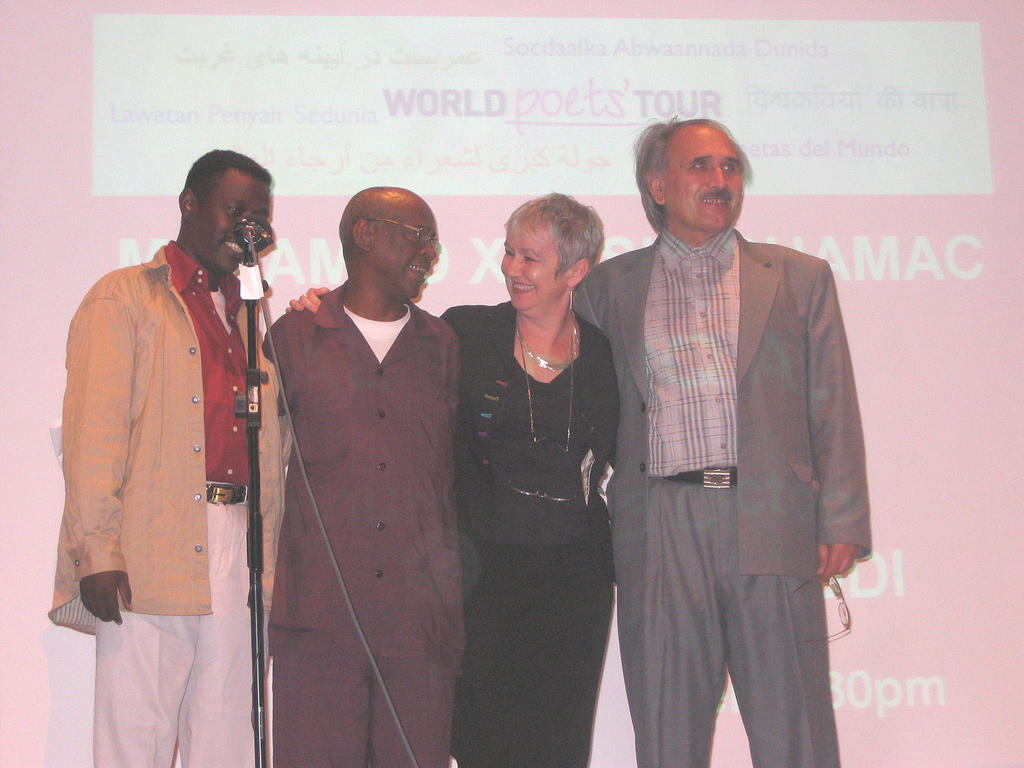
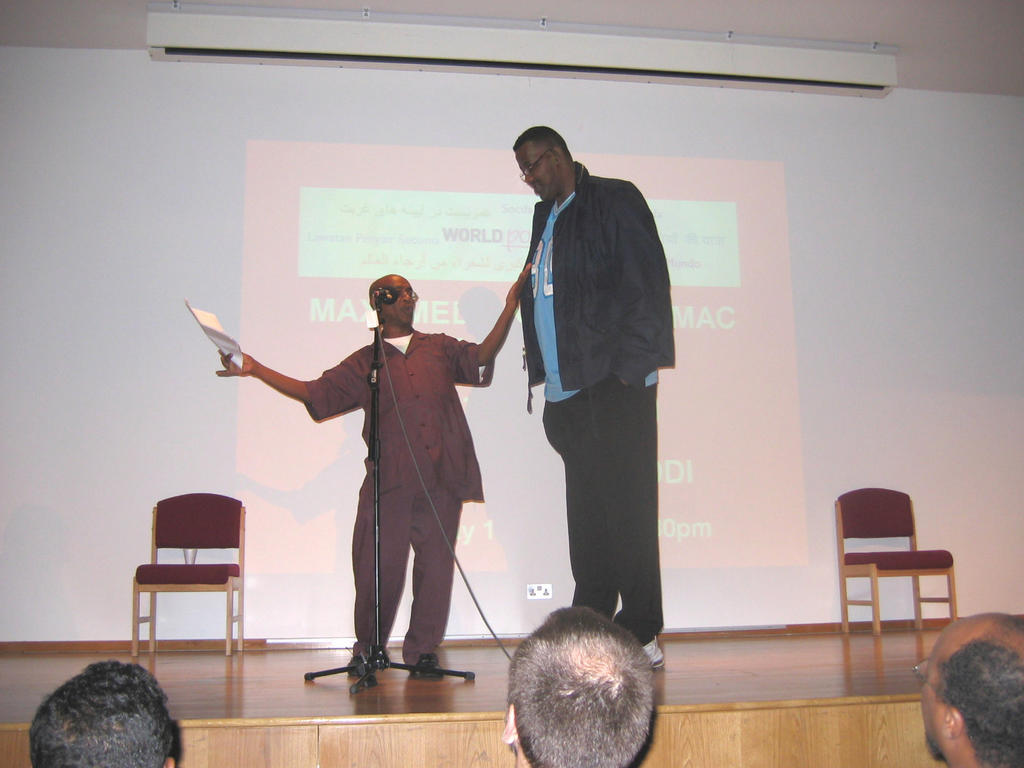
Above: Sarah Maguire with (L to R) Al-Saddiq Al-Raddi, Maxamed Xaashi Dhamac 'Gaarriye' and Partaw Naderi

The three-week ‘World Poets’ Tour’, which has been taking place this month, is the first tour of its kind in the UK. The tour was organised by the Poetry Translation Centre (PTC) of the School of Oriental and African Studies (SOAS), London University. It has visited ten cities in England, Scotland and Wales and ends tomorrow with a reading in Edinburgh, Scotland, by Al-Saddiq Al-Raddi of Sudan and Partaw Naderi of Afghanistan.

A reading held in the Brunei Gallery at SOAS a few evenings ago featured Al-Raddi and Naderi together with Maxamed Xaashi Dhamac ‘Gaarriye’ from Somaliland. The other poets brought to Britain for the tour are women: Coral Bracho from Mexico, Gagan Gill from India and Toeti Heraty from Indonesia.

The tour by the six poets is striking evidence of the PTC’s valuable work in making the work of non-European poets accessible to an English-reading audience through high-quality translations.

The PTC was launched last year, and its founder and director is poet Sarah Maguire. Poems are translated literally by a first translator. The translations are then transformed through workshops into poems that ‘work’ in English while remaining true to the originals. A number of eminent poets in Britain have translated PTC poets, and the tour included six of these poet-translators, among them Maguire herself.

At the Brunei Gallery evening, Al-Raddi’s work was read by him in Arabic and by his poet-translator Mark Ford in English translation. His work has also been translated by Maguire, who is the translator of Nadari’s poetry and appeared on stage with the Afghan poet.

David Harsent, who read alongside Gaarriye as his poet-translator, this month won the prestigious Forward prize for the best poetry collection for his collection “Legion”. Gaarriye’s work was introduced by Dr Martin Orwin, SOAS lecturer in Somali and Amharic, who explained that Gaarriye was “the first person to work out how the Somali metrical system works.”

Maguire told the audience that she was particularly delighted to welcome poets “from three regions of the world which have been very troubled and which have suffered, and are suffering, enormously. All of those countries have very long histories with Britain and with British meddling in their affairs which British people like me feel deep regret for.”

Maguire noted that people from the Sudanese, Somali and Afghan communities, who have fled terrible conditions, are often made to feel unwelcome in Britain. “I feel again an enormous sense of regret about that because, as far as I’m concerned, the best thing about living in London is the fact that there are 300 languages spoken here and there are more and more people coming to live here from countries such as your own.” The evening gave “the opportunity to indicate to people a glimpse of the extraordinarily rich literary heritage and traditions of poetry of the three countries.”

The audience reacted to the readings with obvious enjoyment and enthusiasm. Gaarriye’s performance gained an extra dimension when he invited “the tallest man in the world”, fellow Somali Hussein Bissad, to join him. Hussein, who is eight feet one inch tall, stood on stage throughout Gaarriye’s readings.


Gaarriye greets Hussein Bissad

Susannah Tarbush

Saudi Gazette, 25 October 2005

Tuesday, October 18, 2005

miskin theatre's palestine play

The play “Iman: Walled in Walled out” has a good claim to being one of the most powerful pieces of Palestinian-related theatre ever staged in Britain. The play, written and directed by Robbie McGovan, Neil Maskell, Dominic Power and Lucy Flack, was staged earlier this month at the Miskin Theatre in the town of Dartford, not far from London. Its cast of young British actors, mostly still in their teens, brought energy, commitment and passion to their performances.

The play consists of scenes and stories woven around the notorious killing by the Israeli Defence Forces (IDF) of 13-year-old Iman al-Hams in Gaza in October 2004. Iman was deliberately shot despite it being obvious that she was a schoolgirl, and Israeli soldiers later described how their commander emptied his entire magazine into her body.

The play had a direct visceral impact, intensified by the musical soundtrack performed by five talented and versatile young musicians. Their line-up of instruments included several with a Middle Eastern sound - dulcimer, mandolin and bazooki. When Leonie Evans sang, the effect was ethereal.

The play opened with the black-clad cast rushing and darting on to the stage in all directions, clutching eerie white masks. This dynamism and physicality was maintained throughout the drama.

The stage was at the centre of the auditorium, with rows of seats on either side. At times a muslin screen was suspended across the stage on which were projected images of Palestinian crowds and funerals, which mingled with the actors on stage.

Some of the scenes had an absurdist, dark humour, such as “The Toilet is Another Country” in which the IDF prevent a boy from using a latrine. The situation escalates to draw in more and more characters. In another confrontation, an old lady shot in the ankle by the IDF has a sarcastic exchange with a soldier who tells her to get up and hurry. Death is ever present, and in one visually eloquent scene girls wind a funeral sheet around a killed girl.

The play was developed through the Theatre in Education (TIE) process. Neil Maskell explains in the play’s published programme: “We start with around forty actors, a small group of musicians, a design, lighting and sound team along with no script, no story and no notion of where we will end up.”

As part of the research into music for the play, the singer and musician Reem Kelani, the leading authority on Palestinian music in Britain, conducted a one-day workshop with the cast and directors.

Dr Rosemary Hollis of the think tank Chatham House was consulted for her knowledge of the Palestinian-Israeli conflict. The visual arts input came from Palestinian artist Leila Shawa, much of whose work is inspired by the children of her native Gaza.

The play had its first run in the early summer. In its latest run the play was updated to take account of the Israeli withdrawal from Gaza, while pointing out that Israel still controls Gaza’s borders.
It would be interesting to see what young people in Palestine make of this work performed by Britons of their age. But taking the play and its cast to Palestine will probably have to wait for more peaceful times.

Susannah Tarbush
Saudi Gazette October 19 2005


Tuesday, October 04, 2005

british muslim magazine 'emel' goes mainstream


The launch of a glossy new lifestyle magazine is a not uncommon event in Britain, where newsagents’ shelves are crammed with a vast array of publications. But what makes the launch of Emel exceptional is that it is a Muslim magazine hoping to expand its readership to include non-Muslims.

Emel arrived in mainstream outlets such as W H Smith, Tesco, Asda and Waterstones last Thursday. Its name is derived from the initials “M” and “L”, standing for Muslim Life, and it is also close to the Arabic for “hope".

The magazine’s editor Sarah Joseph is a British convert to Islam. With her intelligence, calmness and good humour, she is one of the most effective Muslim commentators to appear regularly on British television.

Emel was founded two years ago as a quarterly available only at specialist Muslim bookshops. It has now gone monthly and entered the British mainstream market in response to a growing interest among some sectors of the British public in learning more about Islam and Muslims.

The cover picture is of singer Sami Yusuf who, according to Emel’s profile of him, has “revolutionized the English nasheed landscape, especially with his quality music videos”, and is “truly blazing a trial in the international Muslim music scene”. His latest album “My Ummah” has just been released.

Emel covers many aspects of the lives of Muslims in Britain, with a mixture of comment, features, real life stories, finance, health, food, interiors, garden, fashion, travel and art. Several articles mark the holy month of Ramadan, including a thoughtful piece by scholar Tariq Ramadan. There are articles on seclusion and additional prayers during Ramadan, on “moonsighting” and on Ramadan fitness. There is also an interview with three Pakistani cricketers on their experiences of Ramadan.

On the political front, the magazine examines the reaction to the London attacks of 7/7 and has an article on “how to stop the preachers of hate.” The arts section takes an in-depth look at the work of the famous London-based Egyptian artist Ahmed Moustafa, who is inspired by Islamic calligraphy and geometry.

Sarah Joseph and her team have succeeded in producing a magazine that is fresh, lively and thought-provoking, with high standards of writing and design. It lives up its aim, which Joseph describes as being “a positive voice that celebrates the value of being a Muslim in today’s Britain.” She identifies a nascent British Muslim culture that is emerging, “far away from the anger violence and rhetoric of the theologically unsound; far away from the sensationalised media clichés of extremism and alienation.”

Susannah Tarbush
Saudi Gazette October 4

Saturday, October 01, 2005

Philip Larkin early muse Penelope Scott Stokes

photo © estate of Penelope Evans
Article in The Times today:

Larkin's tomboy first love is revealed in lost sonnet

www.timesonline.co.uk/article/0,,2-1805891,00.html

Tuesday, September 27, 2005

green book roundtable in tripoli


In September 2003, UN sanctions on Libya were lifted following Libya’s agreement to pay $2.7 billion to the families of victims of the Lockerbie Pan Am bombing and to accept responsibility for the explosion. Three months later, Libya took the dramatic step of revealing and abandoning its programmes for weapons of mass destruction. These developments ushered in a phase during which Libya has fostered links not only with governments but also with non-governmental organisations.

As part of this process, the Jamahariya Thought Academy in Tripoli last week held a three-day roundtable on Libyan leader Muammar Gaddafi’s “Green Book”. The 13 invited delegates, of whom I was one, came from the USA, Britain, Canada, Finland, the Netherlands, Switzerland and Turkey.

The invitees were mainly activists in the peace and democracy fields, largely from academic backgrounds. The inclusion of five delegates from America was a sign of the way in which Libya has opened up since the US lifted its travel ban and economic sanctions in 2004.

The “Green Book” with its “Third Universal Theory” was controversial when it was first published some 30 years ago. Is it really of relevance today? In the discussions of the papers by Libyan academics on the main themes of “The Green Book”, and of the “Great Green Charter on Human Rights”, it was clear that the delegates found the ideas presented to be of interest in considering the problems facing the world today, although some had reservations on certain points.

The sessions were chaired by Dr Rajab Boudabbous, the General Director of the Jamahariya Thought Academy. The speakers included three Libyan women professors, among them Dr Salma Abdaljbar who spoke on religion and politics.

On the morning of the third day, the delegates were suddenly informed that the Libyan Leader wished to meet them, and were driven to his high-security compound. Gaddafi is well known for his frequent sartorial image changes. Rather than being in Bedouin costume on this occasion, he wore a dazzling white suit and bright green shirt. After engaging in discussions with the delegates and answering their questions, he signed copies of “The Green Book”.

He also talked about his “White Book” on his proposed solution to the Israel-Palestine conflict in which “Isratine” (a hybrid name derived from Israel and Palestine) would be a state where Jews and Palestinians would live in peace.

Some of the US delegates had first been to Libya in July 2004 on the first non-governmental delegation of Americans to officially visit the country after the US lifted its travel embargo. They included Dr Glen T Martin, Professor of Philosophy and Religious Studies at Radford University, Virginia.

Dr Martin is the secretary general and treasurer of the executive cabinet of the World Constitution and Parliament Association (WCPA). The 9th session of the Provisional World Parliament will be held in Libya from 25 to 27 February.

The roundtable was the second event of its kind, coming after a roundtable for Russian delegates. The next roundtable will be for Chinese invitees, and roundtables in other languages including French and Spanish are planned.

Susannah Tarbush
Saudi Gazette September 27 2005

le grand voyage film


The feature film “Le Grand Voyage”, which is about to go on general release in Britain, chronicles the geographical and emotional journey of an elderly father and his son during a car journey from France to Makkah.

The film had a special screening for a multifaith audience at the British Academy of Film and Television Arts (BAFTA), in London’s Piccadilly, last Wednesday. The screening was organised by Simon Keyes, the director of St Ethelburga’s Centre for Reconciliation and Peace.

The film’s director and scriptwriter Ismael Ferroukhi, who is himself an immigrant to France of Moroccan origin, was present at the screening and answered questions afterwards. The members of the audience were full of praise for the epic film, with some finding that it contained echoes of their own difficult relationships with immigrant fathers.

Several of those present wondered how conservative Muslims would react to the film. One man responded that he is an imam at his local mosque, and that his sister is even more conservative than he is, but “we both loved the film.”

The film has won several awards, including the Luigi de Laurentis Award for the best first film at the Venice Film Festival in 2004. It was the opening film last December at the Dubai Film Festival.

“Le Grand Voyage” stars the young French actor Nicholas Cazale (whose grandmother is Algerian) as Reda, and Moroccan actor Mohamed Majd as his father, a Moroccan who has lived in France for 30 years.

The film exposes the wide gap between the father and his moody son who is preoccupied by his non-Muslim French girlfriend Lisa and by his final examinations. When his father tells him he wants him to drive him to Makkah, he complains to his mother: “Can’t he fly, like everyone else?” At one point in the journey the father explains to Reda why it was important to him to undertake this long road journey with its hardships rather than take the easier way of flying to the Hajj.

At first the father seems unbearably authoritarian and harsh, even discarding Reda’s mobile phone in a rubbish bin while he is asleep in the car. The distance between them extends to language: the father speaks Moroccan dialect to Reda, while Reda speaks to him only in French.

In his deeply involving film, Ferroukhi explores the nuances and subtle shifts in the father-son relationship as the car passes through often achingly beautiful scenery in countries including Italy, Slovenia, Croatia, Bulgaria, Turkey, Syria and Jordan.

After crossing the Turkish border the travellers are befriended by a worldly Turkish man Mustapha (played by Jacky Nercessian) who accompanies them until the father mistakenly accuses him of stealing their money. “You may know how to read and write, but you know nothing about life,” the father admonishes Reda.

As they draw near Makkah, they join up with vehicle loads of Arabs from various countries. Ferroukhi conveys the sense of warmth and brotherhood among the Hajj pilgrims, and the scenes shot in Makkah are particularly memorable.

The father explains to Reda that his one fear had been that he would die without going to Makkah, and tells him: “God bless you.” Father and son have moved from their combative relationship of miscomprehension to a new understanding and appreciation, before the film’s harrowing final twist.

Tuesday, September 13, 2005

cooking the sufi way


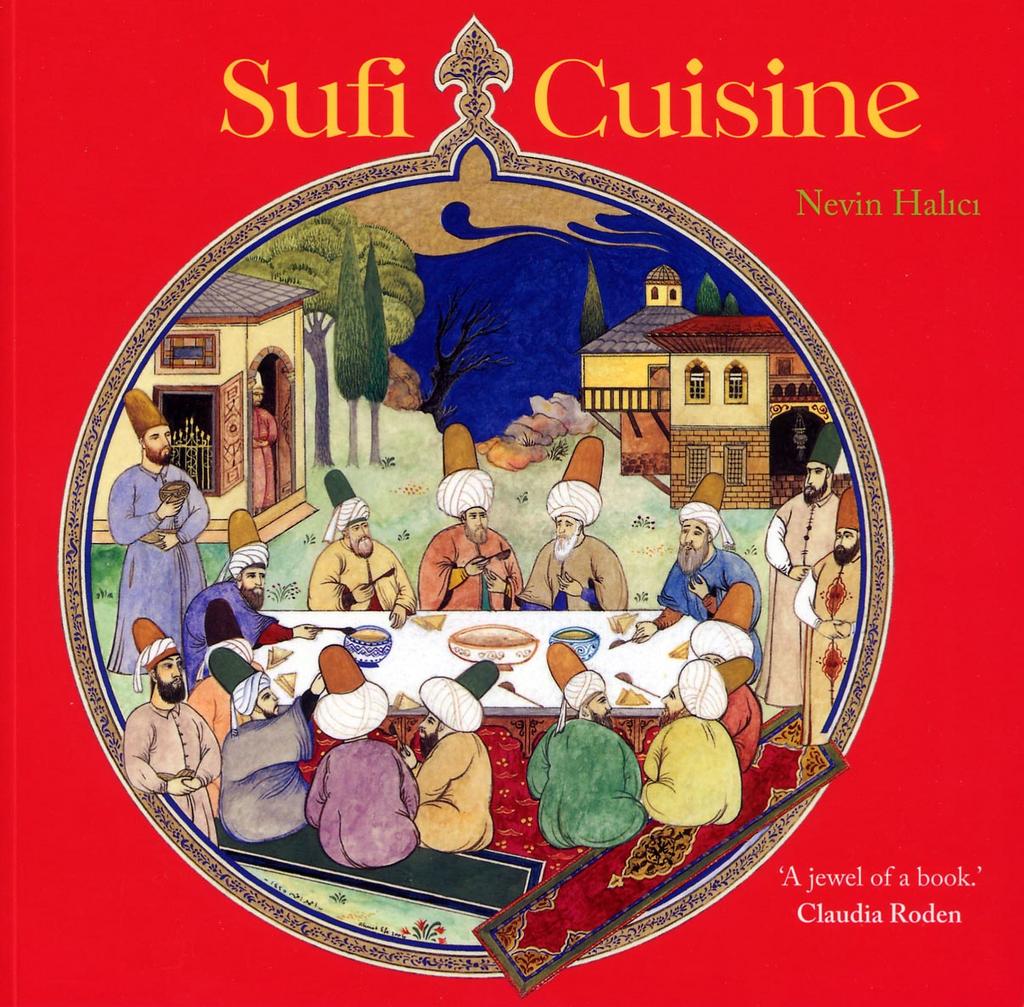
A book launch with a difference was held at the Kufa Gallery, West London, last Tuesday to mark the publication of the latest title from Saqi Books, “Sufi Cuisine” by Nevin Halici. The evening included an introduction by Middle Eastern cookery writer Claudia Roden and a book signing by Halici.

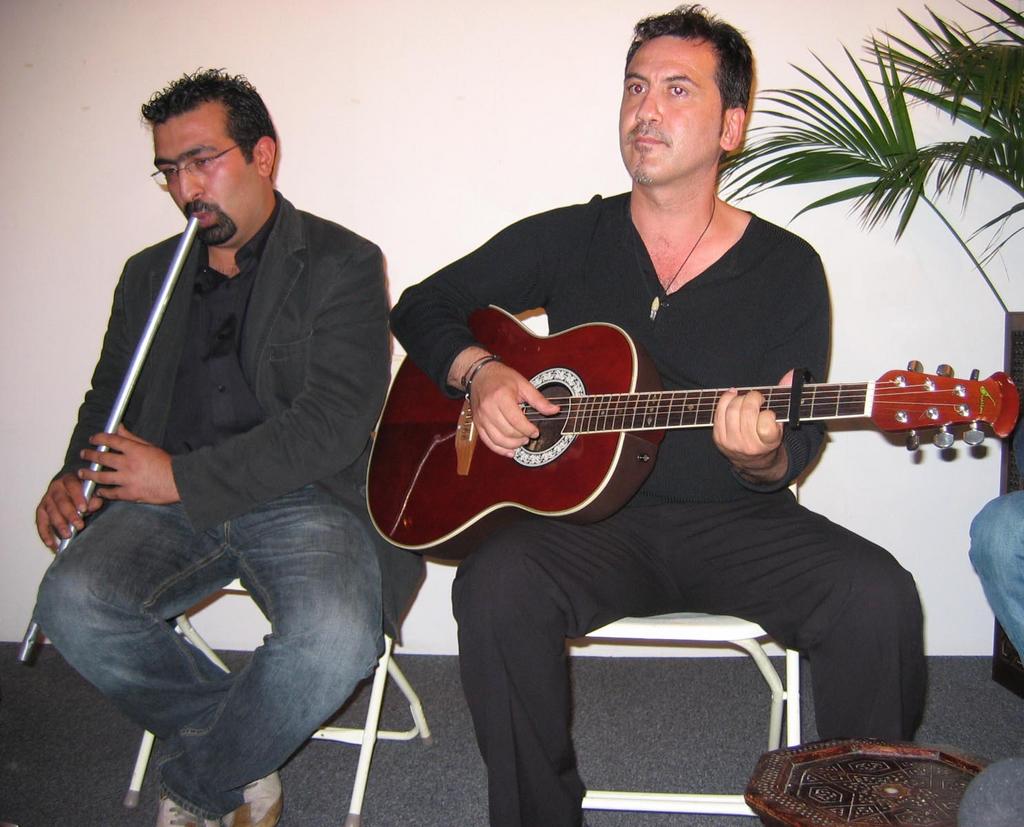
The writer and novelist Morris Farhi read poetry by Mevlana Jalal al Din Rumi, some of it accompanied by music from Turkish guitar player and singer Hakan Bilal accompanied by nay and daf.

The event included an exhibition of the miniatures by Ahmet Efe that illustrate the book. To round things off, the guests sampled sweets from the book, including almond halva, served with rose petal jam and prepared by chef Eredem Dirbali of Ishtar restaurant.

Halici, a native of Konya, is well known for her pioneering work on Turkish cookery. Claudia Roden, who described her as the most respected food writer in Turkey, recalled how she first met Nevin more than 20 years ago in Konya.

"In all the years that I have been researching food around the world I have never come across anyone as passionately committed to recovering and upholding the culinary heritage of her country as Nevin Halici," Roden said. She told of how Halici went from village to village knocking on doors, watching women cook and attending their traditional get togethers.

Halici points out that many of the dishes mentioned by Rumi in the 13th century still exist in Konya, and that Mevlevi cuisine is one of the main roots of Turkish cuisine. She has adapted the recipes for modern times. In Rumi’s time, and until much later, butter was the fat most often used in cooking whereas olive and sesame oil were used for lamps. However sunflower oil, because of its neutral taste, can substitute for butter in many of the recipes.

In the past plums or koruk (unripe grapes) were used to give food a sour flavour, but tomato puree can be substituted. The book includes a recipe for Calla, meat with plums, which is still made in Konya.

Another ingredient traditionally used in Konya food is unripe grape juice known as verjuice. Halici writes that the most popular dish in Konya is sour butternut squash, whose ingredients include verjuice (lemon juice can be used instead), meat, chickpeas, mint, sweet basil, and even chopped marigold leaves.

Grape syrup, or pekmez, features in a number of recipes, for example cooked with quince, apples or carrots. Snow halva is simply pekmez drizzled over light fluffy snow. The recipes include various refreshing sherbets - honey, fig, rosewater, pomegranate.

The recipes are healthy with an emphasis on fresh fruit and vegetables, herbs, mint, grains, lamb, honey, pulses and nuts, in intriguing combinations. The handsome 240-page volume is an important contribution to the literature on Turkish and world cookery.

Susannah Tarbush Saudi Gazette September 13 2005


Tuesday, September 06, 2005

banipal's latest

Celebration of Arab literature

The latest issue of Banipal, the London-based magazine of Arab literature in English translation, contains a rich variety of poetry, short stories, profiles, interviews and reviews.

The writers featured in the 160-page issue are from Palestine, Iraq, Oman, Tunisia, Morocco, Lebanon, Syria, Egypt, the United Arab Emirates and Yemen.

The Omani poet, and editor-in-chief of Nizwa magazine, Saif al-Rahbi is extensively profiled. The 24-page section on this writer includes 13 of his poems translated by Palestinian writer and scholar Anton Shammas.
The Iraqi poet Fadhil al-Azzawi writes on "Saif al-Rahbi's Poetical Journey to himself", and Fakhri Saleh of Jordan, Eskandar Habache of Lebanon, and Khalid Al-Maaly of Iraq also contribute pieces. Al-Rahbi is interviewed in Muscat by Omani academic and translator Abdulla al-Harrasi, and says: "poetry is my home and I cannot live outside it."

Among the other highlights of the issue are a poem by Palestinian Mahmoud Darwish, "Not Like a Foreign Tourist Would" and a short story by the young prize-winning Palestinian author Ala' Hlehel, translated by Anthony Calderbank.

There is a feature on the Syrian poet Saniya Salih who died in 1995. Salih was wife of the poet Mohammad al-Maghut, and the feature alludes to the high price a creative woman can pay for being married to a famous man of letters.

The issue includes the work of several Iraqi writers. Fadhil Al-Azzawi has written a satisfying and lively long essay in the literary influences section, entitled "I Lived a Magical Feast". The Iraqi writer Duna Ghali, who lives in Denmark, has penned the short story "Sip", and Hamid al-Iqabi, who also lives in Denmark, is represented by his story "The Banjo Player".

North Africa is present through two high-calibre writers whose work is translated from French: from the Moroccan Abdellatif Laabi there is an extract from the novel "The Bottom of the Jar", and from the Tunisian Abdelwahab Meddeb there are five poems.

Joumana Haddad, the Lebanese poet and journalist, has written an account of her interviews for An-Nahar newspaper with famous non-Arab writers such as Paul Auster, Umberto Eco, Paulo Coelho, Peter Handke, Jose Saramago and Wole Soyinka.

Banipal also has an extract from "The Myrtle Bush", the new novel by The Lebanese writer and journalist Jad El Hage whose novel "The Last Migration" was published in English. From Yemeni writer Nadiah Alkokabany there is the frank short story "Fireworks to Celebrate a Deflowering."

There is a characteristically amusing "travelling tale" from Banipal's assistant editor Samuel Shimon, "Steppenwolf goes to San Francisco". This is an account, complete with photographs, of how Shimon travelled by train from New York to San Francisco armed with Hermann Hesse's great novel. His trip was punctuated by encounters with odd characters.

Susannah Tarbush
Saudi Gazette
September 6 2005

the other side of Israel

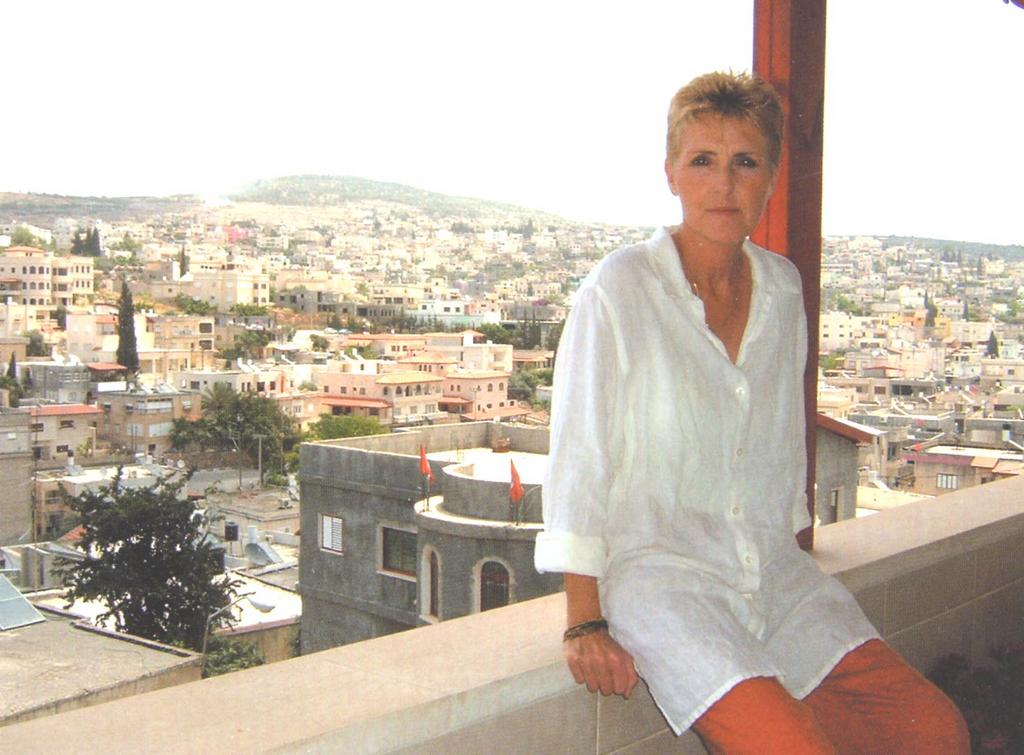
When British Jew Susan Nathan flew into Tel Aviv’s Ben-Gurion airport in October 1999, not long after her marriage had broken down, she pinned a badge to her chest with the slogan: “I’ve come home.” At the age of 50, she was seeking to make a new life in Israel.

And yet six years later she is the author of “The Other Side of Israel: My journey across the Jewish-Arab divide”, a devastating critique of Israeli society and its systematic discrimination against its Arab population.

Nathan’s book was published by Harper Collins in Britain at the end of May, and on September 6 it was published in the US by Nan A Talese, an imprint of Doubleday which is part of the Random House group.

The book is made all the more powerful by the fact that it is written by a Jew, and one who was brought up in South Africa. Nathan draws telling parallels between Israeli and South African apartheid-style policies.

“The Other Side of Israel”, written in collaboration with British journalist Jonathan Cook, is based on Nathan’s experiences of living in the Palestinian Arab town of Tamra located near the Mediterranean coast between Haifa and Acre.

Nathan’s left-wing friends in Tel Aviv were appalled by her decision to move to Tamra. It dawned on her that in moving to Tamra to live with a Palestinian family, “I had crossed an ethnic divide in Israel that, although not visible, was as tangible as the concrete walls and razor-wire fences that have been erected around the occupied Palestinian towns of the West Bank and Gaza to separate them from the rest of the country.”

In the book’s second chapter, “Death of a Love Affair”, Nathan explains how her disillusionment with Israel grew, and how her questions about the indigenous, strangely “invisible”, Arab community became increasingly pressing.

Nathan has aroused the ire and indignation of many supporters of Israel. Some publications in the UK seem to have been reluctant to review her book. However, the book has been praised by some prominent reviewers, among them Egyptian novelist Ahdaf Soueif who gave the book a big write-up in the Times Literary Supplement under the heading “Another Apartheid.”

Nathan’s targets are not only the Israeli government and bureaucracy, but also some of those Israelis who regard themselves as “doveish”. Some of her harshest words are for Israelis in the peace movement, and she describes certain “so-called left-wingers” as “hypocrites of the worst kind.”

Nathan rejects a two-state solution as the way to enduring peace, and thinks a one-state solution is the only way. This aim will seem impossibly utopian to those who see a two-state formula as the only realistic solution. But there is no doubting Nathan’s passionate conviction and her commitment to a struggle “to help a new country emerge here to which one day we all, Jews, and Palestinians, will belong.”

Susannah Tarbush
Saudi Gazette, 6 September 2005