Showing posts sorted by relevance for query Jenin. Sort by date Show all posts

Monday, July 26, 2010

'mornings in jenin' by susan abulhawa

Mornings in Jenin: Susan Abulhawa's Palestinian family odyssey

“Mornings in Jenin”, by the Palestinian-American writer Susan Abulhawa [pictured below], is a rarity in being a novel on the Palestinian-Israeli conflict written in English by a Palestinian and published by a mainstream Western publisher, Bloomsbury of London, New York and Berlin.
With the muscle of Bloomsbury behind her, and with her novel written in highly accessible vivid prose that carries the reader along, Abulhawa stands a good chance of becoming a mainstream bestselling author. Comparisons are being made between “Mornings in Jenin” and the 2003 novel “The Kite Runner” written in English by US-based Afghan Khaled Hossein which was a runaway bestseller and was also made into a film.
With translation into some 20 languages, Abulhawa’s novel is already enjoying success beyond the English-reading world. The author reported on her Twitter feed on 14 June: “Starting the week with awesome news! Mornings in Jenin is the #1 bestseller in Norway! [i’m ridiculously excited].”
Susan Abulhawa was born to refugees of the 1967 Six Day war. As a teenager she moved to the US where she graduated in biomedical science and forged a career in medical science. In 2001 she founded Playgrounds for Palestine – an organization dedicated to upholding Palestinian children’s Right to Play. She lives in Pennsylvania with her daughter.
“Mornings in Jenin” traces over six decades the lives of four generations of the Abulheja family. The family is originally from the village of Ein Hod east of Haifa, where life traditionally revolved around the cultivation of olives and figs.
The family lives through the vicissitudes visited on the Palestinians since the 1940s. The main character Amal is the granddaughter of the patriarch Yehya. She is an attractive personality, with passion, humor and intelligence. Abulhawa depicts with tenderness and acuteness Amal’s process of growing up in the harshest of circumstances, and the characters with whom she strikes up friendships throughout her life.
The prologue to the novel finds the adult Amal in Jenin refugee camp in 2002 with the muzzle of an Israeli soldier’s rifle thrust against her forehead. Amal wonders “if officials might express regret for the ‘accidental’ killing of her, an American citizen. Or if her life would merely culminate in the dander of ‘collateral damage’.”
Abulhawa clearly has a mission as a novelist. Her writing is fuelled by a sense of anger and urgency. She cites the late Palestinian scholar and activist Dr. Edward Said as a major influence. “He lamented once that the Palestinian narrative was so lacking in literature, and I incorporated his disappointment into my resolve.” The Palestinian academic and politician Hanan Ashrawi directly encouraged her to write, after reading Abulhawa’s published memories of Jerusalem.
“Mornings in Jenin” is backed by extensive research, and includes a bibliography. Abulhawa draws extensively on her own experiences. For example she traveled to Jenin in 2002 after hearing reports of a massacre in the town’s refugee camp. “The horrors I witnessed there gave me the urgency to tell this story,” she says. “The steadfastness, courage, and humanity of the people of Jenin were my inspiration.”
An earlier version of “Mornings in Jenin” was published a few years ago as “The Scar of David” by a small US press that subsequently went out of business. “The Scar of David” was translated into French and published by Editions Buchet/Chastel under the title “Les Matins de Jénine”.
Anna Soler-Pont then became Abulhawa’s literary agent and, as Abulhawa puts it, “began breathing new life into the novel”. It was subsequently translated into a score of languages, and Bloomsbury offered to reissue it after extensive revisions and editing.
The publication of “Mornings in Jenin” could hardly be more timely. Palestine is very much under the spotlight as a result of the blockade of Gaza, the continuing outrage over Israeli settlement expansion and demolition of Palestinian homes, and alarm over the threat of war in the wider Middle East.
Earlier this month Abulhawa made a well-received appearance at the London Literature Festival in conversation with writer Rachel Holmes at a session held by the festival in partnership with the Palestinian Festival of Literature (PalFest). Since its inception in 2008, Palfest has taken many high-profile British and other writers to Palestine, and Abulhawa herself participated in this year’s PalFest in May.
“Mornings in Jenin” comes with praise on its cover from two well-known British writers – travel writer Michael Palin and novelist Esther Freud – and from Hanan Ashrawi. Palin writes that the novel gives a “powerful and passionate insight into what many Palestinians have had to endure since the state of Israel was created”. For Freud it is “a powerful and heartbreaking book.” Ashrawi describes the novel as “a unique literary experience not to be missed.”
One main strand of the novel starts with Amal’s older brother Ismael being wrenched from his mother’s arms by an Israeli soldier in the chaos of the violent expulsion of the inhabitants of Ein Hod from their village in 1948. The soldier gives the child to his wife Jolanta, a Holocaust survivor rendered barren by brutal assaults on her by the Nazi SS. The couple bring Ismael up as their son David. But the boy has a scar on his face as the result of being dropped in his crib by his brother Yousef: this scar would “mark Ismael’s face forever, and eventually lead him to the truth.”
The narrative takes the reader through the brutalities of attacks on Palestinians by Zionist terror groups, and then by Israeli soldiers, in the 1940s; the Nakba (catastrophe) for the Palestinians when Israel is created in 1948; the agonies and uncertainties of life as refugees in Jenin; and the 1967 war in which Amal’s father Hasan disappears, her brother Yousef is taken prisoner and tortured, and her mother is psychologically destroyed. Amal herself is shot at by Israeli soldiers and her severe abdominal injuries lead to permanent and extensive scarring.
Amal wins a scholarship to America where she tries to reinvent herself as American “Amy”. Her teacher brother Yousef had joined the Palestinian resistance after the 1967 war and she had lost contact with him. But he manages to trace her and phones her in the US in 1981. She joins him in Beirut where he is living with long-time sweetheart, now wife, Fatima. Amal falls in love with and marries a Palestinian doctor, Majid, and returns to the US while pregnant to wait for her husband to join her.
But then Israel invades Lebanon and lays siege to Beirut. The withdrawal of the PLO, including Yousef, to Tunis is followed by the massacre in the Palestinian refugee camps of Sabra and Shatila camps. Amal suffers a series of losses, and a member of her family is driven by grief and fury to carry out a suicide attack.
Running alongside the story of Amal is the story of Ismael who had been raised as David. After the 1967 war, fellow Israeli soldiers tell him that the imprisoned Yousef bears a strong resemblance to him, and in an effort to obliterate these hints of a link between him and Yousef he beats Yousef up at a roadblock. Years later David, by now a semi-alcoholic, traces Amal to try to establish the full truth of his origins.
One line of attack against the novel has been that almost the Israeli characters are unsympathetically drawn, but Abulhawa is showing the Israelis as they are experienced by Palestinians in specific contexts. It cannot be denied that the record of Israeli violence against the Palestinians over many years has been extraordinarily savage.
She does present a different version of possible Palestinian-Jewish relations in the friendship that blossomed in the late 1930s between Amal’s father Hasan, then a teenager, and a young Jew Ari Perlstein. Ari, the son of a German professor who had fled Nazism, reappears much later in the narrative as a kindly elderly professor.
Susannah Tarbush
Saudi Gazette 26 July 2010

Tuesday, March 13, 2012

palestinian-us writer susan abulhawa tours jordan, qatar and abu dhabi with arabic version of 'mornings in jenin'


Susan Abulhawa


The Arabic translation of Palestinian-American author Susan Abulhawa's acclaimed debut novel Mornings in Jenin , (first published in English by Bloomsbury in 2010) is published this week by Bloomsbury Qatar Foundation Publishing (BQFP)as a paperback under the title Baynama Yanam Al Alam meaning "While the World Sleeps". To publicise the Arabic translation Abulhawa will be appearing at events in Jordan, Qatar and Abu Dhabi in the last week of this month. The publisher says: "This is our first major multi-country author tour we have arranged, so it is a milestone for BQFP."

The novel was translated by Samia Shanan. The title of the Arabic version is a translation of the title of the German translation of the novel, Während die Welt Schlief , published by Diana Verlag as a hardback in March 2011 and as a paperback next month. Explaining why the German rather than original English title was chosen as the basis of the Arabic title BQFP says: "The reason for choosing this title is that Jenin in Arabic means newborn which would sound strange. The German title therefore seemed to work better."The novel has so far been published in 22 countries including Norway, where it is a bestseller.


Susan Abulhawa's book tour begins on Sunday 25th March when she will appear in Amman, Jordan, at a 7pm event at the contemporary art space Makan , Building number 21, Nadim Al-Mallah Street, Jabal Al-Weibdeh,

On Tuesday 27th March in Qatar at 6.30 there is ‘An hour with Susan Abulhawa in collaboration with Fakhoora’ - an event in English with simultaneous translation. Location: Student Centre, Education City

Wednesday 28th March finds Abulhawa at the Abu Dhabi International Book Fair where at 5.30pm she will take part in an event chaired by ADTV journalist Fatima Al Beloushi. On Thursday 29th March at 12.15pm in Abu Dhabi Abulhawa will take part in "Where the Heart is" - a panel discussion on how the idea of “home” affects writing - with cookbook writer Sally Butcher, travel writer Tim Mackintosh-Smith (travel writer) and poet Tishani Doshi.

Tuesday, May 22, 2012

bidisha launches book on palestine, chairs all-woman panel on international journalism

Anna Blundy (L) and Bidisha

On Wednesday evening four panellists – all of them women – discussed 'Writing a Path Through International Affairs: the challenges, rewards and responsibilities of international journalism' at the Mosaic Rooms in London. The writer, critic and broadcaster Bidisha chaired the event, which also marked the publication by Seagull Books of her fourth book Beyond the Wall: Writing A Path Through Palestine.

Earlier on Wednesday a memorial service for the American journalist Marie Colvin, of the London-based Sunday Times, had been held at St Martin-in-the-Fields Church on Trafalgar Square in central London. Colvin was killed with French photojournalist Remi Ochlik in the Syrian Army bombardment of a building housing the media in besieged Amr Baba, Homs, on 22 February. Sunday Times editor John Witherow described her in his address at the service as "the greatest war correspondent of her generation".  A book of Colvin's reporting, On the Front Line: The Collected Journalism of Marie Colvin 1986-2012, is newly out from HarperPress.

For the journalist and novelist Anna Blundy the service held a particular resonance: it was at St Martin’s that a memorial service was held for her journalist and war correspondent father David Blundy who was killed by a sniper in El Salvador in 1989 when Anna was 19. Blundy wrote the memoir Every Time We Say Goodbye: The Story of a Father and Daughter (Century, 1998) about her father's life and death and her relationship with him.

Speaking at the Mosaic Rooms, Blundy said that although she loves the atmosphere around war reporters, in which she grew up, she is also ambivalent about it. "There's an enormous amount of glamour to it. But there are children who get left behind. I spent my whole life waiting for my dad to get killed and then he was, and there's a heavy price." But the obvious thing which cannot and should not be forgotten "is that they are doing important work, clearly, especially someone like Marie who was so brave."


Bidisha and Blundy were joined on the panel by TV journalist and producer Rosie Garthwaite – who worked for Al-Jazeera before setting up the Doha-based TV production company Mediadante  – and Nitasha Kaul, shortlisted for the 2009 Man Asian Literary Prize for her debut novel Residue. Kaul's website describes her as “a perpetually homeless Kashmiri novelist, academic, poet, economist, artist who inhabits many lives in the UK, Bhutan, India.”


Nitasha Kaul

At the beginning of the event Bidisha read an extract from her new book, describing the effects of an Israeli tear gas assault. "At first you think nothing's happened and you're some superhero who's impervious to it. Then the chemicals sweep forward to the front of your mouth, the edges of your nostrils, the jelly of your eyeballs and the insides of your eyelids,,,"

Bidisha travelled to the West Bank for last year’s Palestine Festival of Literature (PalFest -  this video shows her on the writers' panel on the opening day) and stayed on in Ramallah to explore the realities of Palestinian life for her book. She said we tend to think we know a lot about Palestine from newspaper reports "but you can't understand an occupied territory until  you've been there. What I decided I'd do, as someone who wasn't an activist about that issue, was that I would simply as a reporter write what I saw in front of me, for better or for worse."

From Ramallah Bidisha embarked on a tour of Hebron, Nazareth, Nablus, Jerusalem, Bethlehem, and Balata refugee camp (a planned visit to Jenin was cancelled after the murder there of the Arab-Jewish Israeli actor, director and activist Juliano Mer-Khamis, co-founder of Jenin Freedom Theatre). She also lectured at Bir Zeit University. Bidisha is proud of her book "because I think it's accessible in a way that a lot of the books about the region and the issue weren't always."

Bidisha's book Beyond the Wall: Writing a Path through Palestine

The four panellists brought richly varied backgrounds to the discussion. Anna Blundy, a "Russianist" who read Russian at Oxford University, was the Times bureau chief in Moscow in 1998-99 and a columnist on the newspaper.  She is also the author of a series of novels about war correspondent Faith Zanetti, inspired by Marie Colvin. The novels are currently being adapted for Hollywood.

Blundy said that when war reporters are fictionalised in books and films they are portrayed as "terribly serious sort of warriors for truth." But war reporting is also fun and at Marie Colvin's memorial service, along with the tributes to her qualities as a journalist and her courage, "the thing everyone really came away with was what a laugh Marie was. And these jobs are very exciting it's why people do them, and they are extremely privileged and extremely lucky. The danger that goes along with that is something they embrace; people actually want to be in these places."

Blundy thought that a war reporter doing the job properly finds it difficult to have a settled family life.  "They are not stable people. They are away a lot. Family life seems very mundane compared to it. As the mundane family left behind, you feel like crap, and that's a shame." And for the returning reporter "it's hard to come back to normality. It's hard to talk to ordinary people about having their kitchen refitted and a parking ticket... and it's addictive to go back where things really matter." She suggested there is "a slightly suicidal tendency, to get to the edge."

Rosie Garthwaite

Rosie Garthwaite joined the British army at 18, during her gap year, as a  fast-track officer working in North Germany as part of the 3rd Royal Horse Artillery regiment. She read Ancient and Modern History at Oxford University and in 2003 joined the Baghdad Bulletin - the first English-language newspaper in post-invasion Baghdad.

Garthwaite freelanced for Reuters, the Times and the BBC from Basra where, she told the audience, she was the only Western journalist for months. She joined Al-Jazeera in 2006. Garthwaite's contacts from her days in the army stood her in good stead in Basra. But her history with the army put her in a delicate position when she discovered and exposed the first British torture case in Iraq: the death of Basra hotel receptionist Baha Mousa in September 2003 while he was in the custody of the British Army.  She described how she chased the story "and then sat on it for about 10 days and got the Reuters lawyers to look at it – and then warned the army I was releasing it. They called me back the next day and said 'thank you so much, we didn't know this had happened and now we do'... Baha Mousa's family have had the biggest payout to an Iraqi family from US or UK government bodies, they got £1 million in damages."


Garthwaite's book How to Avoid Being Killed in a War Zone was published last year by Bloomsbury Qatar Foundation Publishing (BQFP - a review is here). She canvassed some 150 people including journalists, aid workers, filmmakers, doctors, hostage negotiators, and soldiers for their views and tips on keeping safe, and the book is full of valuable practical advice. But the element of danger will always remain, as the deaths of journalists in the Arab uprisings over the past year have shown all too clearly. In the wake of the killing or injuring of a reporter people often ask whether they shouldn't have gone to a certain place, or should have worn a particular item, and what can be learned from the death. But Garthwaite pointed out, the past year has for example seen the deaths of Marie Colvin in Syria and photojournalist Tim Hetherington in Libya, both of whom were "incredibly experienced, and there isn't any lesson to be learned - it's just bad luck."

Blundy thought that war reporters are getting closer and closer to the action "and risking more and more because there are more of them and with 24-hour rolling news you can't show the same stuff 24 hours." Garthwaite recalled how at Al-Jazeera there was a big controversy after "a very senior editor said unless you are ready to be martyred for your job, then you shouldn't really be doing the job at all."

Bidisha discussed with the panel the pressures from major news organisations to tell a news story a certain way. The  panellists gave examples of images favoured by news organisations: wailing women; the crying woman and the sobbing child; "brown people in peril"; angry men with beards and "an older woman in a veil lamenting over the body of a young man."  Such images may be used because they are good film clips rather than because they round out the  picture of what is occurring.

Blundy pointed out that although people may say they get desensitised to horror on TV news because there is so much of it around the world, the news is incredibly heavily censored: "When you see the raw footage it's absolutely unwatchable. We are not desensitised at all, we are not shown anything much compared with what is actually going on."

Blundy distinguished between TV and the printed media. She was trained in TV news by a very eminent correspondent who told her: "Think of the stupidest person you possibly can in America and explain to him in under a minute what is going on  in the Kremlin at the moment." This is "very different from the kind of thing Marie Colvin was doing, which was writing huge long explanatory things with a lot of history and background."

After publication of How to Avoid Being Killed in a War Zone Garthwaite was constantly asked by  magazines to write, from a woman's point of view, about survival. "One of the things I got asked by every single editor was, please will you find a journalist, a war correspondent, who has got children, who you can fit into this article. And I really struggled to find more than two or three people who I knew."

Blundy said the Mail had tried to get her to write a piece disagreeing with the war correspondent and mother Janine Di Giovanni "because I had written about being the child of a war correspondent." She knows and likes Janine, and she told the newspaper she didn't disagree with her and declined the request. Blundy thought the the reason the Mail wanted such an article was part of a wider criticism of women war correspondents. Fathers who are war correspondents rarely face such criticism. "It's awful for the kids whether the correspondent is the mother or the father."

When Bidisha was Palestine she found that international aid workers kept referring to the idea of "a parallel reality"- meaning that while  events in the occupied territory or war zone continue to happen,  they are not on our timeline and so don't come into existence. She wondered about the "fashionability" of certain conflicts; the Arab Spring being the big hit newswise of the last 18 months. What does it take for something to become that big? Blundy said it's what concerns us, and the Arab Spring concerns us in a huge way, and what happens there very much affects our own politics.


Nitasha Kaul added that it's also a question of how we are made to think whether a certain conflict concerns us or not. "At an analytic level, there are all these questions about the impact a story might have, the proximity of that story to the person that's hearing that, the bizarreness of a story, how strange, whether there is an economic interest, commercial interest involved."

Nitasha contrasted international media coverage of Tibet and of Kashmir. She is deeply involved in the situation in both places, but finds one doesn't hear half as much news about Kashmir as one does about Tibet. In 2010 in Kashmir "something like 100 young people were killed. Had that been happening anywhere else we would definitely have heard more of that here."

At the question and answer session with the audience after the discussion it was noted that Azerbaijan is temporarily under the spotlight, with the media flocking there to cover the Eurovision song contest in Baku., which is attracting the media. Azerbaijan is otherwise rarely covered in the media. (The BBC's Panorama was on Monday devoted to the situation in Azerbaijan, and the suppression of human rights). 

Bidisha raised the question of technology and citizen journalism, of which so much has been made in the Arab Spring. Will this continue, and do these  "rougher takes" have extra veracity? Kaul, who has recently taught university courses on media, politics and public life, said there are statistical reasons why it is not necessarily the case that having more stories from the ground, and multiple tellings of a certain situation, gives you a fuller account. The people who have access to that technology might be part of the same subset of people who would be reporting that story.  Where technology has helped, Kaul said, is in the ease with which stories get out, rapid dissemination and the speeding up of thoughts and reactions, but that's not necessarily a good thing.

Blundy felt that Tweeets are just like chatting, and that you still need the war reporter "on the balcony in the flak jacket - that's a tedious image, but you do need somebody or some institution putting it all together and making sure it's true and making it into a story. The technology has changed, but in the end the story is the story, what is going on, and that is still going to be conveyed as a beginning, middle and an end narrative." 

Nitasha cited the saying that regimes used to have to torture people to get the kind of information that people are themselves voluntarily reporting in the social media. She pointed out how the social media can be manipulated by the authorities. "In a lot of these countries there are governments that actually encourage people to go online." She gave as an example China's "50-cent censors" people who get paid to put forward the party line [they are sometimes known as the "50-cent Party or "50-cent Army"].

On the question of cultural stereotypes and reporting, Nitasha said  journalists share the assumptions of the rest of the society in which they function. That does not mean that we cannot critically see through it, but there are all sorts of  cultural stereotypes including in respectable media sources. She gave as example the Occupy Movement  and its moving in on St Paul's Cathedral and the City of London last winter. Had this happened elsewhere it might have been reported as  "rebels marching into the financial sector of the city" or something similar.
Susannah Tarbush 

Monday, September 29, 2008

reem kelani's 'ramadan nights' concert


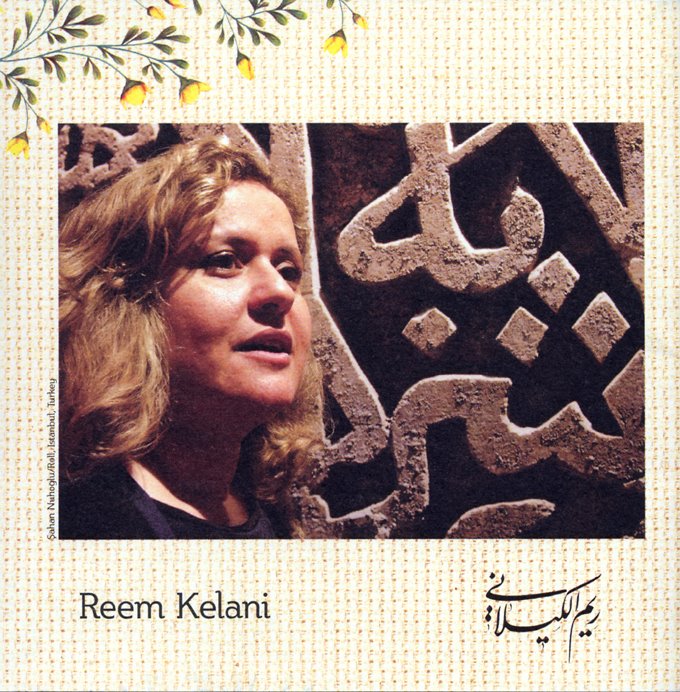
Palestinian singer Reem Kelani opens the Ramadan Nights season of concerts in London

The Ramadan Nights concert given at the London venue LSO St Luke’s by the Palestinian singer and musician Reem Kelani and her band on Thursday night was in effect a tribute to two great Arab artists who happen to share a surname: the Egyptian composer Sayyid Darwish (1892-1923), and the Palestinian poet Mahmoud Darwish who died on August 9.

The concert was the opening event of the Barbican Centre’s fourth annual Ramadan Nights season of concerts by outstanding Muslim singers and musicians from Britain and abroad. Kelani is a long-time resident of the capital, and tickets to her concert had sold out well in advance.

The event began in stunning style with Kelani singing unaccompanied her arrangement of Sayyid Darwish’s “Birth of the Chosen Prophet”. Her pure voice, subtly ornamented, took wing with this devotional song and soared in the spacious yet intimate hall of the 18th century former church designed by Nicholas Hawksmoor.

Then came the rousing traditional Palestinian wedding song “Hawwilouna”, from the coastal city of Akka. The audience joined with gusto in the syncopated clapping by Kelani and the musicians. There was laughter when Kelani observed that the song “tells the family of the groom if you treat our daughter nicely in marriage we’ll make you ruler of all the Arab tribes, but if you don’t you’ll be cleaning after our animals and sheep.”

Kelani dedicated the concert to Mahmoud Darwish, and among the songs she performed was her setting of his 1967 poem “Mawwaal – Variations on Loss”. The opening lines read: “I lost a beautiful dream / I lost the lilies’ sting / My night has been long / stretched over the garden walls / But I have not lost the way.”

The song began with drummer Patrick Illingworth setting a somber beat before the Anglo-Bengali pianist Zoe Rahman came in with a captivating hymn-like succession of chords. Saxophone playing by Ian East and by Zoe’s brother Idris Rahman gave the Mawwaal a soulful sound. Kelani’s powerfully moving rendering of the song was concluded by a skilful tabla solo from the Iranian percussionist Fariborz Kiani.

“Mawwaal – Variations on Loss” and several other numbers performed during the concert came from Kelani’s 2006 debut CD “Sprinting Gazelle: Palestinian songs from the Motherland and the Diaspora”. She is now working on her second CD, devoted to the music of Sayyid Darwish [pictured], “considered to be the godfather of contemporary Arab music.”

Half the 12 songs performed during the concert were Kelani’s arrangements of compositions by Sayyid Darwish to lyrics by various authors. Kelani described Darwish as a “working class hero” who wrote anthems for professions such as water sellers, sailors, fortune tellers and builders.

She said: “He was a tortured soul and I relate a lot to his suffering. He was torn between his faith and his music, and [this is] something that many practicing Muslim artists, especially if they are women, go through. So Darwish’s suffering was very much collective, and he remained with that turmoil most of his life, and the third dimension that came out of that suffering was his beautiful music.”
“The Porters’ Anthem”, with lyrics by Badi’ Khairi (1893-1966), says “buckle up your belt and carry the heavy load because as an Egyptian you’re proud enough to work hard instead of stretching your hand asking for money.” It includes the porters’ cries of “hina hina” that Darwish used to hear in the markets of Alexandria.

Kelani’s performances always include the unexpected, even for those who know her music well, and one surprise in this concert was her first-ever public performance on the tanbour lyre. She accompanied herself as she sang a Sayyid Darwish song about Nubians, which she has entitled “Ode to the Downtrodden

Kelani was born in the northern English city of Manchester, to a medical doctor father from the village of Ya’bad near Jenin and a mother from Nazareth, and grew up in Kuwait. It was in Kuwait that she first heard Sudanese music and got to know the music of the famous Nubian Sudanese singer, songwriter and tanbour player Mohammed Wardi.

The concert was the occasion for Kelani’s first public airing of “Ode to the Downtrodden” (originally entitled “Ashinger Damolina”), and it went down well with the audience. It had a distinctly African feel, particularly through her playing of the tanboura. Kelani gave the audience an idea of the stereotyped way in which Nubians have tended to be viewed in Egypt. She worked with a Nubian linguistics professor visiting Britain to try to ensure that her translations of Nubian words were correct and that she was not treading on sensitivities. She dedicated the song to the Nubian villages that were submerged as a result of the building of the Aswan dam.

Kelani performed several songs from the Palestinian repertoire for which she is best known. The lyrics of the traditional “Galilean Lullaby” were collected by the Palestinian poet Tawfiq Zayyad. Kelani has composed her own music to the lyrics, which begin: “Our loved ones have left home, / Gone away without saying goodbye”.

She learned a song she calls “A Baker’s Dozen” from a group of women in the Ain al-Helweh Palestinian refugee camp in southern Lebanon. She found the song had a 13-beat cycle, and when she was recording “Sprinting Gazelle” her production engineer Steve Lowe, who is from Bolton in northern England, suggested the title “A Baker’s Dozen”. The original Arabic title is “Habl el-Ghiwa” or “The Pull of Seduction”.

The striking introduction to “A Baker’s Dozen” was played on the double bass by Pete Billington with Arabic inflections that gave an effect almost like that of an oud. Kelani said the song expresses both the tragedy and love of life, and she got the audience to come in with cries of “Awf!” at appropriate moments. The effect of Kelani’s vocal improvisations interwoven with the excellent tight playing of her band was very jazzy, and yet at the same time utterly Arab.

As an encore Kelani and her musicians performed the Sayyid Darwish “I am Egyptian”, segueing into one of his most famous songs “Zourouni!” (“Visit Me!”). At the end of the concert members of the audience were invited to partake of Ramadan dates and almonds.

The concert was an exhilarating opening to the Ramadan Nights season of four main concerts, and several smaller Freestage and Clubstage events. The other concerts feature the Azeri singer and daf player Alim Qasimov and his daughter Fargana, sharing the bill with the Kronos Quartet; the legendary Iranian-Kurdish Kamkar family - seven brothers and one sister –appearing on the same program as Turkish ney player Kudsi Erguner and his group; and the Mali musician Bassekou Kouyaté with his Ngoni ba group, and the Mali Tuareg group Tartit.

Susannah Tarbush

Saturday, June 30, 2007

reem kelani and houria niati sing at leighton house

It is difficult to think of a more fitting venue for a festival of Muslim Cultures in London than Leighton House Museum near Holland Park in the west of the city. Leighton House was designed by the architect George Aitchison in the 19th century for one of the greatest-ever British lovers of Arab visual arts - the painter Frederic, Lord Leighton (1839-1896). The building is especially famed for the exquisitely-decorated Arab Hall (pictured) with its domed ceiling, marble-clad walls, mosaic floor, columns, fountain and more than 1,000 decorative tiles, most of them brought from Damascus.

The one-month festival was held at Leighton House throughout June. It started with a full-day conference on the theme Islam Today: Rich Past, Progressive Future. The topics included Islamic Art and Architecture; Science, Philosophy and Architecture in the Islamic Tradition; Educating for Inclusive Citizenship, and Islam Today. Among the speakers were Professor Robert Hillenbrand, Dr Nader El-Bizri, Dr Dina Kiwan and Professor Mona Siddiqui. Another major event during the festival was an afternoon on Iraqi Art Today addressed by two leading Iraqi artists, Baghdad-based Hana Mal Allah and Rashad Salim who lives in London.

For those with an interest in Arab music, the Afternoon of Middle Eastern Music was a particularly memorable part of the festival. The afternoon featured two London-based women singers from different parts of the Arab world. Houria Niati was born in Algeria, while Palestinian Reem Kelani was born in Manchester, England, to a mother from Nazareth and a father from the village of Ya’bad near Jenin, and grew up in Kuwait.

The singers performed in the first floor music room which has a gilt dome over the performance stage. The room is an intimate space that was Leighton’s studio, and where he held his famed musical evenings. The terracotta-colored walls are hung with paintings by Leighton himself and by contemporaries from his artistic circle which included Edward Burne-Jones, John Everett Millais, George Frederick Watts and Sir Lawrence Alma-Tadema. A plaster cast of the Parthenon frieze runs along the upper section of one wall.

In Niati’s recital of Arab-Andalusian songs she was accompanied by the Spanish guitarist Miguel Moreno, who has studied under the legendary flamenco guitarists Geraldo Nunez and Eduardo Rebollar. Niati and Moreno often perform as a duo, under the name Habiboun. After the interval Kelani performed with the talented jazz pianist David Beebee whose inspiration lies in classical music, world music and modern jazz.

When Niati was growing up in Algeria her father was a music lover with a substantial collection of recordings of singers. “They were the top names of that time, but all have now passed away,” Niati said. “The women singers were like my heroines”. Niati trained in Arab-Andalusian singing in Algeria. She then studied art in London, at Croydon College of Art and Design and surprised her fellow students one day by breaking into an acapella (unaccompanied) rendering of a song from her native country.

Niati is now an installation artist, who combines painting, drawing and digital art, and her singing is an integral part of her art installations. She has exhibited her work in the US, Jordan, North Africa, the UAE, the UK and several other West European countries.

Niati’s repertoire is drawn from the compositions of singing, instrumentation and poetry known as nouba. Her music is indebted to the great ninth-century composer Ziryab (Arabic for ‘blackbird’) Ibn Nafi who was born in Iraq but forced into exile in Spain. The accomplished guitar playing of Moreno blended effectively with Niaiti’s sweet, expressive voice in the fusion of Arab-Andalusian and Spanish music. Niati explained to the audience that Arab-Andalusian music travelled to Algeria with the exile of Muslims and Jews who fled southern Spain during the inquisition.

Reem Kelani’s CD “Sprinting Gazelle” was released in early 2006 to much critical acclaim. The CD comprised traditional Palestinian songs and Kelani’s settings of works by Palestinians poets. In her recital she performed compositions from this CD as well as from her second CD which is dedicated to the work of the great Egyptian musician Sheikh Sayed Darwish of Alexandria. He died in 1923 at the age of only 31.

Kelani began her recital in a whirlwind of clapping, yodeling and foot stamping as she performed a wedding song from the city of Acre. The audience was amused by her comment: “The family of the bridge tells the groom’s family that because you accepted our daughter in marriage, we are going to make you ruler of all Arab tribes. Mind you, if you had rejected her we would have made you clean up after our cattle.”

After this boisterous beginning, David Beebee jangled cow bells from the Khorasan region of Iran in the gentle introduction to a Galilean song, a setting by Kelani of a work by the late Palestinian poet and politician Tawfiq Zayyad. The song tells of the singer’s loved ones moving away. “My heart has never stopped shedding tears for them…if you see the cameleer of the caravan stop him to tell my loved ones in their deserted homes that hardship shall never last for ever.” The song was juxtaposed with a contemporary lullaby and with a 19th century lullaby in which Muslim women in Bethlehem ask the Virgin Mary to protect their babies while they are sleeping.

Niati had performed muwashahat from North Africa in her recital, and Kelani’s recital included a muwashaha from Egypt. Kelani observed that Western music abandoned quarter-tones but that they remain in Arab music. In her arrangement for piano of the muwashaha, “I’d like to pay tribute to the meeting point when quarter tones were still not dropped - and hopefully we’ll put the notion of a clash of civilizations into the dustbin, at least for this afternoon.”

Kelani then moved on to a song by Sheikh Sayed Darwish in a 17/8 rhythmic pattern known in Farsi as “khosh rank”, meaning “beautiful color.” The intricate dynamic rhythm carried the listener along with its syncopations and Spanish-type inflections. She also sang the Darwish composition “The Porters’ Anthem”. Darwish studied Italian opera, and also wrote a song for almost every manual profession in Egypt at the time. In his porters’ anthem he incorporates the porters’ cries of “Hela hela” that he would hear in his area of Alexandria.

Kelani’s next number was a love song she described as “’mellow,’ a sanitized way of saying it’s a wrist-slasher”. It was her setting of the qasida “Yafa!” written by Yafa (Jaffa)-born Mahmoud Salim Al-Hout in 1948 when he lost all his manuscripts while fleeing the city. He compares Yafa to a beautiful woman. David Beebee seemed to utilize the entire length of the piano keyboard in his solo introduction to the piece, which was tinged with sorrow and captured the depth and movement of the sea.

Kelani compared the qasida to Niati’s style of singing which is called in Spanish “canta hondo”, meaning “deep singing.” She observed that the Spanish poet and dramatist Federico Garcia Lorca had written much about canta hondo and had paid tribute to the poets of Seville and Granada at a time when there was not much recognition in Spain of the influence of Arab music and Andalusian culture. Kelani said that Lorca had influenced many Palestinian poets after 1948 and that Samih Al-Qassem and Tawfiq Zayyad had dedicated poems to him.

Niati joined Kelani on stage for a rousing rendering of one of Darwish’s most famous songs “Zourouni kull sana marra” or “Visit me once a year”. As an encore Kelani performed Palestinian poet Salma Khadra Jayyusi’s translation into English of Love Poem by Samih Qassim.

Susannah Tarbush
Saudi Gazette June 25 2007

Friday, January 12, 2007

first biography of margaret fountaine

'Wild and Fearless': the first biography of Margaret Fountaine

When the English traveller and butterfly collector Margaret Fountaine visited Damascus for the first time in 1901, a young Syrian man, Khalil Neimy, was her guide and translator. Khalil found good butterfly hunting grounds for Margaret and she was thrilled to catch Syrian species of butterfly she had never seen before.

Margaret then employed the young man on a weekly wage to accompany her to Baalbek to look for butterflies. At the time, Margaret was 39 years old and still a virgin, while Khalil, at 24, was 15 years her junior. Yet despite the differences in their age and backgrounds, Khalil was soon pressuring Margaret with his charm and amorous intentions. While they were visiting the ruins of Baalbek he asked her to marry him and she agreed to become Mrs Neimy.

Khalil was Greek Orthodox, so at least he was a Christian like Margaret, but she soon realised that he had traditional views of marriage. As she refused to think of becoming a Turkish subject, they agreed they would live in America after marriage.

She then hired him for a trek on horseback to Jerusalem. In their seven-week trip through Palestine they passed through Nazareth, and went across the plain of Jenin to Nablus and Jerusalem and then travelled to the coast and went to Beirut by steamer.

These were the beginnings of a loving relationship that would last 27 turbulent years until Khalil’s death in 1928. The couple’s many journeys to collect butterflies took them to places including Algeria, the Caribbean, Central America, the Far East, Turkey, India and the USA. They also spent a disastrous period of nearly three years in Australia trying to farm in the rainforest of Queensland.

Sometimes they travelled as “brother and sister” to enable them to share a room, sometimes as “cousins”. He was known as Karl, and then in her later diaries she always called him Charles.

But despite his marriage proposal early in their friendship, the two would never marry. Margaret received a major blow after their first trip together when she discovered that he was already married to a wife in Damascus.

Over the years Khalil would assure Margaret that he was aiming to get divorced and marry her, but it was not until the mid-1920s that he wrote to her from Damascus and said his uncle, Bishop Neimy, had dissolved his marriage and thought English ladies made very good wives. Only after Khalil’s death did Margaret realise the extent to which he had deceived her and led a double life throughout their relationship.

Although Khalil deceived Margaret about his life in Damascus, it is clear from “Wild and Fearless” that he was very helpful to Margaret in her travels around the world and in her work with butterflies. When they were both stricken with malaria in Algeria and she became extremely ill, she said his devoted care had saved her life. In the international world of entomology [ie the scientific study of insects] Khalil became accepted as her companion on her trips, and she always referred to him as “Bersa” in the papers she wrote for entomological journals.

The extraordinary story of the love affair of Margaret and Khalil, is told by the British travel writer Natascha Scott-Stokes in her biography “Wild and Fearless: The Life of Margaret Fountaine”, published recently in London by publisher Peter Owen.

The book is the first biography of a remarkably adventurous, courageous and gifted woman who travelled the world collecting and breeding butterflies and making important scientific discoveries about them, while at the same time having a complicated emotional life.

Although Margaret wrote a detailed account of her life in her diaries, she stipulated in a letter written in 1939 that the box of her 12 leather-bound diaries, kept in Norwich Castle Museum, should not be opened until 1978. This would be 100 years after she started writing them at the age of 15.

After the diaries were opened in 1978, two edited volumes were published, both edited by WF Cater: “Love Among the Butterflies” (1980) and “Butterflies and Late Loves” (1986).

Scott-Stokes is like Fountaine an exceptional solo woman traveller, and she has an enthusiasm for, and sympathy with, the subject of her biography. Scott-Stokes was the first woman to travel alone from the river Amazon’s source high in the Peruvian Andes to the Atlantic Ocean. She wrote about this in her first travel book, “An Amazon and a Donkey” (1991).

Scott-Stokes tells Margaret’s story with spirit and liveliness. She says that when she started reading Margaret’s diaries “I was absolutely fascinated by her experiences and how many similarities there were in our experience, even though there was a hundred years’ difference.” One similarity is the problems the solo woman traveller encounters with men.

The Fountaine family into which Margaret was born in 1862 was one of the oldest families in the county of Norfolk in eastern England. Margaret was a woman of many talents, and she could have been an artist or a singer. The illustrations of the various stages in the life cycle of a butterfly from Margaret’s sketchbook, which are reproduced in Scott-Stokes’ biography, show her gifts as an artist.

Margaret’s twenties were dominated by a hopeless love for a chorister at Norwich Cathedral, Septimus Hewson. He would according to Scott-Stokes “leave a wound in her heart and soul from which she would never really recover.”

When Margaret was 27, she and her sisters inherited a large sum of money from her father’s brother. In his will the uncle said that the money should be held in trust, so as to give each girl an income for life. Margaret was now able to leave Norwich and travel. As Scott-Stokes puts it, the money gave her a unique opportunity to escape the limits society had set.

She went to Ireland in pursuit of Septimus Hewson, who had fled there from Norwich after running up debts. She thought she had become engaged to him, but it ended badly.

On her travels Margaret had many male admirers, as she describes in her diaries. But although she enjoyed flirting and playing games, she never fully succumbed to the attentions of men.

Her travels took her first to countries in Western Europe, and in Switzerland she rediscovered the delights of butterfly collecting. She wrote that it was then that “the love of natural history was strongly implanted in me.”

After she spent three days visiting the great butterfly collector Henry John Elwes in 1895 that she resolved to build up a serious butterfly collection. Her first major butterfly-collecting trip was to Sicily.

Scott-Stokes writes that by the time Margaret was 35 in 1897, she entered the entomological world “fully formed, and in perfect condition, just like one of her butterflies.” Her first article, on Sicilian butterflies, was published in the journal The Entomologist and the Natural History Museum in London added 44 of her butterfly specimens to its collections.

Queen Victoria died in 1901 after a 64-year reign and this marked the end of an era also for Margaret. Scott-Stokes writes: “From now on Margaret would live most of her life far away from England, spending long periods of time in Africa, Australia, Asia and the Americas. It was going to be a time of great personal and professional success, and though Margaret’s path was never straight, even she would have been astonished to hear what fate had in store for her.”

Margaret was very keen to visit the East, particularly the Holy Lands, and she travelled by sea via Marseilles and Alexandria to Beirut, where she spent 10 days at the Hotel Allemand. She also visited the mountains, where she was distressed by the situation of women. In Damascus she was booked into the Orient Hotel, whose proprietors were brothers Georges and Elias Kaouam. They came to collect her by a horse-drawn carriage with their guide and interpreter Khalil Neimy, who had been educated by American missionaries and had then spent four years living in Wisconsin.

Even though Margaret discovered, after her trip to Palestine with him, that Khalil was married, she asked him to be her guide on her first visit to Asia Minor (Turkey). He wrote to say he would tell her his side of the story about his marriage, and he even offered to serve her all his life for no wages at all, just to be close to her.

It was during the trip to Asia Minor that, at the age of 41, Margaret finally lost her virginity to Khalil. He explained his marriage by saying he his father had insisted that he return home from America to marry a young girl of 15, but she had turned out to be the daughter of a prostitute. He claimed his wife had then turned to prostitution and had abandoned their first baby daughter who then died. He told Margaret that when he proposed to her in the ruins of Baalbek he had been sure of getting a divorce, which was why he had not mentioned his marriage, but that the Greek Orthodox Bishop of Damascus had now refused to give him one.

Scott-Stokes notes that Khalil became Margaret’s husband in all but name. At the Second International Congress of Entomology held in Oxford in 1912 Margaret took Khalil with her, for he was her partner in her work and she wanted him to be recognised. She was delighted when he was welcomed by everyone. But then the sister of one of her best entomological friends told Margaret that everybody had been talking about them and wanted to know if she was married to “Bersa”.

Margaret would never know all the details of Khalil’s marriage and family circumstances in Damascus, but she had a terrible shock after his death when she received letters from his mother, sister and a friend Margaret had never heard of. The sister claimed that Khalil’s wife had been very cruel, abandoning him while he was ill and taking their five children with her.

Margaret had believed Khalil when he told her he had finally got a divorce. Nor had she had any idea of the existence of these five children, the oldest of whom was supposedly a son of 22. The sister, Poling, told Margaret that Khalil had promised that Margaret would continue supporting her and their mother. Margaret then she started to get letters from his wife asking for money. Margaret ignored all these requests.

After Khalil’s death, Margaret remained loyal to his memory and recognised his contribution to her work. Her huge collection of 22,000 butterfly specimens in Norwich Castle Museum is called the Fountaine-Neimy Collection. After Khalil died Margaret travelled in the Amazon, and found two new butterflies. She allowed Norman Riley of the Natural History Museum in London to name the butterflies after Khalil, and wrote in a letter to Riley: “Poor Mr Neimy, how pleased he would have been.”


Susannah Tarbush
Published in Arabic translation in Al Hayat 9 January 2007


[the photographs of Margaret in 1886 aged 24 (top) and of Khalil at the same age (the latter photo is shown pasted into Margaret's diary) are among the many images reproduced in 'Wild and Fearless' courtesy of Norwich Castle Museum]


Saturday, August 12, 2006

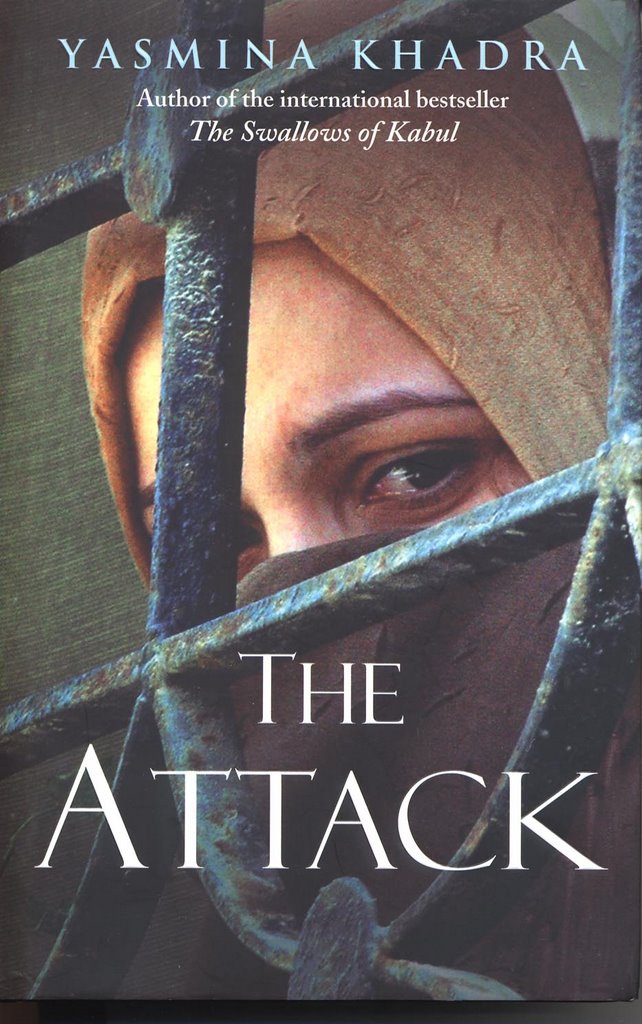
yasmina khadra's novel 'the attack'


There are some well-known examples of women writing under male pseudonyms. The 19th century English novelist Mary Anne (Marion) Evans wrote under the name George Eliot, so as to be taken seriously as a novelist. Some women fiction writers today prefer to use their initials rather than their full first name to try to avoid possible discrimination against women writers.

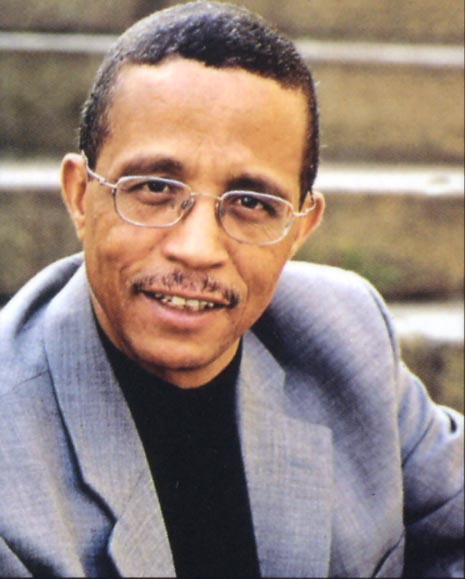
For a male writer to use a female pseudonym is rarer. The case of the Algerian writer who writes under the name Yasmina Khadra is particularly unusual. Khadra wrote police thrillers in Algeria, and has also written a string of political novels. Eventually the author was revealed to be a former Algerian army officer Mohammed Moulessehoul (pictured above left), writing under the name of his wife.

Moulessehoul writes in French, and five of his novels have been translated into English. He moved to live in France in 2001 and it was then that he “came out” and disclosed Khadra’s real identity. For some, his background casts a permanent shadow over his writing and his agenda. There have been accusations that in his novels chronicling the war of the radicals within Algeria, he documents the atrocities perpetrated by radicals while ignoring those allegedly carried out by the Algerian army.

In 2002 the International Parliament of Writers withdrew the protection it had accorded Moulessehoul and his family, after he defended Algeria’s army against accusations that it massacred civilians.

Khadra’s novels have done well, particularly “The Swallows of Kabul”, written from the point of view of an Afghan woman suffering under the Taleban. The novel was shortlisted for the IMPAC prize.

Khadra’s latest book, “The Attack”, won the Prix des Libraires in France, and was shortlisted for the Goncourt, Femina and Renaudot prizes. In Britain, where it was published recently by William Heinemann in English translation, it has been widely, and on the whole favourably, reviewed.

In “The Attack”, Khadra continues to explore the relationship between politics, violence and religion. The first-person narrator Amin Jaafari is an Arab surgeon practising in a Jewish hospital in Israel. Despite his Bedouin origins, he has succeeded in entering “the brotherhood of the highly educated elite”.

Jaafari has been married for 10 years to Sihem, in what he considers a happy union. He is devastated when she dies in a suicide bombing in a Tel Aviv restaurant which kills 19 people including 11 schoolchildren. His grief turns to disbelief when he finds she was the suicide bomber.

Jaafari sets out to discover why Sihem did what she did, and to uncover the lies she had told him. She had told him she was going to stay at her grandmother’s farm near Nazareth, but she was actually driven to Bethlehem before returning to Tel Aviv to carry out the bombing.
Although Khadra’s writing has power and clarity, Sihem remains an obscure figure and her motivation is not wholly convincing. Her husband’s investigations take him into perilous confrontations with certain family members and radicals in Bethlehem and Jenin. At the same time he is forced to review his position as an Arab who has done well within the Israeli medial establishment. One of the men he meets in the West Bank describes him as the “serviceable Arab par excellence” Driven to the edge of madness, Jaafari finds he is suspected by both Israelis and Palestinians.

Susannah Tarbush
Saudi Gazette August 8 2006

Tuesday, May 02, 2006

al-hayat article on reem kelani


The debut CD of Palestinian singer Reem Kelani - "Sprinting Gazelle: Palestinian Songs from the Motherland and the Diaspora" - is a major new contribution from this remarkable singer, musical researcher and broadcaster towards reviving and spreading Palestinian culture through music.

In the weeks since "Sprinting Gazelle" was released in the UK it has been acclaimed by critics and journalists and has received excellent reviews in nearly every serious British newspaper, as well as in music magazines and other publications. Many critics have praised highly the quality, range and emotional depth of Kelani's voice.

Kelani told Al-Hayat in an interview that she is "overwhelmed" by the avalanche of positive media coverage the CD has enjoyed.

The London magazine Time Out not only gave the CD a very favourable review, but also put it at the top of its list of the top six new albums. The CD has been featured on radio stations in countries including Britain, Germany, Australia and the US.

The widespread praise of the CD from critics is all the more remarkable given the fact that Kelani made it independently, with the small Fuse label as a "cover label". She lacks the strong production, marketing and promotion muscle of a major recording company. But through remaining independent she has been free of pressures to make musical and cultural compromises.

The preparation and recording of the CD took Kelani and her husband Chris Somes-Charlton two years of intensive work. They put most of their savings into the project and received further financing from family, friends and supporters. They have not even organised a concert to launch the CD "because we could not afford the logistics, the time or the money." Now they are busy marketing the CD through Kelani's website and in record stores through the distribution company Proper Music.

The CD's ten songs take the listener on a 74-minute odyssey through the Palestinian experience, from the nineteenth century until today. The CD comes with a highly informative and attractive 32-page booklet which contains the Arabic words to the songs, and translations into English poetry.

Some of the songs are Reem's arrangements of traditional songs. Others are Kelani's compositions for poems by such important Palestinian poets as Mahmoud Darwish, Rashid Husain, Salma Khadra Jayyusi and Mahmoud Salim al-Hout.

A number of the songs are sombre in mood, including Kelani's music for the Mahmoud Darwish poem "Mawwal: Variations on Loss". Kelani wrote the music for this song in 1992 for a BBC TV documentary on the tenth anniversary of the massacre in the refugee camps of Sabra and Shatila in Beirut.
She dedicates "Yearning" by Rashid Husain to the late French singer Barbara "whose music taught me to turn anger into inner peace."

Other songs are more upbeat, such as the spirited traditional song "Habl el-Ghiwa", which is performed with a very jazzy, danceable feel.

The CD has spiritual depth and rewards repeated listening. Asked about the narrative thread running through the CD, Kelani says that after choosing the songs "I realised that they are all either by poets that are pre-48 Palestine or areas that are pre-48 Palestine." She describes the narrative as "totally non-compromising," as shown by a song like "Qasidah of Return", with words by Salma Khadra Jayyusi, which has a mood of "total defiance".

The final song "Il-Hamdillah" is a medley of two songs, "Il-Hamdillah and "Intu Banatu, Ihna Banana". These two songs show the "somoud" of the Palestinians and celebrate their collective identity, "something that the last 58 years couldn't impoverish, quite the contrary, they enriched it."

Kelani says that from women in refugee camps she got the message "that I now use in my life as a Diaspora Palestinian - personally, collectively and artistically - that we are not victims. You are not a victim even when you are in pain, even if someone has done you wrong. You get on with life, you acknowledge your pain and you're strong and you celebrate and you sing and dance. She adds: "This is resistance in its purest form."

Reem's core group of musicians consists of the award-winning jazz pianist Zoe Rahman; Zoe's brother Idris Rahman on tenor saxophone, clarinet and bass clarinet; Oli Hayhurst on double bass; Patrick Illingworth on drums; the Egyptian violinist Samy Bishai, and the Iranian percussionist Fariborz Kiani.

The first song "As Nazarene Women Crossed the Meadow" is a dramatic start to the CD, featuring Kelani singing to no accompaniment but that of a vocal drone. According to local Nazarene folklore, women sang this song when they said goodbye to their men who were leaving to serve in the Ottoman Army. The arrangement of the song " "was principally inspired by a visit I paid to St Gabriel Geek Orthodox Church in Nazareth during one of my childhood summers there. I was mesmerised by the Eastern Christian chanting that I heard which had such striking similarities with Muslim religious chanting. My rendition pays tribute to the historically ecumenical tradition of Nazareth and is an attempt to keep this tradition going in increasingly difficult times."
The song is followed by another furaaqiyaat (song of parting), "The Cameleer Tormented my Heart."

Kelani sees no contradiction in being a jazz singer who is a Palestinian. "Both disciplines are based on improvisation, both disciplines come from suffering and from emancipation."

The CD works on two levels. Kelani's voice with its extraordinary range and timbre makes a direct emotional impact. Even for those listeners who do not understand the Arabic of the words there is no mistaking the emotions that are being expressed - range, tenderness, joy, sorrow, defiance. But beyond this, the accompanying booklet helps non-Arab listeners to get further inside the experience of the songs through reading the lyrics in English and through Reem's detailed information on each song. The booklet also contains a glossary of Arabic musical and cultural terms.

Kelani carried out the translations of the songs into English with her husband, and with Salma Khadra Jayyusi as the literary consultant. The poetry consultant to the project, well-known British poet Alan Brownjohn, made suggestions.

The cover illustration of the CD and of the booklet portrays a gazelle on a background of canvas which represents the Palestinian costume for embroidery, and at the same time the earth and sense of belonging.
The delicate plant with yellow flowers that adorns the cover and inside pages of the booklet is feijan - a herb found in the area of Nazareth from where Kelani's mother's family comes.

The value of the booklet providing the translated lyrics and the background to the songs was illustrated recently when a BBC Radio 3 programme featured "Sprinting Gazelle" and played several songs from it.
Thepresenter explained that the words of the song "Yafa!" were written by the Palestinian poet, mythologist and translator Mahmoud Salim al-Hout (1917-88) after he lost all his manuscripts while fleeing Jaffa.
In this evocative song of loss and pain Kelani is accompanied only by pianist Zoe Rahman playing ominous deep rumbles overlain with agitation. The effect is that of a soulful meditation.

Kelani was born in Manchester, northern England, to doctor Yusuf Kelani, from the village of Ya'bad near Jenin, and Yusra Sharif Ali Zu'bi from Nazareth. Reem dedicates the CD to her mother, who died in Amman in 2004, and "to all the 'Big Mamas' who taught me to sing and to belong." In her concerts Kelani often pays tribute to the "Big Mamas", most particularly the old ladies in Palestinian refugee camps from whom she has collected songs.

Kelani grew up in Kuwait where she was surrounded by many different kinds of music. The songs her father sang kindled the devotion to jazz that has been with Kelani ever since. At the age of 13 she fell in love with Palestinian music when she went to a family wedding in the village of Nein near Galilee and saw women singing and dancing.

A marine biologist by university education, she first came to London in 1989 on a British Council scholarship to do an MSc in aquatic resource management at King's College. But before long she decided to pursue her ambition of a musical career.

Kelani has attracted a large and growing following of fans who appreciate her unique blend of Palestinian music and jazz, her superb voice, her charismatic and warm stage presence and her ability to strike up a rapport with widely differing audiences. She has performed at concerts in the UK, US, Canada, Middle East and Europe, often at events to raise funds for Palestinian charities.

Her broadcasting work has included presenting two series of BBC Radio Four's 'Distant Chords' in which she interviewed musicians in exile in Britain from countries including Yemen, Afghanistan, Armenia and Portugal. Kelani has also been involved in educational work, starting with music workshops at the British Museum. Last autumn she was the music consultant for the play "Iman: Walled In, Walled Out" performed by children at the Miskin Theatre in Dartford.

Kelani has found it difficult to find suitable musicians in London, and it took a long time to assemble her band. None of the musicians on her CD is Palestinian. She says: "Playing with people of different nationalities was very challenging because they didn't know anything about the music."

Another challenge was finding a recording label. The political folk singer and song writer Leon Rosselson offered his own Fuse Records label as the "cover label" of the CD.

Kelani says that many musicians based in the Middle East assume that musicians based in the UK or America are lucky. "They don't realise that the 'world music' circles here actively ignore the local talent around them." A foreign musician like her based in the UK tends to be neglected in favour of more "exotic" musicians brought from abroad. "Even if I were based in Paris I would have been more exotic." She considers that "in a way, being in the UK has hindered the launching of my career."

It was radio stations in other countries - America, Australia and Germany -that started playing the CD long before the BBC did, despite the fact that Reem regularly works for the BBC.

The release of the CD comes at a particularly difficult time for the Palestinian people, a time when culture has a more important role to play than ever in helping to convey the Palestinian identity and experience. As Kelani says: "unless people listen to, and acknowledge, the Palestinian narrative in its own right, no peace treaty, peace accord or peace settlement will work. The Palestinian narrative has always been robbed of its independence and authenticity."


Susannah Tarbush
Original of article published in Arabic translation in Al-Hayat newspaper, May 2 2006

Friday, December 06, 2013

'Keep Your Eye on the Wall: Palestinian Landscapes' launched in London

 
report by Susannah Tarbush, London
 
The book Keep Your Eye on the Wall: Palestinian Landscapes, published by Saqi Books in London, brings together the work of seven award-winning artist-photographers and four writers in response to the Wall under construction through the West Bank. It was recently launched in London with a discussion event at the Mosaic Rooms.
 
The panel at the launch comprised the book’s two editors - Paris-based journalist and editor Olivia Snaije and London-based editor Mitchell Albert - plus two contributors to the book: Palestinian artist Steve Sabella and London-based writer, editor and curator Malu Halasa.


L to R: Olivia Snaije, Malu Halasa, Steve Sabella and Mitchell Albert
 

Mitchell Albert gave a slide show of images and artists’ statements from the book and Malu Halasa read extracts from her essay in the book, Oppressive Beauty: Against Aestheticising the Wall. Steve Sabella spoke about his work and life as a Palestinian artist, and about his works in the book. There was then a Q and A session with the audience.   


The beautifully-bound 192-page book is itself a work of art. Its concertina format somehow resonates with its theme of the Wall. It is accompanied by an exhibition of work from the book, shown so far in Arles and Paris.

The Ramallah-based Palestinian lawyer, human rights activist and award-winning author Raja Shehadeh writes in his foreword to Keep Your Eye on the Wall: "When I opened the dossier prepared by the editors of this book in advance of publication, I found the photographs shockingly beautiful and evocative - by far the best I have seen of the Separation Barrier.”

 
slide show at the launch of Keep Your Eye on the Wall

The wall is referred to variously as the "security fence" by Israel, the "Apartheid Wall" by Palestinians, and the "Separation Barrier" or "Separation Wall" by almost everyone else. It is "one of the world's most emotionally charged and controversial constructions of the past ten years," says the book’s introduction. Construction started in 2002. When completed the Wall is expected to extend for 709 kilometres through the West Bank. This is more than twice the length of the Green Line, Israel's recognised border with the West Bank. A map shows the intricate twists and turns of the Wall's course.

“A series of concrete slabs, barbed-wire ‘buffer zones’, trenches, electrified fences, watchtowers, thermal-imaging video cameras, sniper towers, military checkpoints and roads for patrol vehicles have dismembered the cities of the West Bank and segregated them from occupied East Jerusalem,” says the introduction.“Symbolically, the wall in Palestine is this century’s Berlin Wall, albeit four times as long as that hated Cold War icon and more than twice as high.”


Olivia Snaije (L) and Malu Halasa

The Wall has attracted the interest of various Palestinian and foreign artists, such as Banksy, who have done art works and graffiti on its surface. These works are highlighted in for example the book Against the Wall: The Art of Resistance in Palestine.

Keep Your Eye on the Wall has a different approach. It is not so much a book of art done on the wall itself as an expression of the artistic response of Palestinians and some others to the Wall. Six of its seven artist-photographers are Palestinian. Besides Steve Sabella they are Noel Jabbour, Raed Bawayah, Taysir Batniji, Raeda Saadeh and Rula Halawani. The seventh photographer is the German Kai Wiedenhöfer for whom photographing separation walls has been a major preoccupation since the fall of the Berlin Wall in 1989.

Among the four writers featured in the book is the acclaimed Palestinian author Adania Shibli. Her contribution takes the form of a powerful disquieting short story, The Fence. Born in Palestine in 1974, Shibli lives between Ramallah and Berlin. Two times winner of the Qattan Young Writers' Ware - Palestine, Shibli is the author of two published novels and many short stories as well as narrative and art essays. 

Raja Shehadeh was an ideal choice as writer of the foreword. He has an intimate relationship with the landscape of the West Bank. His books include Palestinian Walks: Notes on a Vanishing Landscape(2007) - winner of the Orwell Prize - and Occupation Diaries (2012).

In mid-November Shehadeh and Penny Johnson won the 2013 General Prize at the MEMO Palestine Book Awards as editors of Seeking Palestine: New Palestinian Writing on Exile and Home.


Shehadeh writes in his foreword that each of the photographs in Keep Your Eye on the Wall is "a personal statement by the artist of what the land means to him or her, and the impact and implication of the presence on it of the wall Israel is building."

Shehadeh writes movingly of what the wall means for him, and asks: "How could it have been, that a developed country like Israel could build such a monstrosity." He sees the wall as being built not for security reasons but more likely as a "play for grabbing more Palestinian land, and for the economic benefits that accrue to those contractors and producers of concrete, surveillance equipment, reams of barbed wire, etc involved in its construction. It has been, by far, the largest economic project Israel has ever undertaken."

There are various ways of resisting Israeli efforts to claim and land, whether through settlements or the wall. The aritst in Keep Your Eye on the Wall are doing it through their art, "expressing their feelings with great skill and beauty and echoing the feelings of much larger segments of the Palestinian population that have to survive and make do with life in a divided, disfigured land," writes Shehadeh.

The exhibition of Keep Your Eye on the Wall is curated by Masasam Curatorial Projects, with curators Monica Santos and Sandra Maunac. It has works by Taysir Batniji, Rula Halawani, Raeda Saadeh, Steve Sabella and Kai Wiedenhöfer. The exhibition was shown in Arles from 1 July to 22 September and in Paris from 12 September to 2 October.

It is due to be shown at the Empty Quarter Gallery in Dubai in Art Dubai 2014 and at the Contemporary Art Platform in Kuwait. Interest has been expressed by Goethe-Institut in Ramallah, and it is hoped the exhibition will be mounted in the USA at some point.

Rula Halawani will be exhibiting some of her photographs from the book at a collective show in Italy in 2014, and Sabella is also expected to have some pieces from Disturbia and Metamorphosis in a London show.

THE ARTIST PHOTOGRAPHERS

Noel Jabbour

 
The New Motif, 2012
© Noel Jabbour


We Are Not Enemies But Friends,  2012
© Noel Jabbour
 

Noel Jabbour was born in Nazareth in 1970 and studied photography and art in Jerusalem. She has exhibited in Europe, the Middle East and US and her work is in collections worldwide.
Her sequence of nine works in Keep Your Eye on the Wall is entitled Illusion.

Jabbour says in her artist's statement "you believe there is hope", given the reduction in the number of checkpoints and fewer soldiers on the roads between the big cities compared with previous stays in the West Bank. But "then you’re confronted with a bigger, higher barrier: the massive infrastructure of sophisticated control. You end up at the Wall. There is no escape from the ideological master plan behind it."

Raed Bawayah


from Toward the Sky series, 2012 
© Raed Bawayah 
 
from Toward the Sky series, 2012
© Raed Bawayah
 

Raed Bawayah was born in Qatana, Palestine, in 1971. He studied at the Naggar School of Photography in Musrara, Jerusalem. His work is in several collections. He lives and works in France and Palestine. In his compelling black-and-white portraits in his series Toward the Sky, Palestinian workers "climb toward the sky, landing on the Israeli side of the Wall." The Wall divides their village of Yamoun, next to Jenin, from Palestinian villages in the Galilee region of Israel. Thousands of Palestinians have moved to these villages to work. In his artist's statement Bawayah describes their grim lifestyle.

Kai Wiedenhöfer


Gaza Strip Border, Kibbutz Netiv Ha'Asara, Israel
© Kai Wiedenhöfer


©Kai Wiedenhöfer
 
Kai Wiedenhöfer was born in Germany in 1966 and studied photography and editorial design in Germany and Arabic in Damascus. He has won numerous awards. In 1988 he photographed the fall of the Berlin Wall, and believed it represented the end of walls as political instruments. "Yet, on the contrary, walls have had a big renaissance. Barriers have gone up in the US, Europe and the Middle East in the aftermath of political, economic, religious, and ethnic conflicts." When construction began on the Separation Barrier in occupied Palestine he grew concerned and he documented the process in 2003-2010 and published a book, Wall. His book Confrontier (2013) is about separation walls worldwide.
 
Taysir Batniji

from Untitled, Gaza 
© Taysir Batniji
 

Taysir Batniji was born in Gaza in 1966 and studied fine arts in Palestine in France. His work has been exhibited in Europe, the Middle East, Australia, the US and Brazil and is in several collections. In 2012 he was awarded the Abraaj Capital Art Prize. He lives and works in Palestine.

His series is Untitled (Gaza Walls) and he made it in 2001 during the first months of the second intifada. "As the days went by, the doors and walls of the city - which had already become bulletin boards since the First Intifada - now became veritable canvases for portraits of "martyrs", along with posters, slogans, and graffiti. The succession of faces on death notices were soon erased, worn away by time, covered over, or torn off deliberately. "This series reflects on a double disappearance: of those who gained "recognition" through their images on posters, and of the disappearance of the posters themselves.


Raeda Saadeh 

 
One Day, 2013
from Concrete Walls
©Raeda Saadeh
 
Raeda Saadeh was born in Umm al-Fahm in 1977 and studied fine arts in Jerusalem and New York. She has participated in shows in Europe, the Middle East and the US and her work is in various permanent collections. She lives and works in Jerusalem.
 
"The woman who recurs in my work lives in a state of occupation that begins with the political and ends with the psychosomatic," says Saadeh. "She is saner than she should be, both fragile and strong, fully awake and responsive, constantly on the move."
 
Steve Sabella


Disturbia
© Steve Sabella


 Disturbia
© Steve Sabella
 
Steve Sabella was born in Jerusalem in 1975 and studied photography and visual arts in Jerusalem, the US and the UK. He has exhibited internationally and his work is in collections including the British Museum and Mathaf: Arab Museum of Modern Art in Doha. A monograph of his work is being prepared in collaboration with the Akademie der Künste in Berlin, where he lives.
 
In his artist's statement in his Disturbia and Metamorphosis photographs in Keep Your Eye on the Wall, Sabella explains that his work in 2008-11 "focused on liberation from mental exile and the splintering of identity, and grew into Disturbia, an investigation of the physical body and the hidden 'scars of occupation'."
 
In Metamorphosis, Sabella highlights materials that connote restriction of movement: "Barbed wire, for instance, which unexpectedly evokes the stitching of a wound." On close inspection of what appears to be the Separation Barrier, "the viewer may notice concrete fragments that are beginning to dissolve. Metamorphosis emphasises precisely this opposition and transformation: a conflict between form and function, vision and perception, stagnation and transcendence."
 
Rula Halawani
 

 from Gates to Heaven, Jerusalem, 2012
©Rula Halawani
 
Born in Jerusalem in 1964, Rula Halawani studied photography in Canada and the UK. Her work has been exhibited in the Middle East, Europe and the US and is in several collections and the private Nadour Collection.  Halawani has received numerous awards, and founded the Photography Programme at Birzeit University, Palestine, where she teaches.
 
For Halawani the eight ancient main gates of Jerusalem's Old City were a familiar and beloved sight. But in 2002 Israel erected its Separation Barrier "and installed other kinds of gates, divorcing Palestinians from their families, homes and from Islamic and Christian holy sites." In making her Gates to Heaven She photographed these gates on the Israeli side of the Wall around Jerusalem and never saw them open.