Tuesday, May 30, 2006

saudi artists at british museum


The work of the two Saudi artists participating in the “Word into Art: Artists of the Modern Middle East” exhibition at the British Museum gives visitors some idea of the exciting creative work being produced by artists from Saudi Arabia.

Faisal Samra, born in Bahrain in 1956 to Saudi parents, is a world-renowned artist who has taken part in many international exhibitions.

Ahmed Mater al-Ziad is a relatively new artist, who was born in Tabuk in 1979 and combines his artistic pursuits with a career as a doctor. He studied medicine and surgery in Abha, and joined the Al-Miftaha Artists’ Village at the King Fahad Cultural Center in 1998. He founded Al-Miftaha cultural magazine in 2001 and has spearheaded various artistic initiatives.

Samra’s work in the exhibition, “Text-body”, is an 80-centimetre high sculptural shape of clay over wire mesh, on which oil, pigments, henna and gold leaf have been applied to produce letters on a weathered background.

The curator of the exhibition Venetia Porter says: “This wonderful piece by Faisal Samra is a very remarkable work. He’s covered it with individual letters and of course what’s interesting here is that this goes back to the magical tradition. In early magical texts and amulets you find individual letters written because they were much more powerful.”

In the exhibition catalogue Samra states: “In 1989 I burned the border between painting and sculpture by freeing the treated canvas from the frame and then I cut it to an organic shape and hang it from one side on the wall or in a space. This act enabled me to open a dialogue between the artwork and its context.”

In Ahmed Mater al-Ziad’s striking painting “X-ray”, the x-rayed human form is rendered in turquoise, while the dark border around it is marked with inscriptions and formulae.

In the catalogue Mater explains that the work “explores the confusion in the identity of mankind in the contemporary world. The x-ray, sitting on top of a deep, layered background of medical text and expressive paint, represents an objective view of the individual, chosen to provoke a familiar response.” He adds: “My approach as a practising doctor has been evidence-based and influenced by a direct experience of the world.”

Stephen Stapleton, founder of the Offscreen Education Programme and project coordinator for the British Museum’s artist-in-schools programme, says: “Ahmed Mater’s voice is unique and complex. His work in the exhibition features expressive layers of paint reminiscent of the abstract expressionists, as well as medical text and x-ray images from the hospital where he works as a doctor.”

Stapleton describes Mater as “an important new artist from the Arabian Peninsula, his work presenting both an objective and highly subjective view of the individual.”

An exhibition of Mater’s work opened at the Saudi Cultural Centre in London last week. During his trip to London he is also participating in collaborative workshops at the Royal Geographical Society and in schools.


Susannah Tarbush
Saudi Gazette, May 30 2006

Tuesday, May 23, 2006

word into art exhibition at british museum


left: 'Homage to Baghdad' by Dia al-Azzawi


The exhibition ‘Word Into Art: Artists of the Modern Middle East’, which opened at the British Museum last week, provides a wonderful opportunity to view the work of around 80 of the region’s most accomplished contemporary artists.

The exhibition, which runs until September 2, has been organised in partnership with Dubai Holding. This is the first time the British Museum has put on show the impressive collection of modern art from the Middle East it has built up over a quarter of a century.

The museum’s director Neil MacGregor says: “We wanted to show that the Middle East is in London, and not just as a temporary phenomenon. Many of the artists in this exhibition are partly resident in London, which has become over the past 30 or 40 years one of the cultural capitals of the Middle East. That is something we should take notice of and celebrate and put on display.”

MacGregor points out that the exhibition is to be made available in a “virtual form” so that it can be seen and studied in the Middle East by those who may be prevented (by for example by the all-too-prevalent visa problems) from viewing it in London.

The exhibition’s curator Venetia Porter describes it as “a tribute to the artists and to the extraordinary creativity that there is in the Middle East that people just don’t know about here. We’re hoping that by showing this work we’re going to be able to introduce people to what is a very vibrant tradition of modern art happening all over the region.”

She adds: “We would like people to come away from this exhibition realising that there is much more to the Middle East than what you read in newspapers or see on television screens.”

The strikingly-designed exhibition is arranged in four sections. The first, ‘Sacred Script’, illustrates the relationship between the Arabic script and Islam and the enduring vitality of the Islamic calligraphic tradition. The works in the second section, ‘Literature and Art’, include Iraqi artist Hassan Massoudy’s “Calligraphy” illustrating the poetry of al-Aqil.

The third section, ‘Deconstructing the Word’, looks at the use of script in abstract art. One example is “Untitled” by Mahmoud Hammad, a pioneer of the Syrian artistic movement from the 1960s and the first Syrian artist to include Arabic letters in abstract composition (on right).

The final section, ‘Identity, History and Politics’, investigates the political, historic and social dimensions of the relationship between art and word. The bloody conflicts of the Middle East including Palestine, the Iran-Iraq war, Lebanon and the present war in Iraq are forcefully present in some of the works.

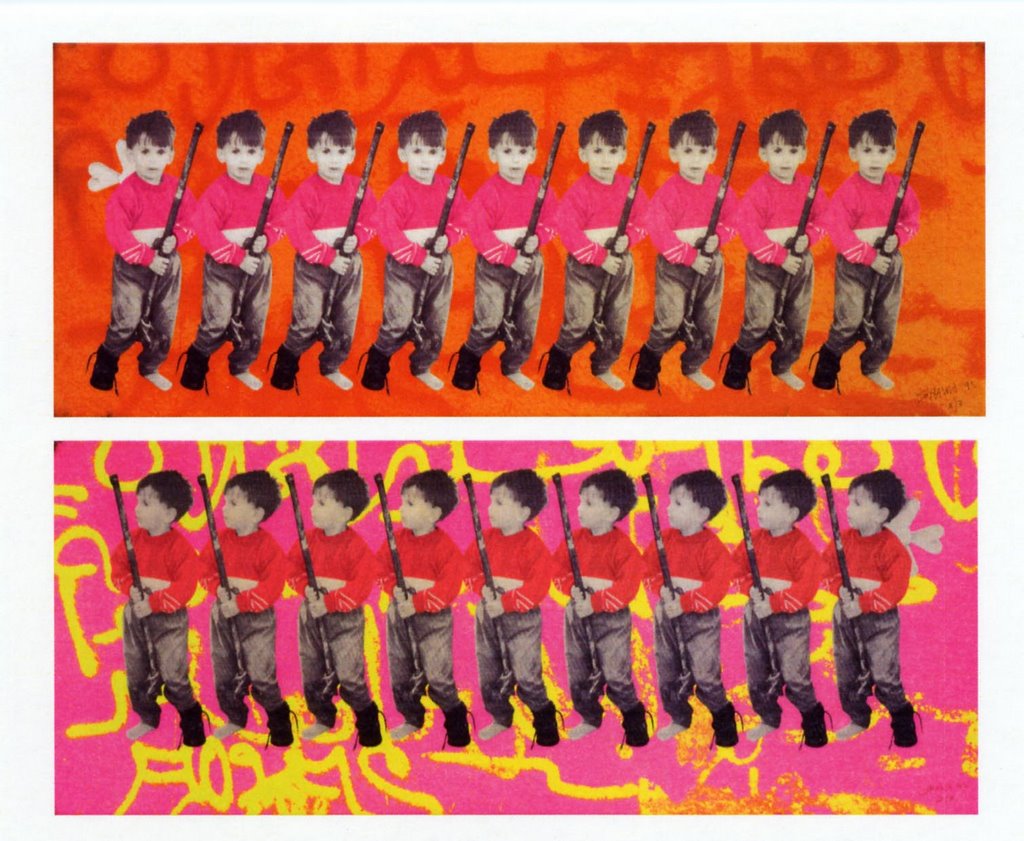
In her brightly coloured two-part work “Children of war, children of peace”, Palestinian artist Laila Shawa uses repeated images of a young boy from a refugee camp in Gaza to highlight the plight of Palestinian children. The Iraqi artist Dia al-Azzawi pays tribute in his lithograph “Homage to Baghdad” to his native city, placing Arabic letters over abstract shapes that echo ancient Iraqi sculptures. Egyptian artist Chant Avedissian’s work “Umm Kulthum’s Greatest Hits” presents various images of the diva with the titles of some of her most famous songs.

The exhibition, to which entry is free, is accompanied by a rich programme of events in a ‘Middle East Now’ season. The season includes conferences, workshops, films, literature, food, history and the performing arts.

Susannah Tarbush, Saudi Gazette 23 May 2006

'Children of war, children of peace' by Leila Shawa


Tuesday, May 16, 2006

book on jordanian food


In contrast to the cuisines of some other Middle Eastern countries - notably Lebanon, Morocco, Iran and Turkey - the food of Jordan remains little known internationally. According to Cecil Hourani, author of the fascinating book “Jordan: The Land and the Table” published recently in London by Elliott & Thompson, even Jordanians themselves are not always fully aware of their country’s distinctive cuisine. There is no ‘Jordanian Restaurant’ in Amman, and no ‘Jordanian Cookbook’.

Hourani’s book shows just what a varied cuisine is to be found in Jordan. Drawing on his travels, research and personal culinary encounters he explains the organic relationship between food and Jordan’s people, geography, history and seasons.

He aims to demonstrate that “there is indeed a Jordanian cuisine which mirrors a society composed of several ethnic and cultural communities which form a distinct national entity.”

There are two main components of the Jordanian kitchen. The first is the traditional Jordanian Arab cuisine based on the relationship between ‘the desert and the sown’. The second was introduced by migrants from the Caucasus and Anatolia from the second half of the 19th century onwards.

Hourani writes that his book is “not a cook book which instructs the reader how to cook, but rather a book about food, with some recipes to illustrate the text”. The recipe section is actually quite substantial, made up of intriguing recipes collected from friends and family, and from people encountered on his travels around Jordan.

The book highlights the ingredients and flavours that give Jordanian food its character. One key ingredient is jameed, dried buttermilk. Another is freeki, the ears of wheat or barley picked while green and smoked on wood. There are also more exotic items, such as the desert truffle.

Hourani looks in detail at characteristic sweet and sour ingredients, and at various combinations of spice and herb flavours. No fewer than 45 wild plants are used as food. The terms in the glossary include zerb, a lamb or kid roasted in a pit or sunken barrel. He gives an evocative account of a zerb feast in an orchard near Madaba.

The recipe section begins with national dishes, including the Jordanian Mansaf. From Palestine there is a national chicken dish Masakhen. The Circassian national dish Shipswabasta combines burghul, garlic, walnuts and hot paprika. The national dish of the Chechens is Galnish, and from the Armenians there is Manti, or Shishbarak, known in various versions from China to Turkey, which comprises dumplings filled with minced lamb and boiled in a broth.

“Jordan: The Land & the Table” appears at a time when in the West there is a turning away from mass-produced food towards healthier, more authentic products. Perhaps Hourani’s book will inspire the setting up of one or more restaurants specialising in Jordanian food.

Susannah Tarbush
Saudi Gazette, 16 May 2006

bradford riots film


The success of the far-right British National Party (BNP) in the recent local elections in England, in which it more than doubled its council seats, was an ominous sign of a rise in public anti-Muslim sentiment. The BNP has made a campaign against Muslims part of its platform.

The new TV film-length drama “Bradford Riots” reminds us of the potential for violence when such far-right groups target cities with large Muslim populations. The drama has been released on DVD, and has been screened on Channel 4 and repeated twice on its sister channel More4.

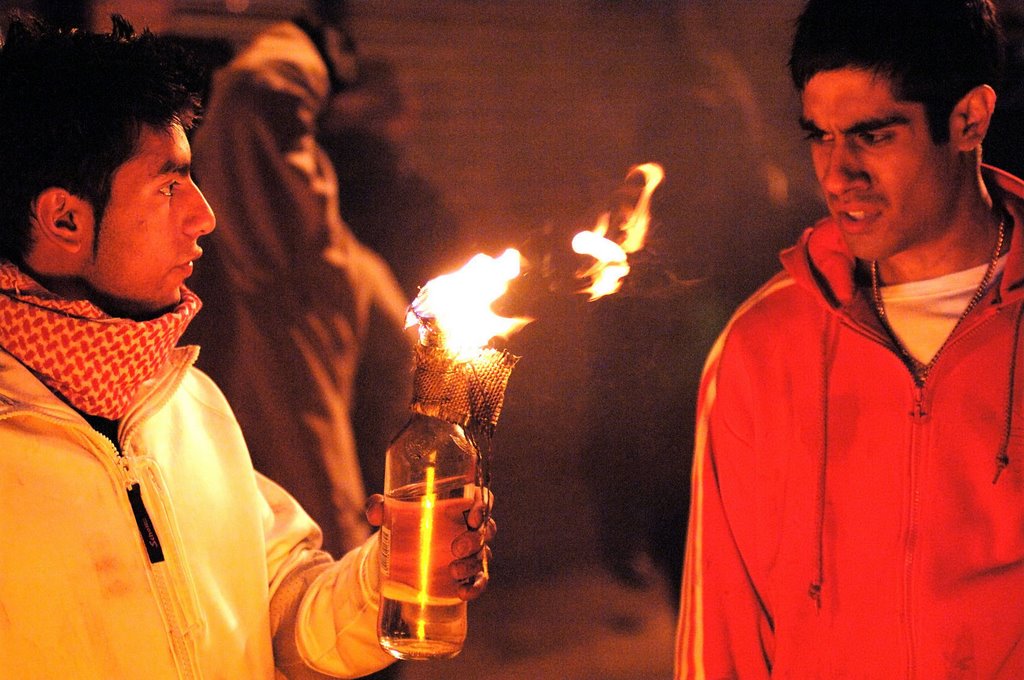
The film is based on the 12-hour riots by Asians in the northern English city of Bradford in July 2001, which were the worst rioting on mainland Britain for two decades. The trigger to the riots was a planned march by the National Front (NF). Although Bradford council banned the march, many NF supporters turned up.

In the aftermath of the riots, courts handed down severe sentences, with 191 people receiving prison terms totalling 510 years. The film’s writer and director Neil Biswas has no doubt that the harshness of the sentences resulted from a hardening of attitudes towards Muslims after the September 11 attacks in the USA.

The film centres around university student Karim (played by Sacha Dhawan) who is back home in Bradford for the summer vacation. Through his eyes we see the problems of deprivation and unemployment faced by his peers who remain in the city. One friend, Aki (Syed Ahmed), has become a drug dealer.

Karim’s older brother Faisal (Ace Bhatti) runs the family textile business and is resentful of their father Azad (Victor Banerjee) paying large amounts for Karim’s university education, while Faisal has a wife and young son to support.

The film shows the gap between the generations, with the older generation opposed to the rioters. Karim gets caught up in events and joins in throwing stones at the police, partly because he is incensed that they declined to intervene when a friend of his was badly beaten up by NF supporters. When Faisal comes out to find Karim he too is enveloped in the riot and hits a policeman in self-defence.

Although Karim at first denies to his father that he was present at the riots, his face is among those published by the police who want rioters identified. Azad insists that his son give himself up to the police.

Karim’s lawyer advises him to plead guilty, confident that with his clean record and exemplary references from his university he will be treated leniently. But the judge sentences him to five years. Karim is placed in a cell with a racist white cellmate who taunts him about his Muslim faith. His final collapse comes when he learns that Faisal has been seized by the police in a nighttime raid on his home.

Sacha Dhawan says he was keen to give Karim a strong identity and individuality because “at the end of the day, I feel that what the young Muslim community lack is identity, in that people just categorise them by their religion.” In court, “you want the judge to look at him, to look at his case personally, and realise this is a kid who shouldn’t go to prison.”

Susannah Tarbush
Saudi Gazette, 16 May 2006

Tuesday, May 09, 2006

HOPING auction for Palestinian kids


(L) Tilda Swinton


At first sight there might seem to be little connection between supermodel Kate Moss and the Palestinian cause. But a kiss from Kate Moss is just one of the ‘promises’ up for auction at a benefit dinner in support of Palestinian refugee children, to be held at Annabel’s club in central London on Monday May 15. Tickets for the dinner and auction are £200 each.

The event is organised by the HOPING Foundation (HOPING is the acronym of ‘Hope and Optimism for Palestinians in the Next Generation’). By far the majority of the funds the foundation raises go directly to community projects for children in refugee camps. The foundation’s most recent grant paid for a specially-equipped bus to transport of disabled children located in refugee camps and villages in the Nablus area.

HOPING’s trustees are fashion designer Bella Freud, Palestinian academic and activist Karma Nabulsi, and writer and film maker Harriet Vyner. Another key figure in HOPING is Jemima Khan, the ex-wife of the Pakistani politician and former cricketer Imran Khan. Jemima is a member of HOPING’s committee, along with 12 other prominent women.

Oliver Barker of Sotheby’s auction house will present the benefit auction, and the ‘promises’ will presented by actor Rupert Everett. The ‘promises’ include the reading of a story to a child by actress Tilda Swinton, a star of the film “Chronicles of Narnia: The Lion, the Witch and the Wardrobe.” Another ‘promise’ is a cricket lesson with Imran Khan. Also being auctioned is the ‘promise’ of a game of golf with Jemima Khan’s boyfriend, film star Hugh Grant, with Jemima acting as caddy.

The other ‘promises’ are a walk around the Tate Modern gallery with artist brothers Jake and Dinos Chapman plus Paul Simonon of punk group The Clash; a pair of boots or shoes designed by artist Sam Taylor-Wood and shoe designer Christian Louboutin; tea and a tour of Lambeth Palace with the Archbishop of Canterbury Dr Rowan Wiliams; a portrait by top fashion photographer Terry Richardson, and dinner for eight cooked by chef Giorgio Locatelli, or a day in his restaurant kitchen.

The HOPING Foundation has already shown its ability to organise high-profile events in which celebrities show their committed support for Palestinian children. In October 2004 the foundation held a sell-out benefit concert for 5000 at the Brixton Academy featuring Primal Scream, Spiritualised, Nick Cave and Steve Mason (of the Beta Band). The concert was released on DVD.

Before the concert, Primal Scream lead singer Bobby Gillespie wrote in the Guardian newspaper: “The Palestinians are a prisoner nation, refugees and exiles treated like ghosts. Now we want them to feel our solidarity.” He said the members of his band were “upset and appalled with what is going on there.” Doubtless this is a sentiment echoed by those who will be guests and participants at the forthcoming benefit auction.

Susannah Tarbush
Saudi Gazette, 9 May 2006

Tuesday, May 02, 2006

al-hayat article on reem kelani


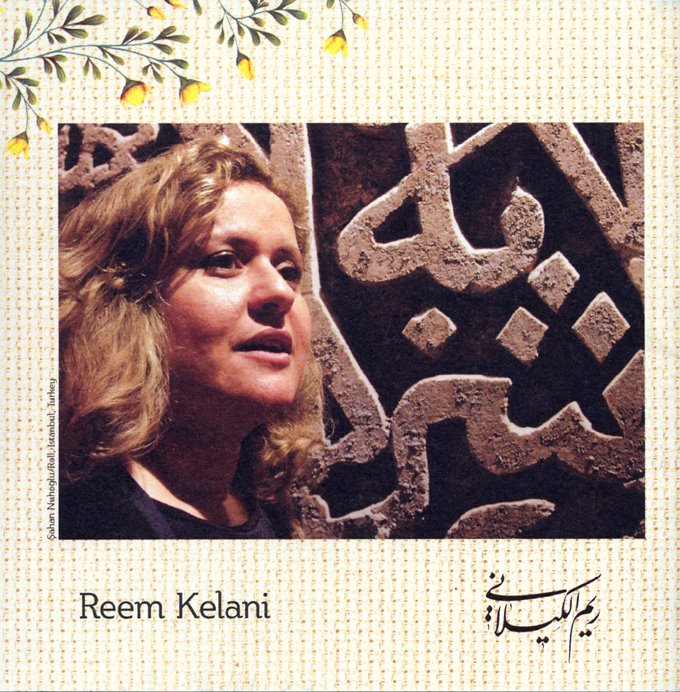
The debut CD of Palestinian singer Reem Kelani - "Sprinting Gazelle: Palestinian Songs from the Motherland and the Diaspora" - is a major new contribution from this remarkable singer, musical researcher and broadcaster towards reviving and spreading Palestinian culture through music.

In the weeks since "Sprinting Gazelle" was released in the UK it has been acclaimed by critics and journalists and has received excellent reviews in nearly every serious British newspaper, as well as in music magazines and other publications. Many critics have praised highly the quality, range and emotional depth of Kelani's voice.

Kelani told Al-Hayat in an interview that she is "overwhelmed" by the avalanche of positive media coverage the CD has enjoyed.

The London magazine Time Out not only gave the CD a very favourable review, but also put it at the top of its list of the top six new albums. The CD has been featured on radio stations in countries including Britain, Germany, Australia and the US.

The widespread praise of the CD from critics is all the more remarkable given the fact that Kelani made it independently, with the small Fuse label as a "cover label". She lacks the strong production, marketing and promotion muscle of a major recording company. But through remaining independent she has been free of pressures to make musical and cultural compromises.

The preparation and recording of the CD took Kelani and her husband Chris Somes-Charlton two years of intensive work. They put most of their savings into the project and received further financing from family, friends and supporters. They have not even organised a concert to launch the CD "because we could not afford the logistics, the time or the money." Now they are busy marketing the CD through Kelani's website and in record stores through the distribution company Proper Music.

The CD's ten songs take the listener on a 74-minute odyssey through the Palestinian experience, from the nineteenth century until today. The CD comes with a highly informative and attractive 32-page booklet which contains the Arabic words to the songs, and translations into English poetry.

Some of the songs are Reem's arrangements of traditional songs. Others are Kelani's compositions for poems by such important Palestinian poets as Mahmoud Darwish, Rashid Husain, Salma Khadra Jayyusi and Mahmoud Salim al-Hout.

A number of the songs are sombre in mood, including Kelani's music for the Mahmoud Darwish poem "Mawwal: Variations on Loss". Kelani wrote the music for this song in 1992 for a BBC TV documentary on the tenth anniversary of the massacre in the refugee camps of Sabra and Shatila in Beirut.
She dedicates "Yearning" by Rashid Husain to the late French singer Barbara "whose music taught me to turn anger into inner peace."

Other songs are more upbeat, such as the spirited traditional song "Habl el-Ghiwa", which is performed with a very jazzy, danceable feel.

The CD has spiritual depth and rewards repeated listening. Asked about the narrative thread running through the CD, Kelani says that after choosing the songs "I realised that they are all either by poets that are pre-48 Palestine or areas that are pre-48 Palestine." She describes the narrative as "totally non-compromising," as shown by a song like "Qasidah of Return", with words by Salma Khadra Jayyusi, which has a mood of "total defiance".

The final song "Il-Hamdillah" is a medley of two songs, "Il-Hamdillah and "Intu Banatu, Ihna Banana". These two songs show the "somoud" of the Palestinians and celebrate their collective identity, "something that the last 58 years couldn't impoverish, quite the contrary, they enriched it."

Kelani says that from women in refugee camps she got the message "that I now use in my life as a Diaspora Palestinian - personally, collectively and artistically - that we are not victims. You are not a victim even when you are in pain, even if someone has done you wrong. You get on with life, you acknowledge your pain and you're strong and you celebrate and you sing and dance. She adds: "This is resistance in its purest form."

Reem's core group of musicians consists of the award-winning jazz pianist Zoe Rahman; Zoe's brother Idris Rahman on tenor saxophone, clarinet and bass clarinet; Oli Hayhurst on double bass; Patrick Illingworth on drums; the Egyptian violinist Samy Bishai, and the Iranian percussionist Fariborz Kiani.

The first song "As Nazarene Women Crossed the Meadow" is a dramatic start to the CD, featuring Kelani singing to no accompaniment but that of a vocal drone. According to local Nazarene folklore, women sang this song when they said goodbye to their men who were leaving to serve in the Ottoman Army. The arrangement of the song " "was principally inspired by a visit I paid to St Gabriel Geek Orthodox Church in Nazareth during one of my childhood summers there. I was mesmerised by the Eastern Christian chanting that I heard which had such striking similarities with Muslim religious chanting. My rendition pays tribute to the historically ecumenical tradition of Nazareth and is an attempt to keep this tradition going in increasingly difficult times."
The song is followed by another furaaqiyaat (song of parting), "The Cameleer Tormented my Heart."

Kelani sees no contradiction in being a jazz singer who is a Palestinian. "Both disciplines are based on improvisation, both disciplines come from suffering and from emancipation."

The CD works on two levels. Kelani's voice with its extraordinary range and timbre makes a direct emotional impact. Even for those listeners who do not understand the Arabic of the words there is no mistaking the emotions that are being expressed - range, tenderness, joy, sorrow, defiance. But beyond this, the accompanying booklet helps non-Arab listeners to get further inside the experience of the songs through reading the lyrics in English and through Reem's detailed information on each song. The booklet also contains a glossary of Arabic musical and cultural terms.

Kelani carried out the translations of the songs into English with her husband, and with Salma Khadra Jayyusi as the literary consultant. The poetry consultant to the project, well-known British poet Alan Brownjohn, made suggestions.

The cover illustration of the CD and of the booklet portrays a gazelle on a background of canvas which represents the Palestinian costume for embroidery, and at the same time the earth and sense of belonging.
The delicate plant with yellow flowers that adorns the cover and inside pages of the booklet is feijan - a herb found in the area of Nazareth from where Kelani's mother's family comes.

The value of the booklet providing the translated lyrics and the background to the songs was illustrated recently when a BBC Radio 3 programme featured "Sprinting Gazelle" and played several songs from it.
Thepresenter explained that the words of the song "Yafa!" were written by the Palestinian poet, mythologist and translator Mahmoud Salim al-Hout (1917-88) after he lost all his manuscripts while fleeing Jaffa.
In this evocative song of loss and pain Kelani is accompanied only by pianist Zoe Rahman playing ominous deep rumbles overlain with agitation. The effect is that of a soulful meditation.

Kelani was born in Manchester, northern England, to doctor Yusuf Kelani, from the village of Ya'bad near Jenin, and Yusra Sharif Ali Zu'bi from Nazareth. Reem dedicates the CD to her mother, who died in Amman in 2004, and "to all the 'Big Mamas' who taught me to sing and to belong." In her concerts Kelani often pays tribute to the "Big Mamas", most particularly the old ladies in Palestinian refugee camps from whom she has collected songs.

Kelani grew up in Kuwait where she was surrounded by many different kinds of music. The songs her father sang kindled the devotion to jazz that has been with Kelani ever since. At the age of 13 she fell in love with Palestinian music when she went to a family wedding in the village of Nein near Galilee and saw women singing and dancing.

A marine biologist by university education, she first came to London in 1989 on a British Council scholarship to do an MSc in aquatic resource management at King's College. But before long she decided to pursue her ambition of a musical career.

Kelani has attracted a large and growing following of fans who appreciate her unique blend of Palestinian music and jazz, her superb voice, her charismatic and warm stage presence and her ability to strike up a rapport with widely differing audiences. She has performed at concerts in the UK, US, Canada, Middle East and Europe, often at events to raise funds for Palestinian charities.

Her broadcasting work has included presenting two series of BBC Radio Four's 'Distant Chords' in which she interviewed musicians in exile in Britain from countries including Yemen, Afghanistan, Armenia and Portugal. Kelani has also been involved in educational work, starting with music workshops at the British Museum. Last autumn she was the music consultant for the play "Iman: Walled In, Walled Out" performed by children at the Miskin Theatre in Dartford.

Kelani has found it difficult to find suitable musicians in London, and it took a long time to assemble her band. None of the musicians on her CD is Palestinian. She says: "Playing with people of different nationalities was very challenging because they didn't know anything about the music."

Another challenge was finding a recording label. The political folk singer and song writer Leon Rosselson offered his own Fuse Records label as the "cover label" of the CD.

Kelani says that many musicians based in the Middle East assume that musicians based in the UK or America are lucky. "They don't realise that the 'world music' circles here actively ignore the local talent around them." A foreign musician like her based in the UK tends to be neglected in favour of more "exotic" musicians brought from abroad. "Even if I were based in Paris I would have been more exotic." She considers that "in a way, being in the UK has hindered the launching of my career."

It was radio stations in other countries - America, Australia and Germany -that started playing the CD long before the BBC did, despite the fact that Reem regularly works for the BBC.

The release of the CD comes at a particularly difficult time for the Palestinian people, a time when culture has a more important role to play than ever in helping to convey the Palestinian identity and experience. As Kelani says: "unless people listen to, and acknowledge, the Palestinian narrative in its own right, no peace treaty, peace accord or peace settlement will work. The Palestinian narrative has always been robbed of its independence and authenticity."


Susannah Tarbush
Original of article published in Arabic translation in Al-Hayat newspaper, May 2 2006

palestinian art show in london

Tayseer Barakat: Untitled
The exhibition “Occupied Space: Art for Palestine” promises to be one of the most exciting art shows to be held in London this spring. It is heartening to see the array of leading British artists who have aligned themselves with their Palestinian counterparts for the show, to be held at Gallery 27 in Cork Street from May 15 to 20.

In all, 54 artists are participating in the exhibition, which is organised by the Palestinian Solidarity Campaign (PSC) with support from the A M Qattan Foundation. Some are London-based Palestinian artists who have already made a big impact on the international art scene, such as Gaza-born Laila Shawa and Beirut-born Mona Hatoum. A number of other Arab artists based in London are also taking part, such as the Egyptian Ahmed Mustapha, and Iraqi Maysaloun Faraj.

The exhibition website says the show aims “to show that despite difficulties experienced over many years, Palestinian artists of all generations are producing significant, exciting work in all media.”

The show is an encouragement for artists working within Palestine, including such well-known figures as Vera Tamari, Suleiman Mansour and Tayseer Barakat. Also represented are up-and-coming young artists who are “producing work of astonishing quality under the challenging conditions in the Occupied Territories.”

Some of the biggest names in British painting are featured in the show, among them Maggi Hambling, Dinos Chapman and David Gentleman. A work by John Keane, who was a war artist in the 1991 Gulf war, entitled “Security/Impunity/Geometry & Terror” and reproduced on the exhibition invitation card portrays the Israeli “security wall”.

The participation of so many British artists in the exhibition is proof that, despite the increasingly beleaguered existence of the Palestinians, there is much sympathy for the Palestinian cause in British cultural circles.

All works in the exhibition are for sale, and those artists from outside the Occupied Territories have donated their work. Proceeds from the sale will go to the artists from Palestine taking part in the exhibition, and towards PSC projects in the UK. And Leila Shawa has made available for sale a limited edition of 100 prints (at £75 each) of her painting “Jerusalem” which was displayed as a poster at Piccadilly Circus underground station in 2002 as part of London Underground’s Platform for Art Programme.

Susannah Tarbush Saudi Gazette May 2 2006

John Keane: Security/Impunity/Geometry & Terror (2)

Tuesday, April 25, 2006

laila lalami's novel


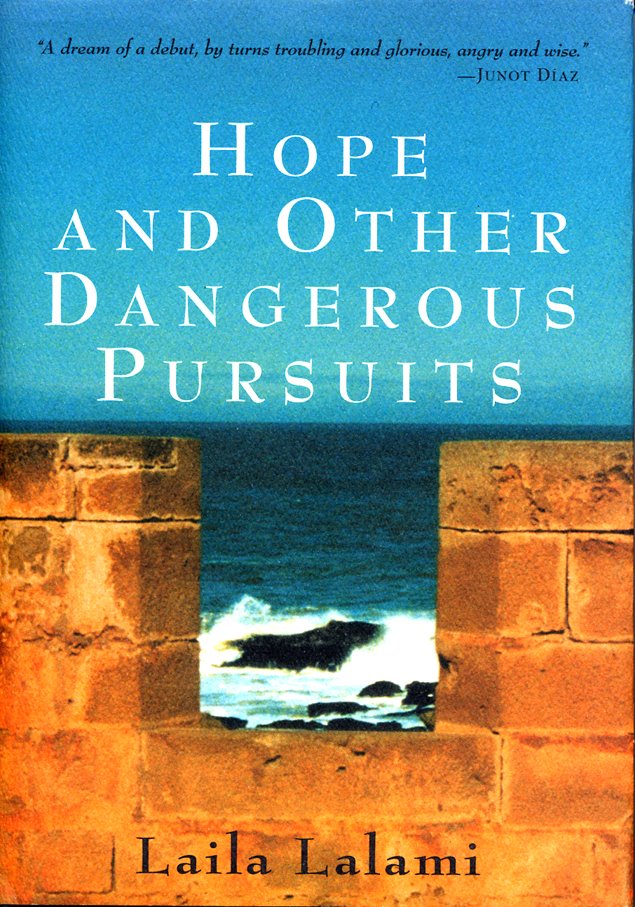
The Moroccan writer Laila Lalami wears more than one hat. She is known to internet users worldwide for her stylishly-presented and incisive literary blog “Moorish Girl”. And she is also a novelist writing in English, with her first novel “Hope and Other Dangerous Pursuits” published in the US by Algonquin Books of Chapel Hill, North Carolina.

Born in Rabat, and educated in Britain and the US, Lalami lives in Portland, Oregon. She brings to her novel the same qualities of clarity, liveliness and insight that characterise “Moorish Girl.”

In the novel’s introduction, seen through the eyes of graduate Murad, we are introduced to a group of characters crossing illegally to Spain at night in a flimsy boat. “Fourteen kilometres. Murad has pondered that number hundreds of times in the last year trying to decide whether the risk was worth it.”

The characters include a young women Faten who wears a hijab, Aziz who is on a second attempt to cross the Strait of Gibraltar, and abused wife Halima running away with her children. As the boat nears the Spanish coast, the migrants are ordered to swim to land, although not all can swim.

The next section of the book, “Before”, explores the reasons for the characters’ decision to take this risky voyage. The final section “After” looks at what becomes of the characters..

Lalami does not take the obvious path in approaching her characters. We first see Faten from the point of view of a father working at the Ministry of Education worried about the influence of this religious girl on his daughter. He uses his position in the educational bureaucracy to exact a revenge that will blight Faten’s future.

Lalami writes an uncluttered prose with grace and fluency. Her novel is relatively brief at 195 pages, but every word counts. Her deft and subtle characterisation has much humanity, and also irony and playfulness as in her depiction of Murad and his efforts to be a guide in Tangier, an over-crowded field. His opening line to tourists is: “Interested in Paul Bowles?”

Are those who do manage to make it to Spain really better off than those who are turned back and returned to Morocco? The migrants’ dreams are inevitably tempered by reality. Aziz and his wife pay a high price for their years of separation, and on his first visit home his memories of the women he consoled himself with while away somehow sully his relations with his wife.

Faten attains an independence in Spain, but only through selling her body. The Orientalist attitudes of some European men are alluded to in her odd relationship with young Spanish client Martin. As for Murad, he may find his way not by leaving Morocco, but through following his gift for storytelling.

Lalami’s novel is a major contribution to the literature on migration and on the ambiguous relationship between the two sides of the Mediterranean, and thus between two cultures. These contemporary themes will become all the more pressing in the future.

Susannah Tarbush, Saudi Gazette April 25 2006

Tuesday, April 18, 2006

booklet on bethlehem

Widad Kamel Kawar is famed for the extensive collection of Palestinian and Jordanian traditional costumes, weavings, jewellery, amulets and everyday tools she has built up over 45 years. As well as being a means of salvaging and preserving Palestinian culture, the collection is a vital resource for researchers and museums.

Now Mrs Kawar, who lives in Amman, has written a booklet entitled "Bethlehem: From Golden Threads to Cement Blocks." The Golden Threads are the threads used in the exceptionally rich embroidery of Palestinian dresses in Bethlehem, which were traditionally imported from Syria. The Cement Blocks are the hideous grey ramparts of the apartheid wall that is making daily life in Bethlehem so difficult. Mayor Dr Victor Batarseh describes the town as an "open air prison".

Mrs Kawar writes that her booklet contrasts Bethlehem's glorious art form of textiles and embroidery "which reflects an innovative and refined society, with the current Israeli actions and policies to isolate, impoverish and dispossess its people."

The wall isolates Bethlehem from Jerusalem, less than six kilometres away. Economic life is declining, and Bethlehem has deteriorated from a flourishing centre for pilgrimages and tourism into an isolated enclave.

The attractively-designed booklet juxtaposes black and white historical photographs of Bethlehem and its people with examples of colourful embroidery and costumes. It also highlights the architecture of the town including the castles (qasoor), built by prominent families, some of which now lie outside the apartheid wall.

The pinnacle of the costume industry is the malak (royal) dress, so called because of its richness. In addition to the brightly striped and embroidered dress, the malak ensemble includes a short-sleeved embroidered jacket known as the takseereh, a high fez-like shtaweh headdress adorned with the gold coins of the dowry, and a silk shawl. The headdress is fastened under the neck with the silver Chain of Seven Souls. The costumes reflected the wealth of the town.

The booklet, designed by Salua Qidan of the Jordanian design and digital solutions company SYNTAX, is a most valuable and informative publication, and it is to be hoped it will be widely distributed. In depicting the fate of Bethlehem and its culture, it powerfully portrays the conditions that the Palestinians have had to endure more widely.

The Kawar collection is at www.arabheritage.org

Susannah Tarbush
Saudi Gazette April 18 2006

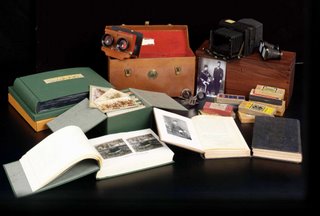
sotheby's sells archive of makkah and medina photos


An archive of photographs of Makkah and Medina dating from the early 20th century has been on display at Sotheby’s auction house in London in preparation for the Natural History, Travel, Atlases and Maps sale on May 9. The sale of the archive is expected to realise £40,000 to £60,000.

The photographs were taken by Muhammad ‘Ali Effendi Sa’oudi (1865-1955) who accompanied General Ibrahim Rif’at Pasha on two pilgrimages from Egypt to Makkah and Medina in 1904 and 1908. The general was responsible for protecting the mahmal procession which carried to Makkah the elaborate embroidered draperies known as the kiswa for the covering of the Ka’ba.

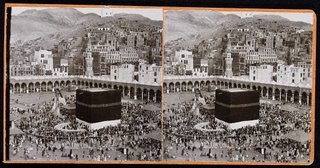
Sa’oudi worked for the Ministry of Justice in Cairo where he specialised in identifying forged documents. His Dresden Stereo Palmos camera, on of the most advances cameras of its day, is included in the sale along with a wooden stereoscope for viewing its slides. The stereoscopic slides appear as 3D images when viewed through the stereoscope.

There are 114 original photographs, 88 stereoscopic glass slides and a modern album containing a complete set of prints of the slides. There are also 80 stereoscopic photographs mounted on card.

There are images of Al Haram Mosque in Makkah, including internal shots with the Ka’ba and Zam Zam, and of the Prophet’s Mosqueon Medina. Other images show archaeological sites and intimate photographs of groups and individuals.

Although Sa’oudi’s photographs are of great interest, they are not the earliest photographs of the two holy cities. Muhammad Sadiq Bey, an Egyptian colonel and engineer photographed Medina in 1861 and Makkah in 1880. Sotheby’s sold his original photographs of Makkah in 1998 for a world record of £1.25 million.

General Rif’at Pasha wrote a lavishly-illustrated book, “Mir’at Al Haramayn Aw Al Rihlat Al Hijaziyya”, published in Cairo in 1925, on his four journeys to Makkah and Medina between 1901 and 1908. Many of the 557 photographs in the book were taken by Sa’oudi. The sale includes Sa’oudi’s copy of the first edition of the book.

Sa’oudi’s contribution to the book, as well as his literary skill and literary output, have not previously been fully recognised. Sotheby’s says that through the archive he “emerges from the shadows as a man who brought the natural and architectural splendour of the future Saudi Arabia to a wider audience just as the Kingdom was reaching pre-eminence.”

The sale includes two manuscripts written in Arabic in Sa’oudi’s hand. “A Synopsis of the Pilgrimage” was written after his first pilgrimage, and “The Construction of the Ka’ba” was written after 1905.

There is also Sa’oudi’s “Voyages au Hedjaz et en Arabie” (1919) with printed text in Arabic and French and manuscript annotations by the author, together with a modern English translation. And there is an unpublished translation into Arabic of the chapters on Makkah and Medina from J L Burckhardt’s “Travels in Arabia” published in 1829.


Susannah Tarbush
Saudi Gazette April 18 2006

Tuesday, March 28, 2006

banipal literary evening in london


Hisham Mattar Posted by Picasa


Londoners wanting a taste of the literature being written by Arabs living in exile had their chance last Wednesday night when three London-based writers - Ghalya al-Said from Oman, the Libyan Hisham Matar and Ghalia Kabbani of Syria - presented their work at the Irish Centre in Hammersmith, West London.

They also had the chance to taste Arabic food from an enticing buffet of dishes such as ful, homous, kibbe and tabboule freshly prepared by the Iraqi novelist Samuel Shimon (author of "An Iraqi in Paris").

Shimon is co-founder of Banipal, the London-based magazine of modern Arab literature, which presented the evening. The event was part of the Westwords Live literature festival being held in West London by eight boroughs during March and April. It was introduced by Banipal's Publisher and Editor Margaret Obank, and chaired by Christina Phillips, an Arabic scholar who sometimes translates for Banipal.

Ghalya al-Said read in Arabic from her recently-published first novel "Days of Heaven". Obank, who read the English translation, described "Days of Heaven" as a novel that is set in London in the 1970s among the immigrant community. "The hero, Ghassan, is a fantasist Don Juan who left his homeland to come to try and find his fortune as a major con man and desperado, and all the adventures he has are recounted." Al-Said writes with acute observation and humour. Ghassan finds that London, unlike cities elsewhere, helps him to keep his many secrets.

Hisham Matar read from his first novel "In The Country of Men". The book trade regards this novel as one of the hottest books due to be published this summer. It was sold in auctions in Europe and the US within a week of being submitted to publishers. It will be published in July by Viking, an imprint of Penguin, and then in 13 other languages. A translation into Arabic is also under way.

Matar's sensuous, dreamy yet precise prose captures the atmosphere of Tripoli in the relentlessly scorching summer of 1979 as seen through the eyes of the nine-year old narrator. The sensitive boy's relationship with his troubled mother, and the mystery over his absent father glimpsed in the street, make a compelling start to the novel.

Christina Phillips read Ghalia Kabbani's story "A Cup of Tea With Mrs Robinson", translated into English by Ali Azeriah. The narrator of this thought-provoking story is a political refugee who describes returning home after a woman has assaulted her in the street injuring her face.

The husband's reaction to his wife's trauma falls far short of what she had hoped for. He is more concerned with discussing politics with his friends than with her welfare. With skill Kabbani takes us inside the realities of life for political refugees, and reveals the stresses political exile places on marriages. It is the English baby-sitter, formerly dismissed as a Mrs Thatcher type with her hairdo and her determination, who gives the narrator the spontaneous comfort she needs.

Susannah Tarbush
Saudi Gazette March 28 2006

Tuesday, March 21, 2006

from bangla-beat to afro-beat


Idris Rahman

“From Bangla-Beat to Afro Beat” was the title of a concert held at the Queen Elizabeth Hall in London’s South bank Centre last Monday week to celebrate the musical heritage of Bangladesh. The concert was presented by Asia House, and the programme contained a message from the Bangladesh High Commissioner to the UK, Sabihuddin Ahmed, saying he hoped it would achieve its aim of “placing Bangladeshi music on the roster of mainstream performances in the UK.”

Runi Khan, who had the initial idea for the concert, said in her message in the programme that Bangladeshis, who comprise a significant portion of Britain’s Asian population, “are still best known for their curry houses and their rich musical heritage has had little sustainable exposure.” She hoped the concert would start to redress this situation.

The evening got off to an inspiring start with a pre-concert jazz recital, in the Queen Elizabeth Hall foyer, by the gifted jazz pianist Zoe Rahman and her clarinettist brother Idris who are of mixed Bangladeshi-English parentage. They gave wonderfully expressive and engaging performances in which they were accompanied by the lively Brazilian percussionist Anselmo Netto.

Award-winning Zoe’s second album, “Melting Pot” was released recently. Soothsayers, the band Idris leads, released its album “Tangled Roots” a few months ago. As a prelude to the “Bangla-Beat” concert, the recital included some Bengali material based on four songs by the singer and composer Hemant Mukherjee.

The “Bangla-Beat” concert was designed to cover a wide range of music, from traditional folk music and the music of the new generation in Bangladesh to collaborations between Bangladeshi, Asian and world musicians.

The first half of the concert featured Baul culture, declared last November by UNESCO as a national treasure. The Bauls are a mystical group of wandering faqirs who perform devotional songs accompanied by traditional string and percussive instruments.

The Baul performers were Abdur Rob Fakir and Shahjahan Munshi. Also on stage were members of the Ektaar All Stars. The young singer-songwriter Shayan Choudhury, known as Arnob, who is also an instrumentalist, composer, painter and music video maker, sang an appealing selection of songs. His debut solo album “Chaina Bhabish” was released last year.

The Ektaar line up also included Ektaar’s managing director Faisal Siddiqi (Bogey), as bass player and vocalist. He is the guitarist and vocalist of Renaissance, one of Bangladesh’s most established bands. On lead guitar was Al Fahmi Kazi Bashar, known as Kaartik, who plays lead guitar for the group Bangla. On vocals and percussion was Sahana Bajpaie, whose first solo album of songs by Tagore is due out soon.

The second half of the concert was given over to Bangladesh-born Kishon Khan, who grew up in London, and his new world fusion assembly of musicians called Lokkhi Terra. Khan played the piano and Rhodes electric piano. His line-up included more than a dozen performers, among them special guest Fazal Qureshi (second son of the late Ustadh Allarakha) on tabla, Pandit Dinesh on Indian percussion, and the young Pakistani flautist Haider Rahman. Other instruments included trombone, trumpet, cello, bass, guitar, drums and congas. Lokkhi Terra included two singers from Bangladesh, Armeen Musa and Aneire Khan.

Susannah Tarbush
Saudi Gazette March 21 2006

Zoe Rahman in recital

Tuesday, March 14, 2006

British Council's Arabic translation seminar

The four-day Arabic/English literature translation seminar organised in London last week by the British Council, in partnership with Arts Council England, was one of the most ambitious and wide-ranging explorations of the subject ever to have been held.

The seminar brought together leading Arab, British and other writers, translators, commissioning editors, literary agents, publishers and academics. The sessions on a variety of topics were supplemented by one-on-one interviews with two major Arab women writers, the Lebanese Hanan Al-Shaykh and the Moroccan Leila Abouzeid.

The seminar provided ample evidence of how rich and diverse the field of translating and publishing Arab writers has become in the past few years. One of the valuable spin-offs was the opportunity afforded for networking and contact building.

The event began on Tuesday at the London Book Fair, where a panel examined the translation of Arabic into English and vice versa, and the strengthening of links between the UK and Arab world in publishing, distribution, translation and cultural exchange.

The panel was chaired by translator, author and former British Council representative Peter Clark. It included Jordanian author Fadia Faqir, Palestinian poet and author Mourid Barghouti, Palestinian poet and novelist Ibrahim Nasrallah, and Margaret Obank, the publisher and editor of Banipal magazine of modern Arab literature.

On the following two days, the venue of the seminar was Goodenough College. There were several ‘guest hosts’ for specific sessions, among them Banipal, the British Centre for Literary Translation (of the University of East Anglia), the Poetry Translation Centre of London University’s School of Oriental and African Studies, and English PEN.

On Thursday evening there was a reception and dinner for seminar participants at the October Gallery in Bloomsbury, followed by author readings and a party. The final event was a brainstorming roundtable on Friday morning to discuss future plans and opportunities to increase links between UK literature professionals and Arab partners.

The Saudi novelist and short story writer Yousef Al-Mohaimeed, who is cultural editor of Al-Yamama magazine, was a speaker at a session on Thursday entitled: ‘How to create and maintain a dialogue: writers making connections.’ Born in Riyadh in 1964, Al-Mohaimeed is one of the new generation of Saudi fiction writers whose work tackles head-on the social conditions of the country.

Two chapters of Al-Mohaimeed’s novel “Traps of Scent”, translated by Anthony Calderbank, were published in Banipal’s special feature on the Saudi novel in its Summer 2004 issue.

“Traps of Scent” was originally published in Arabic by Riad El-Rayyes in Beirut in 2003; Al-Mohaimeed pointed out that because of censorship, a number of Saudi novelists have had their work published in Beirut. He expressed frustration at the misleading images of Saudi Arabia in the West, first as a country of camels, tents and oil and then, after 9/11, as a country of terrorism.

Al-Mohaimeed spoke of some of the difficulties facing Saudi novelists, and artists in such areas as film, theatre and the visual arts, but noted signs of an increased openness. He would clearly like British publishers to take an interest in Saudi novelists, but rejected pressure on those writers to write in a certain way. “In writing novels we feel that we are part of the world – we know the techniques of the novel and we want to contribute, but we don’t want to be ‘folkloric’.”
Susannah Tarbush
Saudi Gazette, 14 March 2006
Saudi novelist Yousef Al-Mohaimeed (L) and Syrian writer Fawaz Al-Haddad

Tuesday, February 21, 2006

Salma Khadra Jayyusi's Arabic fiction anthology


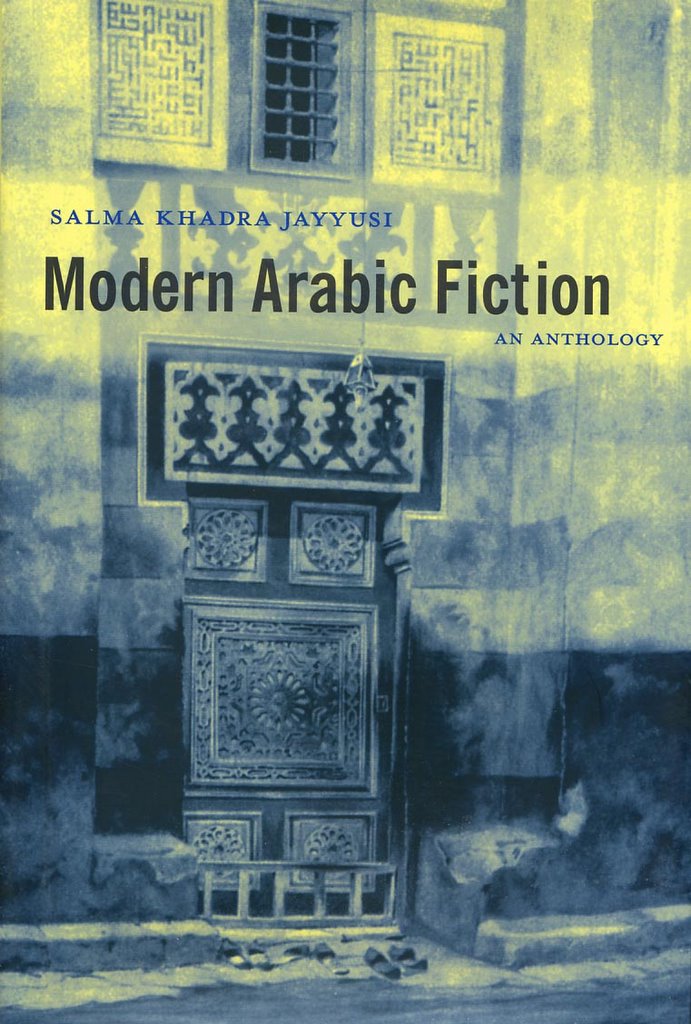
The renowned Palestinian scholar, poet and translator Salma Khadra Jayyusi has made a unique contribution to the study of Arab literature and civilisation during a long and productive career. The latest fruit of her passion for bringing Arabic literature to a wide readership is “Modern Arabic Fiction: An Anthology”, edited by Jayyusi and published by Columbia University Press. The anthology is a companion volume to “Modern Arabic Poetry: An Anthology” which she edited for the same publisher in 1987.

This ambitious fiction anthology has been many years in the making, and its 1056 pages encompass an immensely rich array of work by Arab novelists and short story writers translated into English. The short stories and novel extracts reveal the vitality and diversity of a literature that is still little known in the West.

The book is divided into three sections. The first includes the work of 14 “pioneers”. The second comprises short stories by 119 writers, and the final section groups extracts from novels by 28 writers (some writers appear in both these sections). There is a biography for each writer.

Jayyusi’s 70-page introduction is an essential guide to Arabic fiction. She traces the historical roots of fiction, with classical Arabic literature being “one of the richest and most varied in world literary history.” She points to Arabic influences on European literature, and to certain similarities between Arabic and Western fiction.

Jayyusi examines the development of the Arabic novel from the late 19th century and of short story writers from the 1920s. She points out that Egypt managed to stay at the centre of fiction in the Arab world, especially with the rise of Naguib Mahfouz in the 1950s. When Mahfouz won the Nobel Prize for Literature in 1988, this was “not simply a recognition of a single author’s achievement but also an acknowledgement of the fact that the Arabic novel had reached distinction on a global scale.”

Other writers whose work Jayyusi discusses at length in the introduction include novelists ‘Abd al-Rahman Munif, Ibrahim al-Koni, Gamal al-Ghitani, Ibrahim Nasrallah, Ghassan Kanafani, Edward al-Kharrat, Gha’ib Tu’ma Farman and Fu’ad al-Takarli, and short story writers Yusuf Idris and Zakaria Tamir. In compiling the anthology, Jayyusi has been keen not only to include such famous writers, but also the up-and-coming and the lesser known.

Almost all the translations have been undertaken afresh, even when previouisly published English translations of certain works exist. Most of the translations are collaborative efforts, pairing a translator from the Arabic with a writer. The translators include Jayyusi’s daughters May and Lena, Salwa Jabsheh, Aida A Bamia, Roger Allen and Mona N Mikhail. Among the distinguished writers with whom they have worked are Christopher Tingley, Anthony Thwaite, Jeremy Reed and Naomi Shihab Nye.

Jayyusi does identify one gap in Arabic fiction, when she writes that there is a need for a fiction to match the state of terror in which the Palestinians are living. She writes: “…neither literature nor art, as far as I know, has been able to match the colossal dimensions of this communal experience… a Palestinian Guernica is now overdue.”

Susannah Tarbush
Saudi Gazette, 21 February 2006

freemuse report on US music censorship


The continuing row over the Danish cartoons has generated much debate over limits to the “freedom of expression”. Vivid proof of limitations to the freedom of expression in the musical arena came earlier this month when the Rolling Stones played the US Super Bowl halftime show.

The Rolling Stones’ performance was subjected to a form of censorship. When the group was singing lyrics deemed too suggestive, the microphones were temporarily silenced. In addition ABC, the broadcaster of the concert, imposed a five-second delay in transmission in case further censorship was needed.

Although the Stones later said that the censorship had been “absolutely ridiculous” and completely unnecessary, a National Football League spokesman stressed that the group had agreed to it.

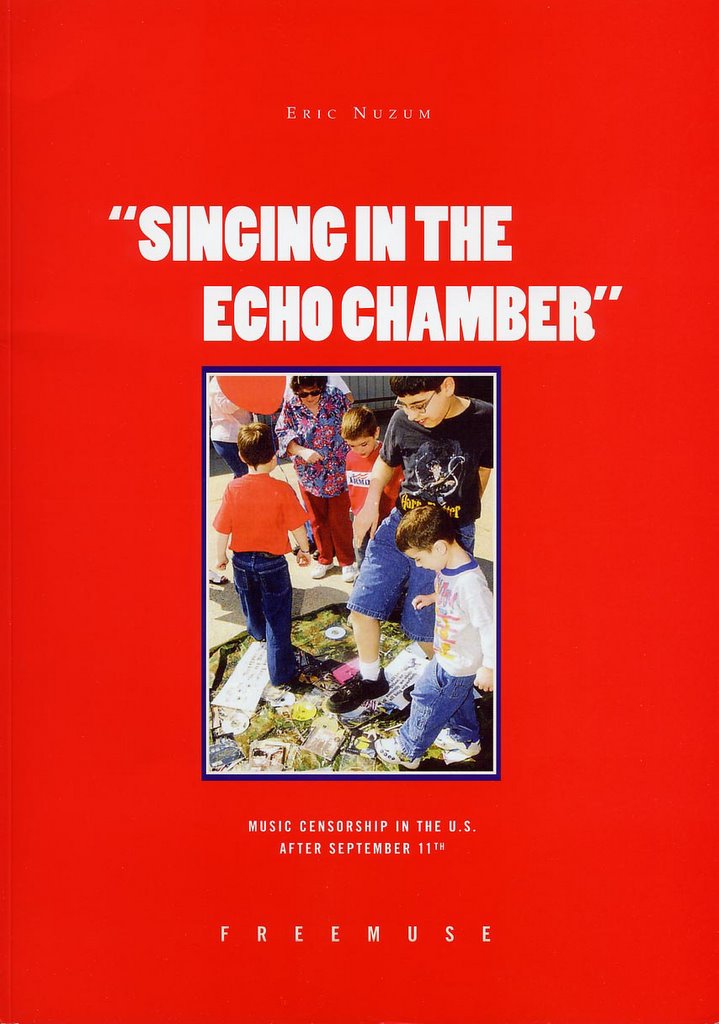
By chance, the censorship of music in the US since September 11 is the subject of a special report, “Singing in the Echo Chamber”, published a few days ago by the Copenhagen-based charity Freemuse which campaigns against music censorship

Freemuse says it is often assumed that violations of freedom of expression occur only in distant, undemocratic countries ruled by despots. “However, it has become obvious that any country undergoing war or stress introduces censorship as a tool to control its population and emerging discontent within the society.”

The picture on the cover of the 64-page report shows gleeful children trampling CDs underfoot. The report’s author, Eric Nuzum, sees the current censorship as part of the wider pattern of curbs on civil liberties in the US since September 11.

Nuzum highlights the role that much of the US media is playing in banning or condemning certain types of music, songs or actions of musicians. Citizens seem to support this, with four out of ten Americans considering that music should be censored.

The “echo chamber” in the report’s title refers to the media’s endless repetition of a news item without any sense of the checks and balances normally applied to reporting. In the post-September 11 climate, once an action has been labelled as “treasonous”, “unpatriotic”, “anti-Bush” or “unsupportive of troops”, these statements tend to become part of the echo.

Among the US music acts which have suffered reprisals from radio stations and other media and from the music-buying public because of their stance on US President George W Bush and the war in Iraq are the group Pearl Jam, the girl band Dixie Chicks and the singer Linda Ronstadt.

Although some eminent musicians have used their music to protest against Bush and the war in Iraq, the Freemuse report points out that some observers think this protest music is being stifled by the powerful corporations controlling the music industry.

There are also increasing curbs on suggestive material, particularly since the Super Bowl incident in 2004 when Janet Jackson’s breast was momentarily exposed by her famous “wardrobe malfunction.” This explains why the Rolling Stones found themselves censored.

Susannah Tarbush
Saudi Gazette 21 February 2006

Wednesday, February 08, 2006

naim attallah in touch with his roots


In his first autobiographical book, “The Old Ladies of Nazareth”, the London-based publisher and entrepreneur Naim Attallah gave a delightful account of his boyhood in Palestine.

In his follow-up “The Boy in England” Attallah recounted his adventures after arriving in Britain to study engineering in 1949, an exile from Palestine. Attallah was avid for new experiences, and he was attractive to other people, particularly women, and had a knack for meeting the right person at the right time.

When the Israelis disrupted his father’s financial aid, Attallah took a series of unskilled jobs and was a fitter in an electrical components factory, a steeplejack, a hospital porter and a nightclub bouncer.

In his latest autobiographical volume, “In Touch With His Roots”, published like the previous two by Attallah’s publishing house Quartet, the story moves to the British and Arab business scenes of the 1960s. Attallah is now married to the lovely Polish girl Maria. As a Palestinian with British nationality, able to mingle freely in British and Arab society, urbane but with “a streak of devilment”, he is active as a banker at the interface of Arab and Western finance.

Attallah has an unusual approach to writing memoir, writing about himself in the third person. In the first two books he refers to himself as “the boy”; in the latest he has become “Naim”. He explains that this use of the third person helps him write without inhibition and unlocks memories that might otherwise not have resurfaced.

“In Touch With his Roots” is dominated by the late Palestinian-Lebanese banker Yusif Bedas and the Intra Bank that he founded. The book is dedicated to Bedas, for his “enterprising spirit and greatness of vision.” Yet Attallah does not shy away from discussing what he saw of some of Bedas’s weaknesses.

The collapse of Intra Bank in 1966 was one of the most dramatic financial-political shocks the Middle East has witnessed. As someone who had a sensitive position within the bank, and who was close to Bedas and his wife Wadad, Attallah is well placed to give an insider’s account of events which are still in dispute 40 years on.

There are lively descriptions of the characters Attallah encountered and who in many cases became friends. Among them are the Middle East Airlines (MEA) chairman Sheikh Najib Alamuddin, Egyptian businessman Ahmed Abboud Pasha (“the Pharaoh of Free Enterprise”), Hungarian aristocrat Vamos, King Hussein’s ex-wife Princess Dina, ballerina Dame Margot Fonteyn, and Lebanese actress Nidal al-Ashkar.

For Attallah, a most unhappy footnote to the Intra collapse came in 1995 when, without warning, Wadad Bedas and her three children issued a complaint with the juge d’instruction in Beirut against the Intra Investment Company, Attallah and Antoine Best. It alleged there had been a breach of trust with respect to the Bedas estate, allegations that Attallah describes as “preposterous”. In 2004 Attallah was informed that the court of 1st instance in Beirut had ruled in favour of him and the other defendants; no appeal against the ruling has been lodged.

After the collapse of Intra, Attallah pursued multiple careers in publishing, the arts and business, as will be told in the fourth part of the Naim Attallah story, to be published in early 2007.

Susannah Tarbush
Saudi Gazette 7 February 2006

Tuesday, January 31, 2006

reem kelani's 'sprinting gazelle' CD


When the Palestinian singer and music researcher Reem Kelani, on a visit from London, told women in the Palestinian refugee camp of Ein el-Hilweh in southern Lebanon her name they immediately burst into the traditional song “Sprinting Gazelle”. This was a tribute to the name Reem, which means gazelle (or more specifically, according to the Hans Wehr Arabic dictionary, white antelope or addax).

The spontaneous performance of the song by women of three generations epitomises the irrepressibility and deep-rootedness of Palestinian musical culture. The women also demonstrated for Kelani the circle dance that accompanies the song at weddings

Kelani has over the years done vital work in recording, arranging and singing the songs she has collected, as well as composing her own songs. The song she heard in Ein el-Hilweh is now the title track of her debut CD “Sprinting Gazelle: Palestinian Songs from the Motherland and Diaspora”, newly released on the British label Fuse Records. The infectiously danceable title track includes musician Tigran Aleksyan on the double-reeded yarghul that is played at Palestinian weddings.

The CD opens with Kelani’s haunting rendition of “As Nazarene Women Crossed the Meadow”, unaccompanied but for a background vocal drone. According to local Nazarene folklore, women would sing this song while saying goodbye to menfolk leaving to serve in the Ottoman Army.

In the CD’s sleeve notes, Kelani recalls how an elderly man from Shefa Amer near Nazareth approached her after a performance she gave in Dubai “and said that he had not heard this song for at least 60 years.”

Some of the ten tracks are based on traditional songs, such as “The Cameleer Tormented my Heart”, “Galilean Lullaby” and “A Baker’s Dozen”. Other tracks feature Kelani’s compositions for Palestinian poetry: “Mawwal – Variations on Loss” based on poetry by Mahmoud Darwish, “Yearning” by Rashid Husain, “Yafa!” by Mahmoud Asim al-Hout and “Qasidah of Return” by Dr Salma Khadra Jayyusi. The CD concludes with the rousing “Il-Hamdillah – Giving Praise”.

Running through the tracks is a sense of longing and pain, mingled with joyfulness and vibrancy. Kelani’s remarkable voice enters deep into the soul of the music with emotions ranging from tenderness to passion and fury.

Kelani is supported by a terrific lineup of musicians. Her core band, with which she often appears in performance, includes jazz pianist Zoe Rahman, whose piano improvisations (taqasim) add a magical dimension to tracks such as the evocative “Yafa!”

Woodwind whiz Idris Rahman plays clarinet, bass clarinet and tenor saxophone. On the percussion side, Iranian Fariborz Kiani plays daf, tombak and naghghareh, and Parick Illingworth plays drums. Oli Hayhurst is on double bass and Samy Bishai plays violin.

The sleeve notes are in the form of a 16-page booklet rich in information on each track and with the lyrics in both English and Arabic. The literary consultant is Palestinian scholar Dr Salma Khadra Jayussi and the poetry consultant the well-known British poet Alan Brownjohn. The cover and sleeve notes were designed by Nada Irani, and the Persian-style calligraphy was done by Iranian calligrapher and musician Bahman Panahi.

Reem Kelani is at:
http://www.reemkelani.com/

Susannah Tarbush
Saudi Gazette 31 January 2006

I see the stars at noon

When there is news in the Western media about illegal migrantion from Morocco to Europe, it all too often takes the form of reports on the bodies of nameless would-be migrants being washed up on European beaches after their boat journeys end in disaster. The film “I See the Stars at Noon”, directed and co-produced by Saeed Taji Farouky, shows the picture from the other side by following the attempts of 26-year-old Abdelfattah from Meknes to reach Spain through “hijar sriyyah” (secret emigration).

Farouky was born in Britain in 1978 to mixed Egyptian and Palestinian parentage. His film’s title is a Moroccan saying which means that someone’s world is turned upside down.

Abdelfattah’s attempt to reach Spain fails when Spanish police board the ship that is transporting him and other illegal migrants. Last heard of, he was working as a security guard in neighbouring Tunisia.

The documentary was shown to acclaim at the Dubai Film Festival in December. I saw it last week at its European premier held at the Frontline Club in West London. Farouky and the film’s editor and co-producer Gareth Keogh fielded many questions afterwards. The two are co-founders of the production company Tourist with a Typewriter.

The film consists largely of dialogue between Abdelfattah and the unseen filmmaker as the young Moroccan tries to negotiate his way though the clandestine world of people-smugglers. Abdelfattah knows the risks but is willing to take them. His idea of life in Europe and of his prospects there are inflated.

Abdelfattah makes an appealing subject with his attractive looks, and his apparent decency and wish for a better life. He despairs of the future that awaits him if he remains in Morocco. In one scene he takes Farouky to where some of his friends are gathered, drinking and smoking kif, a collage of pictures of scantily-dressed women on the walls.

The unexpected development in the film is the way in which Abdelfattah turns the tables on the filmmaker, forcing him to examine the relationship between subject and director. He asks Farouky for help towards the 750 Euros he needs to pay the people smuggler for passage on a cargo ship, otherwise he will be forced to go on a risky “boat of death”. He points out that the filmmaker is benefiting from him: “Without me the documentary wouldn’t be possible.”

This absorbing and searching film reveals much about the dilemmas of being a documentary filmmaker, and about the desperate struggle many young Moroccans face and the factors that make them keen to reach Europe even at the risk of their lives.

Susannah Tarbush
31 January 2006

Tuesday, January 24, 2006

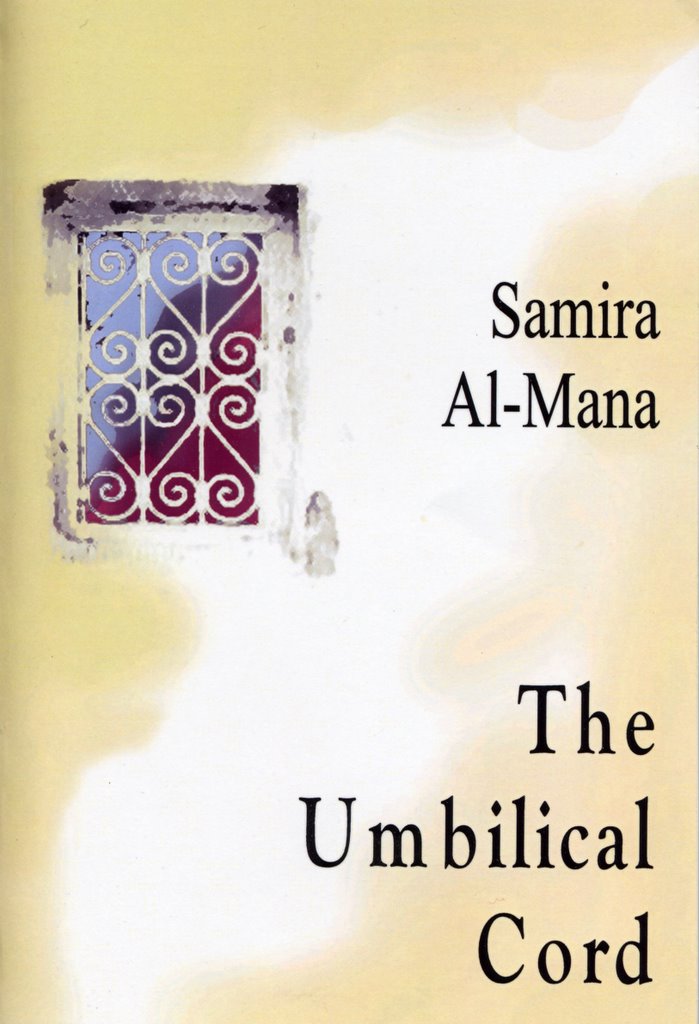
samira al-mana's novel in english


Deeply Attached

The title of Iraqi writer Samira Al-Mana’s novel “The Umbilical Cord” reflects the deep attachment Iraqis in exile have to their mother country. Al-Mana has first-hand experience of the life of Iraqi exiles, having lived in Britain since 1965. She is married to another Iraqi writer, the poet and translator Salah Niazy, with whom she founded and produced the literary journal Alightrab al-Adabi (Literature of the Exiled).

“The Umbilical Cord” is one of five novels by Al-Mana, who has also written two collections of short stories. Her play “Only a Half” was read on stage in 1990 under the sponsorship of the International Women Playwrights’ Center and Buffalo State University, New York.

The Arabic original of “The Umbilical Cord” was published in 1990, and the English translation has now been published by Central Publishing Services of West Yorkshire, England. The translation was undertaken in conjunction with the late Charles M Lewis, to whose memory it is dedicated.

The novel takes the form of 14 interrelated stories revolving around two middle-aged Iraq exiles, divorced Afaf and diplomat’s widow Madeha, who is a fiction writer. Al-Mana depicts the society of Iraqi expatriates in London with skill and humour. She captures their suspicions and longings, and the corrosive effects of the appalling situation back in their homeland.

Characters recur in the stories. In the opening story “All That Jazz” Madeha encounters an acquaintance in an underground train. He shows her a teapot in the form of Prime Minister Margaret Thatcher and says: “That’s democracy, whatever they say! Mrs Thatcher sold in London’s department stores as a teapot! Her opponents laugh at her and take revenge.”

Madeha suspects he may be an informant, but when she gets off the train and remembers his old and torn collar is she convinced he is “one of the innocent” who had seen her by chance and wanted to share his grief and his loneliness. In a later story he asks Madeha why she had been suspicious of him.

In the title story, Afaf is assailed by memories of Iraq and its people while waiting on the platform of Gloucester Road tube station. On a visit from Iraq her uncle tells her tales of his dissolute past in Basra and the pain caused to his mother when his father took a second wife

When she looks at her sleeping uncle, Afaf thinks how he resembles many of the functionaries in Iraq and neighbouring countries. “They’re all cast in the same mould, fighting for party slogans, nationality, religion. How oppressed they are, and how much they have oppressed others, inflicting cruelty, and in turn suffered from cruelty.”

Afaf observes the ageing of her generation in the story “The Turquoise Ring”, in which a group of Iraqis who had studied in Moscow more than 20 years previously meets up at a party thrown by Madeha. After the 1958 revolution young Iraqis were very keen to study in Moscow, and Afaf met her husband Jalal there. Several stories in “The Umbilical Cord” describe how the marriage declines, alongside the disappointments of post-revolutionary Iraq.

Al-Mana’s satirical eye brings us memorable characters such as Munir Abu Seifen (“Shining Father of the Two Swords”) who is boss at an Arab publishing house and young female literary star Gazal Hamid around whom there has been much scandal and gossip.

The main flaw in “The Umbilical Cord” is not in its contents but in the typographical errors that mar the text. These will presumably be corrected in future editions.

Susannah Tarbush
Saudi Gazette 24 January 2006