Tuesday, March 28, 2006

banipal literary evening in london


Hisham Mattar Posted by Picasa


Londoners wanting a taste of the literature being written by Arabs living in exile had their chance last Wednesday night when three London-based writers - Ghalya al-Said from Oman, the Libyan Hisham Matar and Ghalia Kabbani of Syria - presented their work at the Irish Centre in Hammersmith, West London.

They also had the chance to taste Arabic food from an enticing buffet of dishes such as ful, homous, kibbe and tabboule freshly prepared by the Iraqi novelist Samuel Shimon (author of "An Iraqi in Paris").

Shimon is co-founder of Banipal, the London-based magazine of modern Arab literature, which presented the evening. The event was part of the Westwords Live literature festival being held in West London by eight boroughs during March and April. It was introduced by Banipal's Publisher and Editor Margaret Obank, and chaired by Christina Phillips, an Arabic scholar who sometimes translates for Banipal.

Ghalya al-Said read in Arabic from her recently-published first novel "Days of Heaven". Obank, who read the English translation, described "Days of Heaven" as a novel that is set in London in the 1970s among the immigrant community. "The hero, Ghassan, is a fantasist Don Juan who left his homeland to come to try and find his fortune as a major con man and desperado, and all the adventures he has are recounted." Al-Said writes with acute observation and humour. Ghassan finds that London, unlike cities elsewhere, helps him to keep his many secrets.

Hisham Matar read from his first novel "In The Country of Men". The book trade regards this novel as one of the hottest books due to be published this summer. It was sold in auctions in Europe and the US within a week of being submitted to publishers. It will be published in July by Viking, an imprint of Penguin, and then in 13 other languages. A translation into Arabic is also under way.

Matar's sensuous, dreamy yet precise prose captures the atmosphere of Tripoli in the relentlessly scorching summer of 1979 as seen through the eyes of the nine-year old narrator. The sensitive boy's relationship with his troubled mother, and the mystery over his absent father glimpsed in the street, make a compelling start to the novel.

Christina Phillips read Ghalia Kabbani's story "A Cup of Tea With Mrs Robinson", translated into English by Ali Azeriah. The narrator of this thought-provoking story is a political refugee who describes returning home after a woman has assaulted her in the street injuring her face.

The husband's reaction to his wife's trauma falls far short of what she had hoped for. He is more concerned with discussing politics with his friends than with her welfare. With skill Kabbani takes us inside the realities of life for political refugees, and reveals the stresses political exile places on marriages. It is the English baby-sitter, formerly dismissed as a Mrs Thatcher type with her hairdo and her determination, who gives the narrator the spontaneous comfort she needs.

Susannah Tarbush
Saudi Gazette March 28 2006

Tuesday, March 21, 2006

from bangla-beat to afro-beat


Idris Rahman

“From Bangla-Beat to Afro Beat” was the title of a concert held at the Queen Elizabeth Hall in London’s South bank Centre last Monday week to celebrate the musical heritage of Bangladesh. The concert was presented by Asia House, and the programme contained a message from the Bangladesh High Commissioner to the UK, Sabihuddin Ahmed, saying he hoped it would achieve its aim of “placing Bangladeshi music on the roster of mainstream performances in the UK.”

Runi Khan, who had the initial idea for the concert, said in her message in the programme that Bangladeshis, who comprise a significant portion of Britain’s Asian population, “are still best known for their curry houses and their rich musical heritage has had little sustainable exposure.” She hoped the concert would start to redress this situation.

The evening got off to an inspiring start with a pre-concert jazz recital, in the Queen Elizabeth Hall foyer, by the gifted jazz pianist Zoe Rahman and her clarinettist brother Idris who are of mixed Bangladeshi-English parentage. They gave wonderfully expressive and engaging performances in which they were accompanied by the lively Brazilian percussionist Anselmo Netto.

Award-winning Zoe’s second album, “Melting Pot” was released recently. Soothsayers, the band Idris leads, released its album “Tangled Roots” a few months ago. As a prelude to the “Bangla-Beat” concert, the recital included some Bengali material based on four songs by the singer and composer Hemant Mukherjee.

The “Bangla-Beat” concert was designed to cover a wide range of music, from traditional folk music and the music of the new generation in Bangladesh to collaborations between Bangladeshi, Asian and world musicians.

The first half of the concert featured Baul culture, declared last November by UNESCO as a national treasure. The Bauls are a mystical group of wandering faqirs who perform devotional songs accompanied by traditional string and percussive instruments.

The Baul performers were Abdur Rob Fakir and Shahjahan Munshi. Also on stage were members of the Ektaar All Stars. The young singer-songwriter Shayan Choudhury, known as Arnob, who is also an instrumentalist, composer, painter and music video maker, sang an appealing selection of songs. His debut solo album “Chaina Bhabish” was released last year.

The Ektaar line up also included Ektaar’s managing director Faisal Siddiqi (Bogey), as bass player and vocalist. He is the guitarist and vocalist of Renaissance, one of Bangladesh’s most established bands. On lead guitar was Al Fahmi Kazi Bashar, known as Kaartik, who plays lead guitar for the group Bangla. On vocals and percussion was Sahana Bajpaie, whose first solo album of songs by Tagore is due out soon.

The second half of the concert was given over to Bangladesh-born Kishon Khan, who grew up in London, and his new world fusion assembly of musicians called Lokkhi Terra. Khan played the piano and Rhodes electric piano. His line-up included more than a dozen performers, among them special guest Fazal Qureshi (second son of the late Ustadh Allarakha) on tabla, Pandit Dinesh on Indian percussion, and the young Pakistani flautist Haider Rahman. Other instruments included trombone, trumpet, cello, bass, guitar, drums and congas. Lokkhi Terra included two singers from Bangladesh, Armeen Musa and Aneire Khan.

Susannah Tarbush
Saudi Gazette March 21 2006

Zoe Rahman in recital

Tuesday, March 14, 2006

British Council's Arabic translation seminar

The four-day Arabic/English literature translation seminar organised in London last week by the British Council, in partnership with Arts Council England, was one of the most ambitious and wide-ranging explorations of the subject ever to have been held.

The seminar brought together leading Arab, British and other writers, translators, commissioning editors, literary agents, publishers and academics. The sessions on a variety of topics were supplemented by one-on-one interviews with two major Arab women writers, the Lebanese Hanan Al-Shaykh and the Moroccan Leila Abouzeid.

The seminar provided ample evidence of how rich and diverse the field of translating and publishing Arab writers has become in the past few years. One of the valuable spin-offs was the opportunity afforded for networking and contact building.

The event began on Tuesday at the London Book Fair, where a panel examined the translation of Arabic into English and vice versa, and the strengthening of links between the UK and Arab world in publishing, distribution, translation and cultural exchange.

The panel was chaired by translator, author and former British Council representative Peter Clark. It included Jordanian author Fadia Faqir, Palestinian poet and author Mourid Barghouti, Palestinian poet and novelist Ibrahim Nasrallah, and Margaret Obank, the publisher and editor of Banipal magazine of modern Arab literature.

On the following two days, the venue of the seminar was Goodenough College. There were several ‘guest hosts’ for specific sessions, among them Banipal, the British Centre for Literary Translation (of the University of East Anglia), the Poetry Translation Centre of London University’s School of Oriental and African Studies, and English PEN.

On Thursday evening there was a reception and dinner for seminar participants at the October Gallery in Bloomsbury, followed by author readings and a party. The final event was a brainstorming roundtable on Friday morning to discuss future plans and opportunities to increase links between UK literature professionals and Arab partners.

The Saudi novelist and short story writer Yousef Al-Mohaimeed, who is cultural editor of Al-Yamama magazine, was a speaker at a session on Thursday entitled: ‘How to create and maintain a dialogue: writers making connections.’ Born in Riyadh in 1964, Al-Mohaimeed is one of the new generation of Saudi fiction writers whose work tackles head-on the social conditions of the country.

Two chapters of Al-Mohaimeed’s novel “Traps of Scent”, translated by Anthony Calderbank, were published in Banipal’s special feature on the Saudi novel in its Summer 2004 issue.

“Traps of Scent” was originally published in Arabic by Riad El-Rayyes in Beirut in 2003; Al-Mohaimeed pointed out that because of censorship, a number of Saudi novelists have had their work published in Beirut. He expressed frustration at the misleading images of Saudi Arabia in the West, first as a country of camels, tents and oil and then, after 9/11, as a country of terrorism.

Al-Mohaimeed spoke of some of the difficulties facing Saudi novelists, and artists in such areas as film, theatre and the visual arts, but noted signs of an increased openness. He would clearly like British publishers to take an interest in Saudi novelists, but rejected pressure on those writers to write in a certain way. “In writing novels we feel that we are part of the world – we know the techniques of the novel and we want to contribute, but we don’t want to be ‘folkloric’.”
Susannah Tarbush
Saudi Gazette, 14 March 2006
Saudi novelist Yousef Al-Mohaimeed (L) and Syrian writer Fawaz Al-Haddad

Tuesday, February 21, 2006

Salma Khadra Jayyusi's Arabic fiction anthology


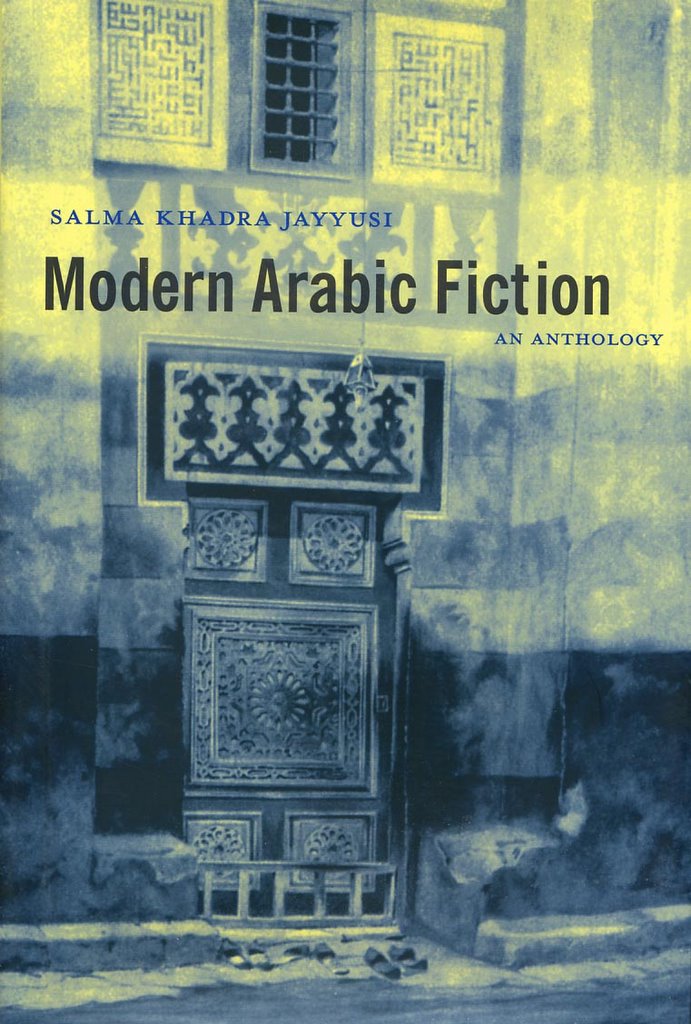
The renowned Palestinian scholar, poet and translator Salma Khadra Jayyusi has made a unique contribution to the study of Arab literature and civilisation during a long and productive career. The latest fruit of her passion for bringing Arabic literature to a wide readership is “Modern Arabic Fiction: An Anthology”, edited by Jayyusi and published by Columbia University Press. The anthology is a companion volume to “Modern Arabic Poetry: An Anthology” which she edited for the same publisher in 1987.

This ambitious fiction anthology has been many years in the making, and its 1056 pages encompass an immensely rich array of work by Arab novelists and short story writers translated into English. The short stories and novel extracts reveal the vitality and diversity of a literature that is still little known in the West.

The book is divided into three sections. The first includes the work of 14 “pioneers”. The second comprises short stories by 119 writers, and the final section groups extracts from novels by 28 writers (some writers appear in both these sections). There is a biography for each writer.

Jayyusi’s 70-page introduction is an essential guide to Arabic fiction. She traces the historical roots of fiction, with classical Arabic literature being “one of the richest and most varied in world literary history.” She points to Arabic influences on European literature, and to certain similarities between Arabic and Western fiction.

Jayyusi examines the development of the Arabic novel from the late 19th century and of short story writers from the 1920s. She points out that Egypt managed to stay at the centre of fiction in the Arab world, especially with the rise of Naguib Mahfouz in the 1950s. When Mahfouz won the Nobel Prize for Literature in 1988, this was “not simply a recognition of a single author’s achievement but also an acknowledgement of the fact that the Arabic novel had reached distinction on a global scale.”

Other writers whose work Jayyusi discusses at length in the introduction include novelists ‘Abd al-Rahman Munif, Ibrahim al-Koni, Gamal al-Ghitani, Ibrahim Nasrallah, Ghassan Kanafani, Edward al-Kharrat, Gha’ib Tu’ma Farman and Fu’ad al-Takarli, and short story writers Yusuf Idris and Zakaria Tamir. In compiling the anthology, Jayyusi has been keen not only to include such famous writers, but also the up-and-coming and the lesser known.

Almost all the translations have been undertaken afresh, even when previouisly published English translations of certain works exist. Most of the translations are collaborative efforts, pairing a translator from the Arabic with a writer. The translators include Jayyusi’s daughters May and Lena, Salwa Jabsheh, Aida A Bamia, Roger Allen and Mona N Mikhail. Among the distinguished writers with whom they have worked are Christopher Tingley, Anthony Thwaite, Jeremy Reed and Naomi Shihab Nye.

Jayyusi does identify one gap in Arabic fiction, when she writes that there is a need for a fiction to match the state of terror in which the Palestinians are living. She writes: “…neither literature nor art, as far as I know, has been able to match the colossal dimensions of this communal experience… a Palestinian Guernica is now overdue.”

Susannah Tarbush
Saudi Gazette, 21 February 2006

freemuse report on US music censorship


The continuing row over the Danish cartoons has generated much debate over limits to the “freedom of expression”. Vivid proof of limitations to the freedom of expression in the musical arena came earlier this month when the Rolling Stones played the US Super Bowl halftime show.

The Rolling Stones’ performance was subjected to a form of censorship. When the group was singing lyrics deemed too suggestive, the microphones were temporarily silenced. In addition ABC, the broadcaster of the concert, imposed a five-second delay in transmission in case further censorship was needed.

Although the Stones later said that the censorship had been “absolutely ridiculous” and completely unnecessary, a National Football League spokesman stressed that the group had agreed to it.

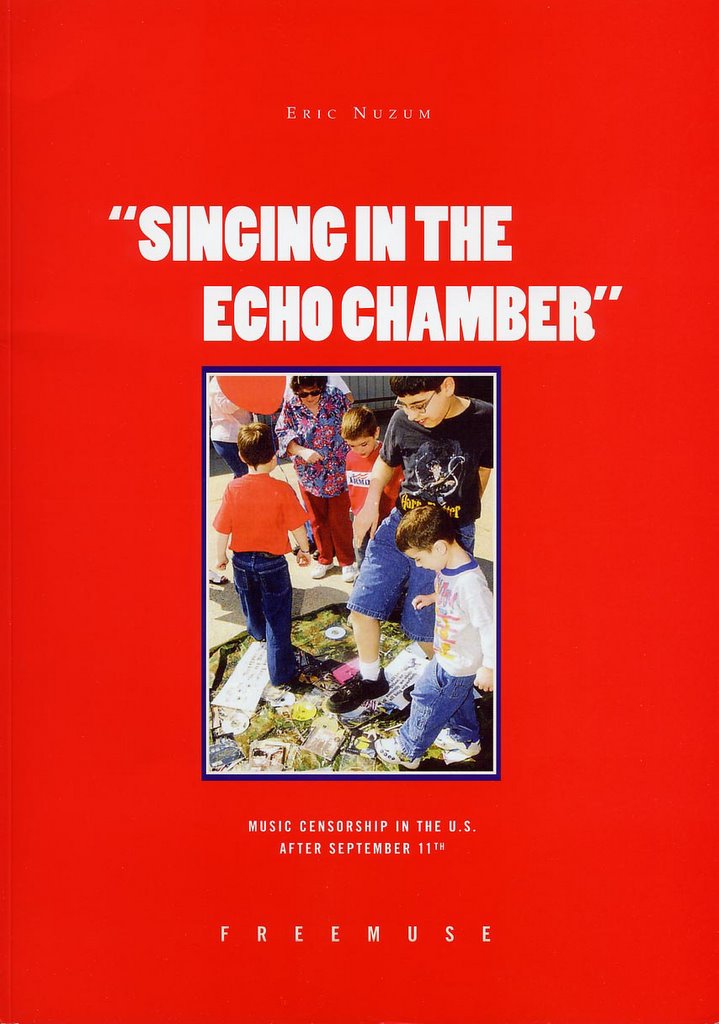
By chance, the censorship of music in the US since September 11 is the subject of a special report, “Singing in the Echo Chamber”, published a few days ago by the Copenhagen-based charity Freemuse which campaigns against music censorship

Freemuse says it is often assumed that violations of freedom of expression occur only in distant, undemocratic countries ruled by despots. “However, it has become obvious that any country undergoing war or stress introduces censorship as a tool to control its population and emerging discontent within the society.”

The picture on the cover of the 64-page report shows gleeful children trampling CDs underfoot. The report’s author, Eric Nuzum, sees the current censorship as part of the wider pattern of curbs on civil liberties in the US since September 11.

Nuzum highlights the role that much of the US media is playing in banning or condemning certain types of music, songs or actions of musicians. Citizens seem to support this, with four out of ten Americans considering that music should be censored.

The “echo chamber” in the report’s title refers to the media’s endless repetition of a news item without any sense of the checks and balances normally applied to reporting. In the post-September 11 climate, once an action has been labelled as “treasonous”, “unpatriotic”, “anti-Bush” or “unsupportive of troops”, these statements tend to become part of the echo.

Among the US music acts which have suffered reprisals from radio stations and other media and from the music-buying public because of their stance on US President George W Bush and the war in Iraq are the group Pearl Jam, the girl band Dixie Chicks and the singer Linda Ronstadt.

Although some eminent musicians have used their music to protest against Bush and the war in Iraq, the Freemuse report points out that some observers think this protest music is being stifled by the powerful corporations controlling the music industry.

There are also increasing curbs on suggestive material, particularly since the Super Bowl incident in 2004 when Janet Jackson’s breast was momentarily exposed by her famous “wardrobe malfunction.” This explains why the Rolling Stones found themselves censored.

Susannah Tarbush
Saudi Gazette 21 February 2006

Wednesday, February 08, 2006

naim attallah in touch with his roots


In his first autobiographical book, “The Old Ladies of Nazareth”, the London-based publisher and entrepreneur Naim Attallah gave a delightful account of his boyhood in Palestine.

In his follow-up “The Boy in England” Attallah recounted his adventures after arriving in Britain to study engineering in 1949, an exile from Palestine. Attallah was avid for new experiences, and he was attractive to other people, particularly women, and had a knack for meeting the right person at the right time.

When the Israelis disrupted his father’s financial aid, Attallah took a series of unskilled jobs and was a fitter in an electrical components factory, a steeplejack, a hospital porter and a nightclub bouncer.

In his latest autobiographical volume, “In Touch With His Roots”, published like the previous two by Attallah’s publishing house Quartet, the story moves to the British and Arab business scenes of the 1960s. Attallah is now married to the lovely Polish girl Maria. As a Palestinian with British nationality, able to mingle freely in British and Arab society, urbane but with “a streak of devilment”, he is active as a banker at the interface of Arab and Western finance.

Attallah has an unusual approach to writing memoir, writing about himself in the third person. In the first two books he refers to himself as “the boy”; in the latest he has become “Naim”. He explains that this use of the third person helps him write without inhibition and unlocks memories that might otherwise not have resurfaced.

“In Touch With his Roots” is dominated by the late Palestinian-Lebanese banker Yusif Bedas and the Intra Bank that he founded. The book is dedicated to Bedas, for his “enterprising spirit and greatness of vision.” Yet Attallah does not shy away from discussing what he saw of some of Bedas’s weaknesses.

The collapse of Intra Bank in 1966 was one of the most dramatic financial-political shocks the Middle East has witnessed. As someone who had a sensitive position within the bank, and who was close to Bedas and his wife Wadad, Attallah is well placed to give an insider’s account of events which are still in dispute 40 years on.

There are lively descriptions of the characters Attallah encountered and who in many cases became friends. Among them are the Middle East Airlines (MEA) chairman Sheikh Najib Alamuddin, Egyptian businessman Ahmed Abboud Pasha (“the Pharaoh of Free Enterprise”), Hungarian aristocrat Vamos, King Hussein’s ex-wife Princess Dina, ballerina Dame Margot Fonteyn, and Lebanese actress Nidal al-Ashkar.

For Attallah, a most unhappy footnote to the Intra collapse came in 1995 when, without warning, Wadad Bedas and her three children issued a complaint with the juge d’instruction in Beirut against the Intra Investment Company, Attallah and Antoine Best. It alleged there had been a breach of trust with respect to the Bedas estate, allegations that Attallah describes as “preposterous”. In 2004 Attallah was informed that the court of 1st instance in Beirut had ruled in favour of him and the other defendants; no appeal against the ruling has been lodged.

After the collapse of Intra, Attallah pursued multiple careers in publishing, the arts and business, as will be told in the fourth part of the Naim Attallah story, to be published in early 2007.

Susannah Tarbush
Saudi Gazette 7 February 2006

Tuesday, January 31, 2006

reem kelani's 'sprinting gazelle' CD


When the Palestinian singer and music researcher Reem Kelani, on a visit from London, told women in the Palestinian refugee camp of Ein el-Hilweh in southern Lebanon her name they immediately burst into the traditional song “Sprinting Gazelle”. This was a tribute to the name Reem, which means gazelle (or more specifically, according to the Hans Wehr Arabic dictionary, white antelope or addax).

The spontaneous performance of the song by women of three generations epitomises the irrepressibility and deep-rootedness of Palestinian musical culture. The women also demonstrated for Kelani the circle dance that accompanies the song at weddings

Kelani has over the years done vital work in recording, arranging and singing the songs she has collected, as well as composing her own songs. The song she heard in Ein el-Hilweh is now the title track of her debut CD “Sprinting Gazelle: Palestinian Songs from the Motherland and Diaspora”, newly released on the British label Fuse Records. The infectiously danceable title track includes musician Tigran Aleksyan on the double-reeded yarghul that is played at Palestinian weddings.

The CD opens with Kelani’s haunting rendition of “As Nazarene Women Crossed the Meadow”, unaccompanied but for a background vocal drone. According to local Nazarene folklore, women would sing this song while saying goodbye to menfolk leaving to serve in the Ottoman Army.

In the CD’s sleeve notes, Kelani recalls how an elderly man from Shefa Amer near Nazareth approached her after a performance she gave in Dubai “and said that he had not heard this song for at least 60 years.”

Some of the ten tracks are based on traditional songs, such as “The Cameleer Tormented my Heart”, “Galilean Lullaby” and “A Baker’s Dozen”. Other tracks feature Kelani’s compositions for Palestinian poetry: “Mawwal – Variations on Loss” based on poetry by Mahmoud Darwish, “Yearning” by Rashid Husain, “Yafa!” by Mahmoud Asim al-Hout and “Qasidah of Return” by Dr Salma Khadra Jayyusi. The CD concludes with the rousing “Il-Hamdillah – Giving Praise”.

Running through the tracks is a sense of longing and pain, mingled with joyfulness and vibrancy. Kelani’s remarkable voice enters deep into the soul of the music with emotions ranging from tenderness to passion and fury.

Kelani is supported by a terrific lineup of musicians. Her core band, with which she often appears in performance, includes jazz pianist Zoe Rahman, whose piano improvisations (taqasim) add a magical dimension to tracks such as the evocative “Yafa!”

Woodwind whiz Idris Rahman plays clarinet, bass clarinet and tenor saxophone. On the percussion side, Iranian Fariborz Kiani plays daf, tombak and naghghareh, and Parick Illingworth plays drums. Oli Hayhurst is on double bass and Samy Bishai plays violin.

The sleeve notes are in the form of a 16-page booklet rich in information on each track and with the lyrics in both English and Arabic. The literary consultant is Palestinian scholar Dr Salma Khadra Jayussi and the poetry consultant the well-known British poet Alan Brownjohn. The cover and sleeve notes were designed by Nada Irani, and the Persian-style calligraphy was done by Iranian calligrapher and musician Bahman Panahi.

Reem Kelani is at:
http://www.reemkelani.com/

Susannah Tarbush
Saudi Gazette 31 January 2006

I see the stars at noon

When there is news in the Western media about illegal migrantion from Morocco to Europe, it all too often takes the form of reports on the bodies of nameless would-be migrants being washed up on European beaches after their boat journeys end in disaster. The film “I See the Stars at Noon”, directed and co-produced by Saeed Taji Farouky, shows the picture from the other side by following the attempts of 26-year-old Abdelfattah from Meknes to reach Spain through “hijar sriyyah” (secret emigration).

Farouky was born in Britain in 1978 to mixed Egyptian and Palestinian parentage. His film’s title is a Moroccan saying which means that someone’s world is turned upside down.

Abdelfattah’s attempt to reach Spain fails when Spanish police board the ship that is transporting him and other illegal migrants. Last heard of, he was working as a security guard in neighbouring Tunisia.

The documentary was shown to acclaim at the Dubai Film Festival in December. I saw it last week at its European premier held at the Frontline Club in West London. Farouky and the film’s editor and co-producer Gareth Keogh fielded many questions afterwards. The two are co-founders of the production company Tourist with a Typewriter.

The film consists largely of dialogue between Abdelfattah and the unseen filmmaker as the young Moroccan tries to negotiate his way though the clandestine world of people-smugglers. Abdelfattah knows the risks but is willing to take them. His idea of life in Europe and of his prospects there are inflated.

Abdelfattah makes an appealing subject with his attractive looks, and his apparent decency and wish for a better life. He despairs of the future that awaits him if he remains in Morocco. In one scene he takes Farouky to where some of his friends are gathered, drinking and smoking kif, a collage of pictures of scantily-dressed women on the walls.

The unexpected development in the film is the way in which Abdelfattah turns the tables on the filmmaker, forcing him to examine the relationship between subject and director. He asks Farouky for help towards the 750 Euros he needs to pay the people smuggler for passage on a cargo ship, otherwise he will be forced to go on a risky “boat of death”. He points out that the filmmaker is benefiting from him: “Without me the documentary wouldn’t be possible.”

This absorbing and searching film reveals much about the dilemmas of being a documentary filmmaker, and about the desperate struggle many young Moroccans face and the factors that make them keen to reach Europe even at the risk of their lives.

Susannah Tarbush
31 January 2006

Tuesday, January 24, 2006

samira al-mana's novel in english


Deeply Attached

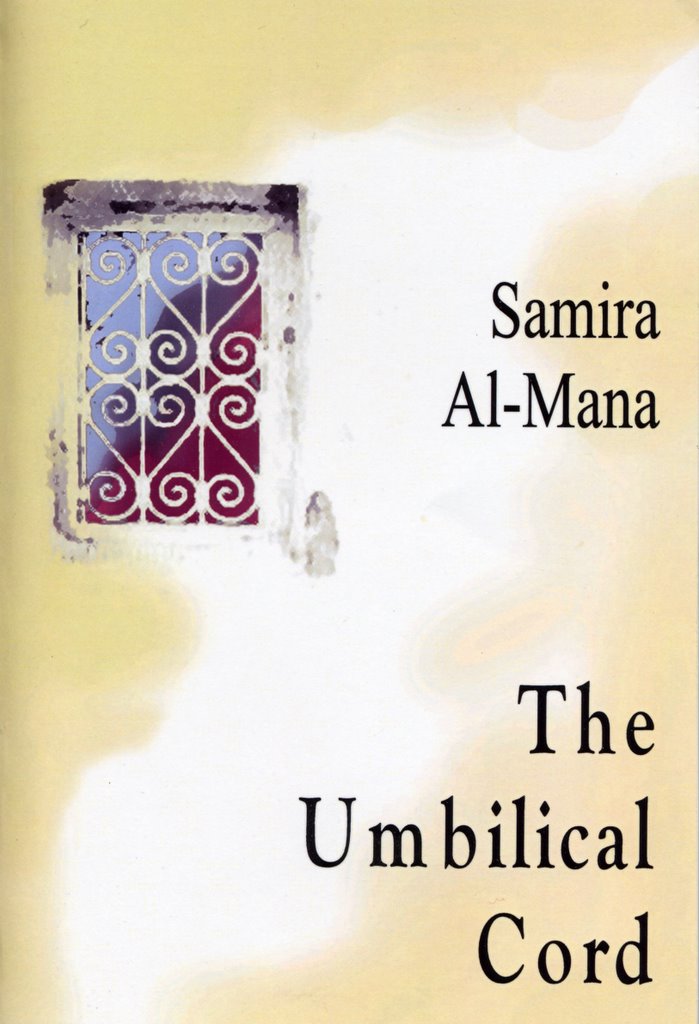
The title of Iraqi writer Samira Al-Mana’s novel “The Umbilical Cord” reflects the deep attachment Iraqis in exile have to their mother country. Al-Mana has first-hand experience of the life of Iraqi exiles, having lived in Britain since 1965. She is married to another Iraqi writer, the poet and translator Salah Niazy, with whom she founded and produced the literary journal Alightrab al-Adabi (Literature of the Exiled).

“The Umbilical Cord” is one of five novels by Al-Mana, who has also written two collections of short stories. Her play “Only a Half” was read on stage in 1990 under the sponsorship of the International Women Playwrights’ Center and Buffalo State University, New York.

The Arabic original of “The Umbilical Cord” was published in 1990, and the English translation has now been published by Central Publishing Services of West Yorkshire, England. The translation was undertaken in conjunction with the late Charles M Lewis, to whose memory it is dedicated.

The novel takes the form of 14 interrelated stories revolving around two middle-aged Iraq exiles, divorced Afaf and diplomat’s widow Madeha, who is a fiction writer. Al-Mana depicts the society of Iraqi expatriates in London with skill and humour. She captures their suspicions and longings, and the corrosive effects of the appalling situation back in their homeland.

Characters recur in the stories. In the opening story “All That Jazz” Madeha encounters an acquaintance in an underground train. He shows her a teapot in the form of Prime Minister Margaret Thatcher and says: “That’s democracy, whatever they say! Mrs Thatcher sold in London’s department stores as a teapot! Her opponents laugh at her and take revenge.”

Madeha suspects he may be an informant, but when she gets off the train and remembers his old and torn collar is she convinced he is “one of the innocent” who had seen her by chance and wanted to share his grief and his loneliness. In a later story he asks Madeha why she had been suspicious of him.

In the title story, Afaf is assailed by memories of Iraq and its people while waiting on the platform of Gloucester Road tube station. On a visit from Iraq her uncle tells her tales of his dissolute past in Basra and the pain caused to his mother when his father took a second wife

When she looks at her sleeping uncle, Afaf thinks how he resembles many of the functionaries in Iraq and neighbouring countries. “They’re all cast in the same mould, fighting for party slogans, nationality, religion. How oppressed they are, and how much they have oppressed others, inflicting cruelty, and in turn suffered from cruelty.”

Afaf observes the ageing of her generation in the story “The Turquoise Ring”, in which a group of Iraqis who had studied in Moscow more than 20 years previously meets up at a party thrown by Madeha. After the 1958 revolution young Iraqis were very keen to study in Moscow, and Afaf met her husband Jalal there. Several stories in “The Umbilical Cord” describe how the marriage declines, alongside the disappointments of post-revolutionary Iraq.

Al-Mana’s satirical eye brings us memorable characters such as Munir Abu Seifen (“Shining Father of the Two Swords”) who is boss at an Arab publishing house and young female literary star Gazal Hamid around whom there has been much scandal and gossip.

The main flaw in “The Umbilical Cord” is not in its contents but in the typographical errors that mar the text. These will presumably be corrected in future editions.

Susannah Tarbush
Saudi Gazette 24 January 2006

Tuesday, January 17, 2006

toot is launched

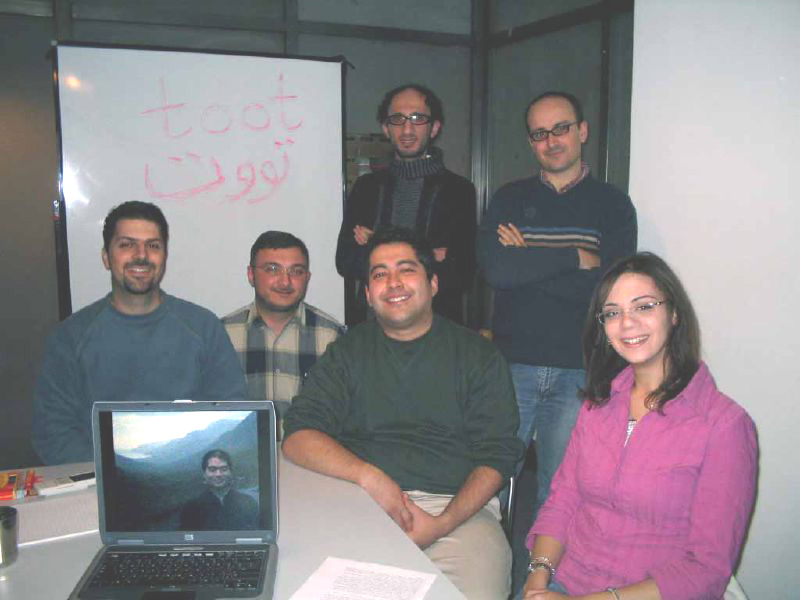
The toot team


The number of Arab blogs (online diaries) is mushrooming, and it can be a difficult and time-consuming task to try and pick one’s way through the thousands on offer to identify those with particular appeal.

“Toot”, a new website launched on 1 January, provides a way into the Arab blogosphere by presenting some of the best blogs around in an attractive and user-friendly way. The website points out that the word “toot” is both a fruit (it is Arabic for mulberry) that consists of little bits that make up a whole, and “the sound you make to draw attention to yourself.”

Toot’s Amman-based team constantly trawls through the toot list of the Arab blogs, whether in Arabic or English, and displays the most interesting posts and conversations. At present toot has a menu of 50 blogs, seven of them Saudi: blogger Ahmed’s “Saudi jeans” and “yawmeyat” blogs, “farah’s sowaleef”, “tech2click”, “al-mohareb”, “al doktoorah” and “prom 2000”.

Toot was founded by entrepreneur, blogger and podcaster Ahmad Humeid (co-owner of branding and web design firm SYNAX) together with his London-based friend Mazen Arafat, Mazen’s brother Karim, and George Akra.The other team members are chief designer Wael Attili, web developer Jad Madi and Roba Al-Assi, who manages the blogs.

Humeid told Saudi Gazette that he hopes to see more Saudi blogs added to toot as it expands, including technology-oriented blogs “that reflect the active open source community there.” He sees the Saudi internet as “a very interesting space, although dominated by the ‘discussion forum’ phenomenon - not to forget those ‘romantic’ sites.”

The toot-listed blogs include from one end of the Arab world “Moorish Girl”, the literary blog of Moroccan novelist Laila Lalami (currently living in Portland, Oregon), and from the other end “Muscatis”, written by Omani Osamah M Abdullatif and his wife. Blogs from many other Arab countries also feature.

The ‘what’s tooting’ section features nine handpicked bloggers of the day. The ‘tootreads’ section consists of posts that the team is currently reading, and ‘tootstream’ has the freshest harvest of posts, with blogs’ RSS feeds. The members of the toot team write a ‘toot(b)log’. Each month the site will feature the top 10 blogs, voted for by visitors.

Bloggers can submit their own blogs to toot for possible inclusion on the site. Humeid says that toot’s current set up will allow it to eventually handle 150-200 blogs.

I asked Humeid whether there is a risk toot will be seen as cliquey and elitist, especially by those whose blogs are rejected for inclusion. He said: “Although we do have our own understanding of what quality blogging is, if we manage to cover a wide spectrum of interests I don’t think we’ll be perceived as elitists. We will be on the constant lookout for fresh voices and we will rely on the pulse of the blogging community to determine what is good.”

He adds: “One thing we will be careful about is that we don’t want to include extremist or very distasteful content. That kind of stuff already has enough forms.”

Toot is at http://itoot.net

Susannah Tarbush
Saudi Gazette 17 January 2006

galloway in celebrity big brother

The Respect Party MP George Galloway has taken many risks in his political career, and has generally come up trumps. But his surprise decision to participate in the reality TV contest Celebrity Big Brother may be a gamble too far even for this wily politician - who currently faces serious allegations that he received large sums of money from Saddam Hussein in the form of oil allocations.

Galloway formed Respect after he was expelled from the Labour Party for his strongly anti-Iraq war stance. How does he justify spending up to three weeks incarcerated in the Big Brother House with 10 other mostly minor celebrities?

Before entering the house 12 days ago, Galloway explained that he was participating in order to reach a new young audience for his political views. He is giving his fee for participating, and any winnings, to the Palestinian charity Interpal. But Channel 4 TV made it clear that he would not be allowed to use the house as a political soapbox.

Galloway's most famous TV appearance to date came last May when he appeared before the US Senate Subcommittee on Investigations in order to refute under oath claims that he had received Iraqi oil allocations. He used the occasion to deliver a stunning indictment of the invasion of Iraq.

The Cuban cigar-chomping politician’s current TV appearance is of a different type altogether. Under the surveillance of 24-hour cameras he and his fellow housemates are ordered by the invisible “Big Brother” to carry out bizarre tasks in order to win food and other perks. Viewers decide which celebrities are to be ejected.

In one demeaning incident, which has made him an object of public ridicule, Galloway was filmed doing an impression of a cat, purring loudly and pretending to lick milk from the cupped hands of 58-year-old former actress Rula Lenska. Lenska stroked his head and rubbed his whiskers while he nuzzled against her thigh.

Galloway had several heated confrontations with 27-year-old glamour model Jodie Marsh, who was the first housemate to be evicted from the house on Friday. Samuel Preston, lead singer of The Ordinary Boys complained that Galloway was trying to turn the Big Brother House into a socialist republic.

Galloway is being accused of neglecting his constituents, who include many Muslims, in the impoverished constituency of Bethnal Green and Bow in East London. A group calling itself the United Residents of Bethnal Green and Bow has set up a website entitled 'Contestant George Galloway MP: Why Isn't he at work?'

The housemates are a rum lot. Disgraced entertainer Michael Barrymore is using his appearance to try and make a comeback. Bangladesh-born Faria Alam's sole claim to fame is that she had much-publicised affairs with England football coach Sven-Goran Eriksson and Football Association chief executive Mark Palios.

The other contestants include US basketball star Dennis Rodman, former "Baywatch" actress Traci Bingham and rapper Maggot from Goldie Lookin' Chain. A “fake celebrity”, blonde Chantelle, was promoted to official celebrity status after she convinced the other housemates that she is lead singer of a girl group called Kandy Floss.

Although Galloway’s stint in the Big Brother House looks as if it could deal a serious blow to his career, the man may yet show that, like the cat he imitated in the house, he has nine lives.

Susannah Tarbush
Saudi Gazette 16 January 2006

Tuesday, January 03, 2006

the english harem


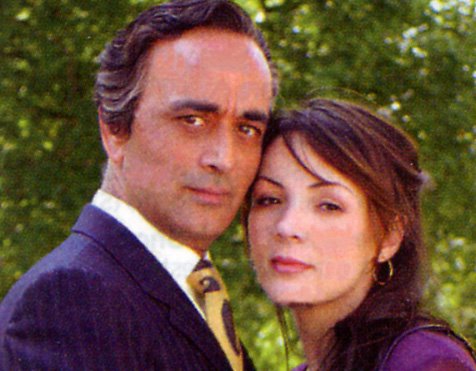
The premise of the drama “The English Harem” sounds potentially salacious. A young English woman Tracy, who works as a cashier at a supermarket, and constantly retreats into dreams of Oriental romance, fails to detect shoplifters and is sacked. She persuades the prosperous Persian owner of a restaurant in the Kensington area of London to take her on as a waitress, and the two fall in love. The Persian, Sami, already has two wives, but she agrees to become his third wife and to move into the palatial family house – hence the title of the drama.

In fact in the ITV drama, which was a highlight of the intensive TV viewing season over Christmas, Tracy only agrees to marry Sam after he assures her that he has no marital relations with his two wives whom he married only out of duty.

The first wife had been married to Sam’s brother, and when his brother died he married her and took on her four children. His second wife was his first wife’s best friend, and married him after her husband too died. The wives work in Sam’s restaurant and egg their husband on to form a relationship with Tracy, to whom they have given their seal of approval.

“The English Harem” was adapted by New Zealand-born writer Anthony McCarten from his novel of the same title. A major draw for viewers was the presence of two of Britain’s most popular actors, Melanie McCutcheon and Art Malik, in the lead roles.

McCutcheon first made her name in the soap opera EastEnders, playing the character of Tiffany Mitchell. She is known internationally for her role in the film “Love, Actually” as 10 Downing Street tea-girl Natalie who becomes the subject of the affections of the prime minister, played by Hugh Grant.

The Pakistani-born actor Art Malik had his major breakthrough in 1984 when he starred as ill-fated young Indian Hari Kumar in the TV series “The Jewel in the Crown”. Most recently he has been playing doctor Zubin Khan in the medical series “Holby City”.

The major obstacles to Tracy and Sam’s marriage come from Tracy’s father and her racist ex-boyfriend Ricky. Tracy dumped thuggish Ricky when she caught him with another woman, but he desperately wants her back and is ready to do anything to sabotage her relationship with Sam.

Thanks to the efforts of Tracy’s father and Ricky, social services remove the children of Sam’s first wife. A masked Ricky then assaults Sam so violently that he suffers a life-threatening brain aneurysm.

The tone of “The English Harem” is an at times awkward mixture of romantic comedy and harsh reality, but the strong cast carries the drama off and the twists in the plot sustain interest. However, it can’t be said that the drama sheds much light on Muslim life in Britain, nor is it a serious exploration of the polygamy that does occur to some extent.

the mozart controversy


The 250th anniversary year of the birth of Austrian composer Wolfgang Amadeus Mozart has got off to a quarrelsome start following the refusal of the controller of the BBC classical music station Radio 3 to play the entire works of the composer back to back.

Last June Radio 3 carried out the first experiment of this kind when it played the entire works of Beethoven over six days. Following the success of this experience, it broadcast all the works of Bach in ten days over Christmas, to a rapturous reception. In September the station played the entire oeuvre of the composer Anton Webern – admittedly only five and a half hours in all.

So why, in his quarter-millennium anniversary year, is Mozart being denied a Radio 3 accolade of the type accorded Beethoven, Bach and Webern? The station’s controller Roger Wright says: “With Mozart end to end, the overall effect would be detrimental to the music. The music could wrongly be seen as slightly more chocolate-boxy than it really is.”

The term “chocolate-boxy” with its connotations of froth, sweetness, predictability and insubstantiality, touched a particular nerve among Mozart loyalists. Perhaps Radio 3 was also deterred by the fact that it would take around 14 days to broadcast Mozart in his entirety.

The music critic Norman Lebrecht fuelled the controversy when, in a piece headed “Too much Mozart makes you sick”, he wrote: “Mozart is the superstore wallpaper of classical music, the composer who pleases most and offends least. Lively, melodic, dissonance-free: what’s not to like?”

Lebrecht claimed: “The coming year of Mozart feels like a term at Guantanamo Bay without the sunshine. There will be no refuge from neatly resolved chords, no escaping that ingratiating musical grin.”

The comments of Wright and Lebrecht have led to furious reactions. Catherine Sprague wrote: “The greatest minds in the history of western civilization have studied Mozart’s spiritual depths and mastery of composition and have concluded exactly the opposite as Mr Lebrecht.”

She asserted that not just composers, but nearly all great philosophers, writers, poets and musicologists consider Mozart to be the greatest musical genius that ever lived. “This does not just mean that Mozart was a prodigy, which he was. Or virtuoso which he was. It means, in plain English, that his music is deep, musically, technically and spiritually. Kierkegaard, Stendhal, Bertrand Russell, George Bernard Shaw etc etc and on down the list have argued such.”

Mozart died at the age of only 35, having produced well over 600 works. To some extent he has been a victim of his own success, and some of his best-loved compositions have become almost too well-known.

But it is unfair to pillory Mozart as predictable and as having failed to move music onwards. There are numerous examples of depths in his music – as shown by for example the opera “Don Giovanni”, the piano sonatas, the sublime string quintets, the Requiem.

In Austria, the capital Vienna and Mozart’s birthplace Salzburg are gearing up for a dizzying year of celebrations. In Britain “Mozart 250” will be marked by many concerts, CD releases and radio and TV programmes. Even if Mozart is not played back to back in his entirety by Radio 3, the station will during the year play very many of his compositions.

Susannah Tarbush
Saudi Gazette 3 January 2006

palestine's children: silent witnesses


Images of Conflict

The photographic book “Silent Witnesses: the Lives of Palestine’s Children” brings home to the reader the traumatic conditions in which many Palestinian children live, but it also conveys their spirit and resilience.

The photographs, mostly in black and white, take us into the streets, homes, families and schools of Palestinian refugee camps and towns. Some show scenes of confrontations and demonstrations, with children having apprehensive, fearful or glowering expressions. In others, children dance, study, stand with arms round friends or family, protect siblings and smile at the camera. Interspersed with the photographs are colourful drawings by children, which reflect the violent conditions under which the children are growing up.

The handsomely produced 240-page book is a project of the Al-Madad Foundation, the UK-registered charity founded in 2000 by Faiza Alreza of Saudi Arabia with the help of her daughters Basma and Yasmin. The book is published by Elliott & Thompson of London and was launched in collaboration with Boucheron, the jewellers. The majority of the photographs were taken by the internationally renowned fashion photographer Stefano Massimo.

Al-Madad has a track record in aiding projects for the Palestinians, including Action Around Bethlehem Children with Disability (ABCD) and Spafford Children’s Center in East Jerusalem.

The charity also co-produced the film “Seeds of Peace” about the work of the Seeds of Peace camp in the US, which brings together young people from regions of conflict including Palestine and Israel.

One of Al-Madad’s earliest projects was to help Birzeit University Photographic Library. “Silent Witnesses” is a further development in this process, with its photographs coming not only from Stefano Massimo, but also from Rula Halawani, Ali Karakrah, Ameer Shata, Baker Atari and Birzeit’s Photographic Department.

In his introduction to the book, Prince El Hassan bin Talal of Jordan writes: “The voice of the silenced majority, including that of the youth, has to be raised in our traumatised part of the world.”

The only fault of the Palestinian children portrayed in the book is “the fact that they were born under an occupation that erects hundreds of check points, roadblocks, trenches and earthen walls to block their way to school and to normality. It is not normal to witness the death of friends, the firing into schools and the razing of homes.”

Prince El Hassan states: “As political, economic and security plans are designed, the voices of the children are stifled behind the Wall, but it is initiatives such as this book that will carry their clear voices to the world with the message that every child is born free, without a label.”

Susannah Tarbush
Saudi Gazette 3 January 2005

Tuesday, December 27, 2005

meetings with remarkable Muslims


In compiling the collection of personal reminiscences “Meetings with Remarkable Muslims”, editors Barnaby Rogerson and Rose Baring were driven by a wish to get away from the stereotyped images of the Islamic world all too prevalent in the Western media and to arrive at a broader, truer picture.

The resulting book, published by Eland Publishing of London, is a rich harvest of human encounters in different parts of the Islamic world. The standard of writing is high, and the approach of the authors intimate and engaging.

The 39 contributors are a varied group. Some are scholars turned travel writers, such as William Dalrymple and Tim Mackintosh Smith. The contributors also include Persian writer, singer and songwriter Shusha Guppy, historian Philip Mansel, researcher and translator Bruce Wannell, Palestinian activist and writer Ghada Karmi, author and expert on textiles and Islamic art Philippa Scott, and writer and founder of the Travel Bookshop in London, Sarah Anderson.

A few of the “remarkable Muslims” are well-known personalities. Mark Hudson writes on the Senegalese singing star Youssou N’Dour, and Justin Marozzi recalls meeting the charismatic Ahmed Shah Massoud, “The Lion of the Panshir”, who was assassinated in 2001. Ghada Karmi gives a touching personal profile of her BBC broadcaster and dictionary compiler father Hasan Karmi who is now 100 years old.

Some of the encounters involve historical figures. Philippa Scott begins her piece “Ziryab on my Mind”, with the words: “Looking back, it seems inevitable, kismet, that Ziryab, father of cante jondo and the Andalusian guitar, should enter my life.” This eighth century musician, whose nickname Ziryab means “black songbird”, has been “an invisible but sometimes almost palpable presence, a wise companion and guide, a happy haunting.”

Other encounters came from chance meetings. Tahir Shah tells of how his friendship with Moroccan Hicham Harras, an inhabitant of a shantytown in Casablanca, grew out of Hicham’s passion for postage stamps. Horatio Clare recalls a Moroccan family to which he was introduced by two high-spirited girls. Tunisian writer and Islamic art expert Sabiha al Khmeir writes of the old man with whom she worked in the Ben Youssef library in Marrakesh.

The writers’ accounts provide windows into the diverse, complex Islamic world. It would be good if “Meetings with Remarkable Muslims” found a readership among those who are so ready to generalise and pontificate about Muslims and Islam without ever bothering to meet Muslims like those they might find in the pages of this book.

Susannah Tarbush
Saudi Gazette
27 December 2005

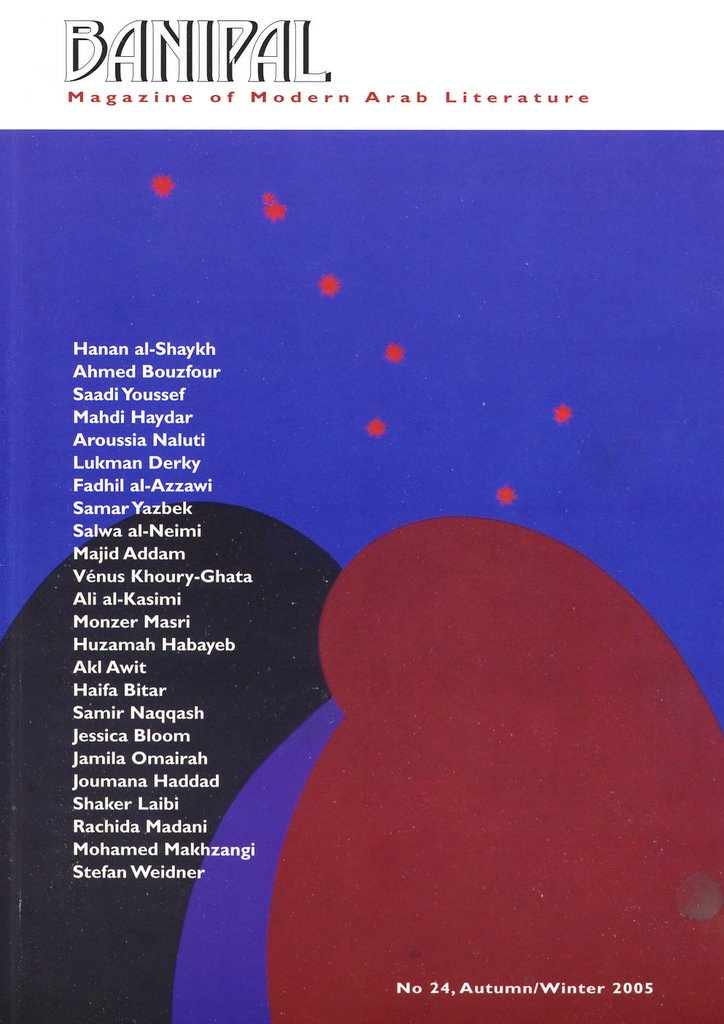
Banipal launches Arabic translation prize


The status and practice of literary translation from Arabic into English has received a boost with the announcement of the launch of the annual Banipal Prize for Arabic Literary Translation, worth £2000. The prize has been established by Banipal, the London-based magazine of modern Arab literature founded in 1998, and by the Banipal Trust for Arab Literature, established in September 2004.

The prize’s patron is the secretary general of the Abu Dhabi Cultural Foundation, Mohammed Ahmad al-Sowaidi, a poet and well-known patron of the arts. Al-Sowaidi says: “The aim of sponsoring the prize in its first year is to participate in building bridges between Arab culture and the Western reader. We consider this participation to be very necessary at this time, even for existential reasons. For literature plays the role of narrating the self in a world of numerous narrations, a world that no longer permits the isolation of cultures.”

The prize will be awarded for the first time next year, and the closing date for entries is 27 January. The prize is for the translation of a full-length imaginative and creative work of literary merit published in English. It will celebrate the works of contemporary Arab authors as well as honouring the work of translators in bringing the work of Arab writers to the attention of the wider world.

The prize is administered by the Translators Association of the Society of Authors in London. It joins the ranks of other prestigious translation prizes administered by the Society, including the Scott Moncrieff Prize for translation from French, and prizes for translation from Dutch, German, Greek, Italian, Portuguese, Spanish and Swedish.

To qualify for entry, the original Arabic should have been published no more than 34 years preceding submission for the prize. For the first year the entries must have first been published in English during 2004 or 2005. For successive years, entries must have first been published in English in the year prior to the award. Although the entries can have been published in English anywhere in the world, they must be available for purchase in the UK.

Since its creation eight years ago, Banipal has been played a unique role in bringing translations of Arab literature from Arabic, and sometimes French, to the English-reading public. Its latest issue includes an extract, in English translation by Roger Allen, from “Hikayati Sharhun Yatool” (“My Story is Too Long to Tell”), the new novel of Lebanese author Hanan Al-Shaykh.

There is also an extract, translated by Christina Phillips, of the novel “Salsal” (“Clay”) by the Syrian writer Samar Yazbek. The book reviews section of Banipal includes reviews of the novels “The Poor Man’s Son” by Algerian writer Mouloud Feraoun and “The Yacoubian Building” by Egyptian author Alaa Al Aswany.

Susannah Tarbush
Saudi Gazette
27 December 2005

Saudi blogosphere expands

(logo right is the Saudi Blog icon)


One of the most striking developments in Arab cyberspace in 2005 has been the growth in the number of Arab blogs – online diaries to which readers can add comments. Blogs typically include links to other bloggers, and posts from one blog can spread quickly through the global blogosphere.

The Arab blogosphere got going two years ago, and so far Iraqi, Egyptian, Lebanese, Bahraini, Syrian and Palestinian bloggers have been among its most active components. The Saudi blogosphere has taken longer to make an impact, but in the past few months it has been expanding by leaps and bounds.

Blogs such as “Saudi Jeans” and “Farah’s Sowaleef” are read widely outside Saudi Arabia, and Farah’s blog was chosen by the London-based Independent newspaper in June as its “blog of the week”.

The author of “Saudi Jeans” is a King Saud University student who refers to himself only by the name Ahmed. “Farah’s Sowaleef” is written by a female KSU student, who blogs under the name Farooha. The two jointly set up the blog “Saudi Blogs” which is both a directory of Saudi blogs, and the official blog of the Saudi blogger community. Saudi bloggers can if they wish add a “Saudi Blog” icon to their blogs.

“Saudi Blogs” started posting on 5 July and it now lists around 86 Saudi blogs. Some are in English and others in Arabic, while a number are in both languages. A message posted a month ago asked Saudi bloggers not listed to contact the site. The message attracted 52 comments, many of them from bloggers asking to be added to the list of blogs.

Some bloggers have been keen to meet in real life, and in the past two months several “blogger meets” have been held in Riyadh and Jeddah.

As well as having his own blog and being co-author of the “Saudi Blogs” site, Ahmed writes a weekly “Pulse of the Saudi Blogosphere” roundup for the “Global Voices Online” website. Helpfully, in addition to references to blogs in English he includes excerpts translated from Arabic Saudi blogs.

The decision of whether to blog in English or Arabic has proved controversial. Farooha says she writes in English because “we belong to a global community, why not write in a language the globe understands?” And to those who have attacked her blog for its criticisms of Saudi society, she says it is beneficial for any society to discuss its flaws as well as its more positive aspects.

The blogger TYT, who writes the blog “Annoyed Saudi”, observed recently that more Saudi females than males seem to blog in English. In his view, Saudi females with English blogs have formed a close group, sharing opinions and supporting each other.

The Saudi blogosphere is a diverse place, whose overwhelmingly young members give through their blogs fascinating glimpses into their lives and their society. Saudi bloggers already seem able to exert some pressure as a cohesive force. For example they protested via their blogs and through contacting other bloggers when the Internet Service Unit (ISU) in October blocked the website of blogger.com, the service through which many Saudi bloggers set up their blogs, and its “blogspot domain”. The blocking was subsequently reversed.

Ahmed wrote on the “Saudi Blogs” site: “I did not expect them to respond this fast, but for me, it was not only about the blockage; it was about making a stand for Saudi bloggers, making ourselves heard. I wanted to let them know that they cannot shut us, and they cannot stop us. This is our freedom, these are our rights, and we will never give them up.”

Susannah Tarbush
Saudi Gazette
27 December 2005

Zoe Rahman's new album


Fresh, Energetic and all that Jazz

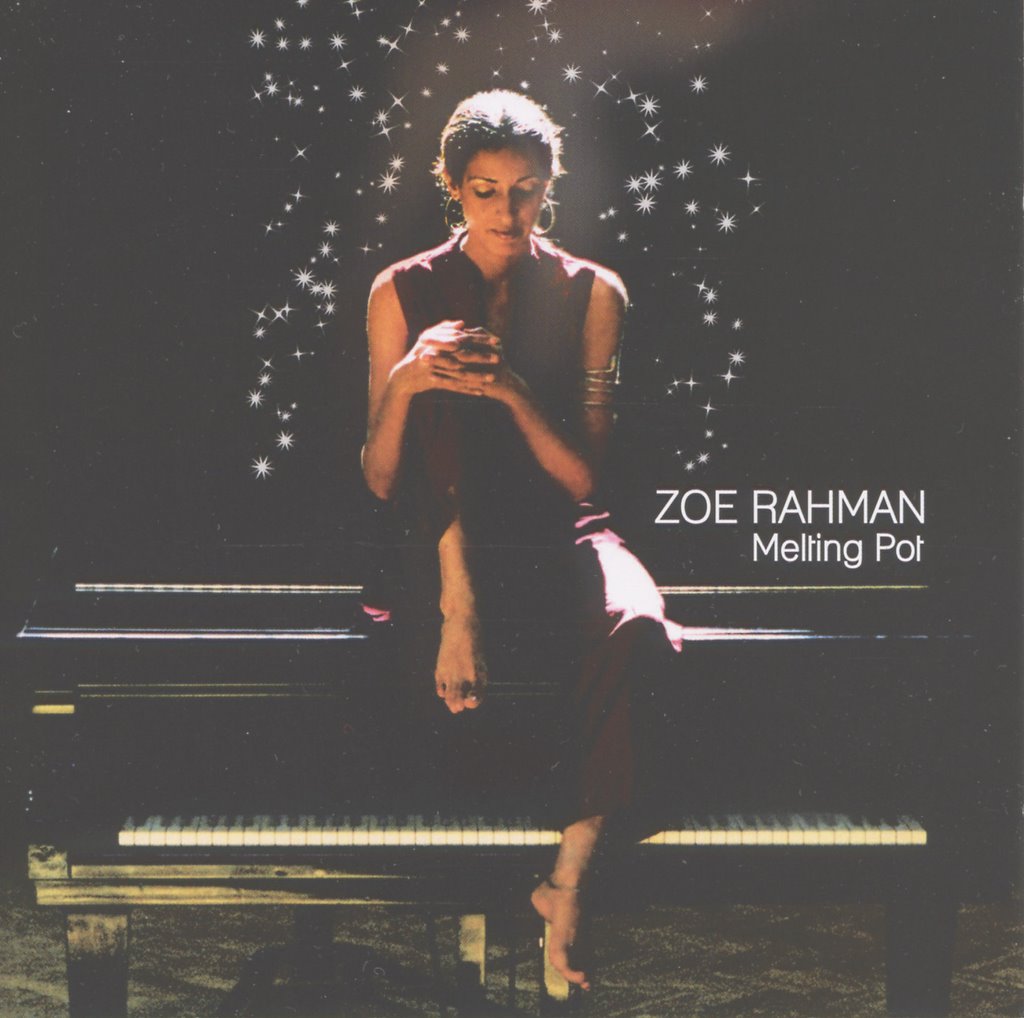
With the release of her second album, “Melting Pot”, the jazz pianist and composer Zoe Rahman has further confirmed her place as one of the most talented and inspiring young musicians on the contemporary British jazz scene. It is a real pleasure to listen to Rahman’s assured musicianship with its freshness of spirit creating intriguing rhythms and haunting melodies.

Rahman’s performance with the other members of her trio, American drummer Gene Calderazzo and double bass player Oli Hayhurst, has a driving sense of energy, yet also a reflective and transcendent quality.

The tracks have a variety of styles and moods; the third, “Shiraz”, is compelling with its poignant repeated melody from which Rahman’s playing soars. On track 4, the jauntily choppy piece “The Calling”, Rahman is joined by Patrick Illingworth on drums and Jeremy Brown on double bass.

All but one of the tracks were written by Rahman. The exception is the final track, the Bengali song “Muchhe Jaoa Dinguli”, written by the singer and composer Hemant Mukherjee. Zoe’s brother Idris renders the vocal line on clarinet, and Brazilian percussionist Adriano Adewale Itauna plays the udu drum.

Rahman was born in the city of Chichester, near the southern English coast, to a father from Bangladesh and an English mother. She studied music at Oxford University, and her classical music training is in evidence in the excellence of her technique.

After Oxford she went to Berklee College of Music in Boston, USA, where she had lesson with the legendary pianist JoAnne Brackeen. While in the USA she formed her own trio, with bassist Joshua Davis and the drummer Bob Moses.

In 1999 Rahman won the Perrier Young Jazz Musician of the Year Award. As a result of that award she recorded three tracks on a Jazz FM-produced compilation CD with drummer Daniel Crosby and bassist Orlando Le Fleming.

Her debut trio album, “The Cynic”, with drummer Winston Clifford and bassist Jeremy Brown, was short-listed for the BBC Radio 3 jazz album of the year review in 2001. She was then nominated in the “Rising Star” category of the 2001 BBC Jazz Awards.

Rahman is a graceful presence on stage, with her slender form, fine features and wide smile. As well as performing with her own trio and other ensembles, she performs records and tours with a range of other artists. Recent CDs on which she appears include the Clark Tracey Quintet’s “The Calling”, Palestinian singer Reem Kelani’s “Sprinting Gazelle”, Soothsayers’ “Tangled Roots”, Tony Bianco’s “In A Western Sense” and Gary Boyle’s “Games”.

She also co-wrote and played piano in the jazz-based theatre show “I’m a Fool to Want You”, based on the life of the French novelist, poet, jazz musician and surrealist Boris Vian.

Excerpts from “Melting Pot” can be heard at www.zoerahman.com

Susannah Tarbush
Saudi Gazette
20 December 2005

Saturday, December 03, 2005