Tuesday, August 27, 2013

second issue of Beirut-based city journal Portal 9 focuses on the square

Portal 9 editor-in-chief Fadi Tofeili and his team probe the significance of the city square in the Arab region and beyond
by Susannah Tarbush 


The squares of Arab cities and towns have been constantly in the news over the past two and half years as places and symbols of demonstrations, uprisings and revolutions.

 It is therefore highly appropriate that the Beirut-based journal on urbanism and the city, Portal 9 (in Arabic Al-Bawwaba al-Tasi’a), has chosen The Square (al-Sahat) as the theme of its recently-published second issue.

In his editorial essay "The Square" introducing the second issue, Portal 9’s editor-in-chief, the Lebanese writer, poet and translator Fadi Tofeili, explores the roots and history of the two main Arabic terms for square - sahat and midan. He looks at the ways in which the ideas associated with these two words intersect in various ways with what has happened over the past two and a half years in the squares of cities and towns across the Arab region. The diverse movements unsettled a long period of stagnation. “The crowds of activists, like water over the earth, gravitated toward the squares and open spaces and breathed new life into the original meanings of sahat and midan.”


Fadi Tofeili Editor-in-Chief of Portal 9

Portal 9 is backed by Solidere, the Lebanese Company for the Development and Reconstruction of the Beirut Central Districtand is published twice a year by Solidere Management Services. Its name was inspired by the historical gates of Beirut. In the 19th century the walls of Beirut had seven gates. With the growth of the city an eighth was added. Portal 9 is an imaginary opening into the city, “a gateway to endless possibilities.”

When the first issue of Portal 9 appeared in early 2013 it was immediately clear [as reported on this blog] that here was an original, exciting new kind of publication, dedicated to "Stories and Critical Writing About the City". The theme of that first issue was The Imagined. The second issue of Portal 9 has sustained and built on the quality of the first.

Each issue of the journal consists of separate Arabic and English editions, which are sold together and fit sugly side by side within a durable sleeve made of card, on one side of which is the Arabic cover words and images and words and on the other side the English. The journal’s articles are in-depth, and well-informed, yet highly readable. The journal is beautifully designed and the text is interspersed with copious high-standard photographs, drawings, maps and plans. It is a journal that readers will want to keep, and is set to to be a collector’s item.

Editor-in-chief Fadi Tofeili was born in Beirut in 1973. Asked about Portal 9’s aims and philosophy he says: “We hope to make Portal 9 a platform for city thoughts, histories, studies, and writings. A publication that deals with unwritten and oral stories and transforms them to documents and texts.” He adds: “Its ambition is to be a think tank that may produce multidisciplinary products and publications.”

The second issue of Portal 9 contains a variety of articles and stories inspired by squares and other public spaces that became vital areas of dissent, in the Arab world and elsewhere.


There are articles on Tahrir Square, on public spaces in Tunisia, on Martyr’s Square in Algiers, on the battle for Belgrade’s Streets, and on the gap between Casablanca city centre and its slums as seen in the novels of Muhammed Zafzaf. From Yemeni journalist Jamal Jubran there is the essay "Sanaa’s Walls and the Myth of Security".(Jubran is also a contributor to the recent I B Tauris anthology of essays Writing Revolution: The Voices from Tunis to Damascus.)

The creative writing section includes a powerful short story by Tofeili entitled "Bones". It also has a moving essay-memoir by Syrian novelist and activist Khaled Khalifa who is originally from Aleppo, entitled “In Search of a Tahrir Square”, translated into English by Maia Tabet.

Like other contributors, Khalifa was specially commissioned by Portal 9 to write his essay. “Every piece in Portal 9 is a commissioned piece written exclusively for our journal and dealing with the theme of the issue,” Tofeili says.

Portal 9’s creative writing section contains a piece by Mario Sabino, editor-in-chief of Brazil’s most influential weekly, Veja, in which he reflects on the square on which he lives - Place du Palais Bourbon in Paris. 

The new issue of Portal 9 has a lively interview, conducted by Todd Reisz, with the outspoken veteran Egyptian architect and urban planner Dr Abdulrahman Makhlouf, under the title "Plans the Earth Swallows". And there is an extensive photo essay by Ziyah Gafic on the architect Oscar Niemeyer and his designs for the Brazilian capital Brasilia, built from nothing in the 1950s.

One of the journal’s attractive features is the folded, removable, inserts placed in its pages like small treasures, each one individually designed. Tofeili says: “The inserts in Portal 9 are part of its identity. They give spaces for different styles in approaching our themes and topics. These ideas are related to our multidisciplinary backgrounds as a team of writers, editors, designers, and artists.”

There are four different inserts in the second issue, two in the English edition and two in the Arabic. In the English edition is Palestinian-Jordanian artist and architect Saba Innab’s folded insert “Disco”– on how radical Italian architects in the 1960s deserted the public space as a site of experimentation in favour of the underground city: they built discos.

One of the two inserts in the Arabic edition is by George Arbid, Professor of Architecture at the American University of Beirut. On the basis of old documents he recently discovered, he compares the three competing design projects for the National Museum of Antiquities and Fine Arts in Beirut in the competition of 1928.

Tofeili attaches much value to the research of old documents and other archival material. “Photographs, objects, old newspapers articles, and keepsakes from personal archives are always sources of fascination, so we seek them,” he says. “They are great sources of knowledge about a place and its inhabitants, and they merit special consideration in print and publications.

Formulating the presentation of these important sources, with academic research and creative writing pieces, makes a very special identity for Portal 9.”


What kind of readership is Portal 9 aimed at? Tofeili says an idea of the type of readers can be “concluded from the map of our contributors in the first and second issues. Because what we aimed for as contributors mirrors what we have in mind as the audience.

“We had young writers, in their early 20s, publishing their first writings, and we had professional researchers, academicians, novelists, journalists, photographers, a taxi driver, artists, historians, and critics. This circle of contributors includes a wide range of audience, interested in reading stories, research texts, and images as well.”

He adds that the Arabic and English bilingualism of the journal ”widens the map of contributors and audience, which lends diversity to Portal 9. It gives us incentives to look for new possibilities with each theme of the journal.”

The English and Arabic editions of Portal do not contain exactly the same contents in the two languages. The photographs illustrations in the two editions are different. Some articles appear in only one of the printed editions, but the translation into the other language can be found on the journal’s website. And the website recently added two videos supplementing articles in the new issue of the printed journal.

Tofeili says the project to launch Portal 9 started as an informal conversation around two years ago between him and his friend Nathalie Elmir, who is now creative director of the journal.


Portal 9's Creative Director Nathalie El-Mir

 “Our common interest in publications drew us together,” he says. “I was a freelance writer and translator with years of experience in newspapers, and Nathalie was a designer producing publications for Solidere. She had received several communication design awards, such as the notable German Design Council Gold Award for a corporate annual report.”

Their initial conversations “investigated how to re-engage people with their city center in Beirut – which has endured intense and devastating experiences of war and division – and how to re-involve them in their city’s existing public realms.”

They then held “a brainstorming workshop which included an architect, urban planner, novelist, photographer, publisher, artist, journalist, academic, theatre director, and designer, from Lebanon and abroad. “


The three-day workshop took place in Beirut city centre – “the location of the Solidere Multidisciplinary Design Department, and also the ‘kitchen’ of Portal 9. We discussed the structure of the journal and its possibilities.”

The workshop resulted in the formation of a team of editors based in Beirut and abroad. Editor-in-chief Tofeili and the managing editor Eyad Houssami are based in Beirut. The editor-at-large Malu Halasa, a curator and a writer of books on Middle Eastern visual culture, is based in London. 

The journal’s reviews and critique editor is Egyptian-born Omar Kholeif, a curator, writer and editor who was based in Liverpool in the North of England but now works in London. The urbanography editor, architect and writer Todd Reisz, who is a visiting assistant professor in Urbanism at the Yale School of Architecture.

Tofeili’s academic background is interior architecture, which he studied in the Institute of Fine Arts at the Lebanese University. While studying, he started to write for An-Nahar newspaper’s literary supplement Al Molhak. He wrote poetry, essays on city and urban issues, and reviews and critique pieces.

After graduating from the Institute of Fine Arts he worked for a year as a designer in an architecture studio in Beirut. “But I didn’t like what I was doing. So I decided to make a major shift in my career... and found myself involved completely in writing”

His first professional position as a journalist was as a reporter in Assafir newspaper. Then, in 1999, he joined the team of novelist Hassan Daoud who was establishing the cultural supplement, Nawafez, of the then new Al-Mustaqbal newspaper.

“My experience in Nawafez was a great opportunity in writing, editing, and translation,” Tofeili says. In addition to Hassan Daoud, the team included the prominent poet and translator Bassam Hajjar (1955-2009); poet and journalist Youssef Bazzi, and the anthropologist Chawky Douwayhi. “The result was a very significant weekly supplement that covered a wide range of culture.” He spent ten years at Nawafez, gaining major experience as a writer.

 “During that period I decided to continue my studies. I did an MA in American Studies at the University of Amsterdam. I focused on metropolitan America, as I was fascinated by the American metropolis.” At the same time he continued to send weekly articles from Amsterdam to Al-Mustaqbal.

Three books of his poetry have been published: Aw Akthar (2000), Hal Jarahta Yadak? Hal Jarahta Khaddak? (2008) and Shajara Baydaa' Touhawelo t'tayaran (2010).

In addition Tofeili translated several books including the novel Shame in the Blood (Aa'ron fi Al Solalaby) by Japanese writer Tetsuo Miura, and the classic study The Myths of the Cherokee (Al Hikayat al Shaa'biyya Li Kabilat Al Cheeroke), in three parts, by the American anthropologist James Mooney.

The inclusion of Tofeili’s short story "Bones" in the second issue of Portal 9 prompts the question, has he written other fiction? “Yes, I do write fiction,” he says. “I am trying to finish a book which is a collection of stories linked with a thread of characters and certain places in Beirut. It is a sort of novel – but I don’t call it a novel yet!”

The theme of the third issue of Portal 9 is to be Fiction. “It will contain a novella, and many other stories.” Tofeili says. The journal welcomes submissions of new writing in English and Arabic: the Portal 9 website provides a form for submissions, and a downloadable PDF of an eight-page style sheet.

Copies of Portal 9 can be ordered via the journal’s website, which links to stockist AntoineOnline. The journal is distributed to book stores and subscribers in the Arab countries by COLIDI. The international distributor is Amsterdam-based Idea Books which distributes the journal in the EU, US and Australasia. It is hoped that in the future it may also be possible to distribute Portal 9 via Amazon.

As editor-in-chief of a journal devoted to studies and writing on the city, which are Tofeili’s five favourite cities? He names: 1-Beirut 2-Amsterdam 3-Istanbul 4-New York 5-Berlin “The reasons for the first 3 are very personal,” he says. “I favour them because I know them very well, or because they are very nostalgic to me.” His choice of New York is “because of cosmopolitanism.” As for Berlin, “it is because of art, culture - and tragic historical lessons.”
[a version of this article appeared in Arabic translation in Al-Hayat newspaper on 25 August 2013]

Friday, August 09, 2013

Sarah al-Hamad's book 'sun bread and sticky toffee' elevates the date to star status


Kuwaiti writer and home cook Sarah Al-Hamad, a long time resident of London, broke new ground in Middle Eastern cookery writing with the publication in 2008 of her first book  Cardamom and Lime: Recipes from the Arabian Gulf (review in Banipal magazine). Al-Hamad revealed a fascinating cuisine in which Indian, Persian and Turkish influences mingle with the traditional Bedouin diet of dates and dairy products.


Now with her second book, Sun Bread and Sticky Toffee: Date Desserts from Everywhere, Al-Hamad has elevated the traditional Gulf staple food, the date, to star status. The new book is, like the first, published by Interlink Publishing of Northampton, Massachusetts. And like the first book, Sun Bread and Sticky Toffee is beautifully and imaginatively produced. Its many striking pictures include photographs taken by Al-Hamad in date-producing locations across the globe.

Sarah Al-Hamad at the launch of Sun Bread and Sticky Toffee

At the launch of her book at the Mosaic Rooms in London, Al-Hamad gave an entertaining slideshow on her "date trail" through the world of dates and date desserts. "My love affair with the humble date goes back to my childhood in the Gulf; you can say it's in my DNA. And growing up surrounded by palm trees helped."

Her interest in dates was reignited some three years ago by the English dessert sticky toffee pudding, of which a main ingredient is dates.

Al-Hamad wanted to know how, when and why this "quintessentially English" dessert came to have dates as its crucial ingredient. "That's what spurred me on and sent me off on this three-year journey of recipe testing, researching, talking to people and travelling."

Al-Hamad's version of sticky toffee pudding

Dried fruits entered the medieval kitchen in England kitchen around the 15th century when the first ships travelled from North Africa to England carrying dried nuts and fruits. "Medieval cookbooks from that time have recipes, especially custards and pies, that contain dried fruit and marry them with meats because in those days they considered that optimal health was attained by mixing cooling and warming foods."

As dates were considered cooling they would be mixed with meats like mutton or pigeon to create a wholesome recipe. "And so, thanks to trade, dried fruits were brought into the UK, and I think improved the British diet immeasurably"

Cartmel, a small town in Cumbria, England, claims to be the "home of the sticky toffee pudding". When Al-Hamad visited the town she found a lot of sticky toffee puddings being made and sold for consumption locally or abroad. But Cartmel is far from being the only place in England that claims to be home to the sticky toffee pudding. "I couldn't actually pinpoint where the dessert originates from," Al-Hamad said. "You can't help but imagine it being eaten at sumptuous banquets hundreds of years ago - but in fact the dessert first appeared on menus in the 20th century."

Al-Hamad's version of the pudding, Sticky Sponge Cake with a Toffee Sauce: King of Dates Pudding, is named after the medjool date. This  large, fleshy, and sweet date, with its irresistible toffee notes, is regarded as "the king of dates".

The recipes in Sun Bread and Sticky Toffee are divided into five sections: breads and spreads; cookies, brownies and slices; date cakes; puddings, fudges and custards; and ice cream, milkshakes and stuffed dates. Each section includes a photo spread on a particular place of interest on Al-Hamad's "date trail".

With the date having been an important part of Middle Eastern diets since antiquity, Al-Hamad provides frequent historical references. In some cases she devises a modern interpretation of an ancient recipe. For example Pineapple Palace Cake: Upside-down in Babylon, topped with an attractive pattern of sliced dates and pineapple, is a lighter version of the rich palace cake that the Babylonians would make for the gods.

Al-Hamad's Sun Bread: Date, Spice and Honey Loaf is a "dense, fragrant, sweet bread", inspired by the ancient recipe from Upper Egypt. The ancient Egyptians, like the Mesopotamians, used wheat, barley or corn as a base for bread, and for special occasions added dates, spices, honey and seeds. Al-Hamad suggests her Sun Bread be eaten for breakfast "slathered with cream cheese, or any time with a cup of tea."

an amateur's rendering of Sun Bread: Date, Spice and Honey Loaf

I had a go at making Sun Bread, using a cake tin rather than the bread tin specified in the recipe. The recipe includes generous amounts of chopped dates, almonds, eggs and honey and 1 tablespoon each of cinnamon and nutmeg. The quantity of spices seemed disconcertingly large, but their presence proved subtle rather than overpowering.

Sun Bread gets its rise from the whites of six eggs beaten into soft peaks. The bread rose nicely, with the crust having a slightly honeyed gloss, and had a pleasing texture, something between a cake and a bread, with the crunch of almonds and succulence of dates. Al-Hamad says the Sun Cake keeps for days. However, it is so delicious that it is unlikely to survive for long in most households.

At the launch of Sun Bread and Sticky Toffee guests had the chance to sample three different types of date, as well as some of the goodies from the book including Desert Date Balls, Pinwheel Date Shortbread, and Bejewelled Haroset: Date, Walnut and Apricot Spread.

Desert Energy Balls [pictured below], or Hais, are an ancient sweetmeat for which Al-Baghdadi gave a recipe in his 1226 cookbook Kitab al-Tabikh. They consist of a paste of dates, almonds, pistachios and vegetable oil shaped into balls (or other shapes) and rolled in toasted sesame seeds, desiccated coconut or chopped pistachios.


The decorative and moreish Pinwheel Date Shortbreads are made by spreading a date and pistachio mixture on a rich pastry, rolling it up into a long sausage shape and slicing into biscuit shapes ready for baking.

Pinwheel Date Shortbreads

Haroset, the fruit and nut paste eaten by Jews at Passover, symbolises the mortar used by slaves in Egypt. While the Ashkenazi version is traditionally basic, with apples and walnuts, the Sephardi version is - depending on local ingredients - likely  to be sumptuous, with the addition of dates, chestnuts, almonds, figs and raisins.

The trajectory of Al-Hamad's date trail was partly determined by the feasibility of visiting particular date-producing countries. "There are many other date-tastic places that I wasn't really able to visit," she said. Saudi Arabia is today's premier date centre, but was not easily accessible, so she went instead to the UAE. Nor was it practicable to do a research trip to Iraq, which was for much of the 20th century the world's 's leading date centre. The city of Basra in particular was famed for its extensive date plantations and the high quality of its dates. But decades of war, occupation and repression have devastated Iraq's date plantations and date production is only a fraction of what it once was.

Al-Hamad began her date trail in the indigenous home of the date, the Arabian Peninsula. In her slideshow there were pictures of Gulf date shops with their great mounds and displays of dates. People tend to buy dates in large quantities, especially before the month of fasting in Ramadan. Dates are customarily eaten as the first food to break the fast, and they are often given as charity.

The book includes a recipe for tamriya, a typical Khaliji date dessert in which dates are cooked with flour and vegetable oil. She calls her tamriya Desert Date Fudge, and finishes it off with slivered pistachio or chopped walnuts or almonds.

In the Gulf Al-Hamad came across date-flavoured flatbread, baked by Afghan bakers, and delicious with sharp white cheese. Another Gulf date bread is the Parsi dish Kajoor ni-ghari: Coconut and Date Stuffed Naans. 

honeyed barhi dates

In the UAE Al-Hamad went to the Date Festival in the Liwa Oasis green belt of villages and date plantations on the edge of the Empty Quarter. "In the Gulf they say the date has 360 uses, and when I  went to Liwa I understood why." In addition to the profusion of fresh dates on show, Al-Hamad found women weaving palm baskets, fans and mats. There were palm offshoots for sale, and palm-leaf houses to admire.

In Spain Al-Hamad visited Europe's largest date plantation in Elche, a half-hour drive from Alicante. In its heyday in Moorish times, in the 10th or 11th centuries Elche had about 1 million palm trees.  Today the number has dwindled to a quarter of a million and the Palmeral of Elche is now a UNESCO World Heritage Site.

"One of the interesting things for me is that in the kitchen the Spanish did not really absorb the date although it grows very well there," Al-Hamad said. "There was a bit of distancing themselves I think, historically." They do have pan-fried almond-stuffed dates, and  Elche makes a date liqueur. Elche is also world famous for the snack Delicias de Elche - almond-stuffed dates wrapped in bacon - although Al-Hamad did not find it on menus in the town.

The Mediterranean region is peppered with date palms, and there is evidence that  dates were eaten up and down the Mediterranean. Roman soldiers battling the Persians ate dates, and inspired by an Italian classic Al-Hamad has a recipe for the stunning-looking Ruby Polenta Cake: Date and Polenta Cake with Pomegranate Syrup, topped with pomegranate seeds.

Al-Hamad's date trail concluded with a visit to New World date cultivation, in California. The 1920s date boom in California came about after the medjool date variety was struck down in North Africa by a disease. The US Department of Agriculture was asked to help, and it took 11 healthy offshoots to Nevada and planted them out to see how they would do. They thrived, and grew into the newest date producing centre. Al-Hamad was interested to find that date producers in California still use the traditional Arabic words to describe different stages of maturity of the date.

Southern California's Coachella Valley is the home of the date palm in the USA.  At the valley's heart is the town of Indio which hosts the National Date Festival every February. Al-Hamad says that no visit to the valley is complete without a stop at the Shields Date Garden, which started in 1924. A quirky 15-minute film The Romance and Sex Life of the Date "playing here since the 1950s, sets the mood as the garden's signature 'blonde' and 'brunette' dates are sampled and a deliciously refreshing date shake is enjoyed."Al-Hamad's recipe for Highway Date Shakes starts involves blending dates, milk, and ice cream or frozen yoghurt, and adding adds sesame seeds, coffee powder or smooth peanut butter.

One of  the most moving things Al-Hamad found during her research was that "the date palm is very human:  there's a female and a male, only the female bears fruit - the  pollen is gathered from the male tree and sprinkled onto the female tree - and they have an almost human average life span of 75 years. They have  little baby offshoots that are then planted and grow into adult palm trees. They are very sociable, they like to be in company, they can overheat, they can grow sick."
by Susannah Tarbush

Sunday, August 04, 2013

arab new trends issues call for exhibitors for the souq @ nour festival

press release from Arab New Trends:


ARAB NEW TRENDS LAUNCHES THE SOUK @ NOUR FESTIVAL
14 November - 1 December 2013

a call for exhibitors for London's very first pop-up Arab Arts and Crafts Boutique

The event is part of the Nour Festival of Arts, which will deliver dazzling contemporary artistic talent from the Middle East and North Africa to London audiences during October-November 2013.
A Borough-wide event, the festival partners include the Victoria and Albert Museum, the Ismaili Centre, the Mosaic Rooms, Al-Manaar: the Muslim Cultural Heritage Centre, The Tabernacle, the Arab British Centre, Qatar UK Year of Culture, the London MENA Film Festival and us, Arab New Trends Ltd.

The Nour Festival of Arts aims to:

- reflect and celebrate the arts and culture of contemporary Middle Eastern and North African regions

- promote film, literature, music, visual arts, fashion, dance, crafts

- demonstrate artistic excellence and work that is thought-provoking and challenging

The Nour Festival is coordinated by the Royal Borough of Kensington and Chelsea and reflects the Council’s commitment to bring the very best international contemporary arts and culture to the borough. Nour – which means ‘light’ or ‘illumination’– sets out to explore contemporary culture from across the region. The festival was inaugurated at Leighton House Museum in 2010, a building that is recognized as being an international symbol of east meeting west.

The Event producer: Founded in 2009 by Maxime Duda, Arab New Trends Ltd is a cultural consulting company specialized in creating, marketing and producing Arts and Culture projects in link with or dedicated to artists, creators and Arts adventurers in the Arab World and the Middle East.

The Event: London will host its very first pop-up Arab Arts and Crafts Boutique, Al Souk @ Nour Festival, for 2 weeks in buzzing Notting Hill.

Right in the heart of one of London’s most fashionable district, we will present the very best and upcoming artists, designers and craftsmen from the Middle East and Northern Africa. Unique pieces, design object, exhibitions of art and photographic works shown for the first time in the UK.

Conceived of as a combination of an art exhibition and one of those free open-air markets that are so typical of the Arab World, Al Souk @ Nour Festival will be bustling with the sounds of the streets of Cairo, Beirut, Aleppo and Marrakech, with a selection of the very best in design, fashion, jewelry, visual art, photography, music, literature, illustrated books, furniture and stationery.

We will handpick all the artists and designers who will present new works in London, with a vast range of pieces and prices perfect for everyone’s wallet.

Al Souk @ Nour Festival will take place between November 14th and December 1st in two of Notting Hill’s most reputed Art galleries :

West Bank Gallery (14-21 November) and The Tabernacle W11 (25 November - 1 December)


Al Souk @ Nour Festival will provide a huge exposure to all the artists who will be invited to share our space:
- Through the Festival programme, distributed throughout London during 3 months. (Sept-Nov 2013)

- With the special brochure of the Souk that we will print in September 2013 (20 000 brochures)

- Thanks to our extensive e-promo on Facebook, Tweeter, Instagram, Tumblr and on the Festival website

- Along with our numerous local Institutional and Arts partners in the UK and London (Shubbak Festival, RBKC, Arab British Center, Embassies, etc...)

- Through the 2 galleries that will host the Souk (25 000 followers and arts and crafts buyers).

- A large press and media campaign will be led in Art specialist media, Arab specialized press and all UK and worldwide lifestyle media.

- This event is a unique opportunity for you to get a broader exposure in the UK, and particularly in London and the Borough of Kensington and Chelsea, reputed for its large Arab Diaspora.

WE ARE OPENED TO RECEIVE APPLICATIONS FROM EXHIBITORS, ARTISTS AND CREATIVE COMPANIES IN THE FOLLOWING SECTORS:

- Design (objects, jewelry, modern crafts)
- Fashion (couture and high street)
- Furniture design (home appliance, small furniture, lighting, textile)
- visual art (painting, collage, mixed media, photography, sculpture)
- music (preferably via a music label / distributor)
- literature (illustrated books, comics, art books, novels)
- Stationery (calligraphy, notebooks, etc)

What are we looking for:
● Be contemporary: we aim at showcasing the best in contemporary design from the region. We do not aim at promoting folkloric objects.
● Have a “regional twist”: we are looking for unique pieces, that couldn’t be found anywhere else in the world and are representative of the perception of Arts and Crafts in the Arab World.
● Be realistic: Please make sure that all the pieces you want to propose us can easily be carried/sent to London in November.
●Be unique: propose us your most original pieces: we are exhibiting in 2 Art Galleries, we want you to be bold!

To all designers, artists and companies interested to join us on this project, please email:
- Your CV/ brief about your work
- Links to any relevant website, with pictures
- A price list of the pieces you would wish to exhibit. (in USD or Euros)
to: maxime.duda@gmail.com or md@arabnewtrends.com

Applications will be accepted until August 31st 2013 but the first candidacies will be considered in priority, so feel free to just drop an email and ask any question you might have and contact us asap

Sunday, July 21, 2013

part 2 of pop-up mathaf: mapping arab literature in london

Hisham Matar in conversation with Deena Chalabi

Serpentine Gallery and Mathaf:Arab Museum of Modern Art map London-Arab links
by Susannah Tarbush
Part 2
(Part 1)

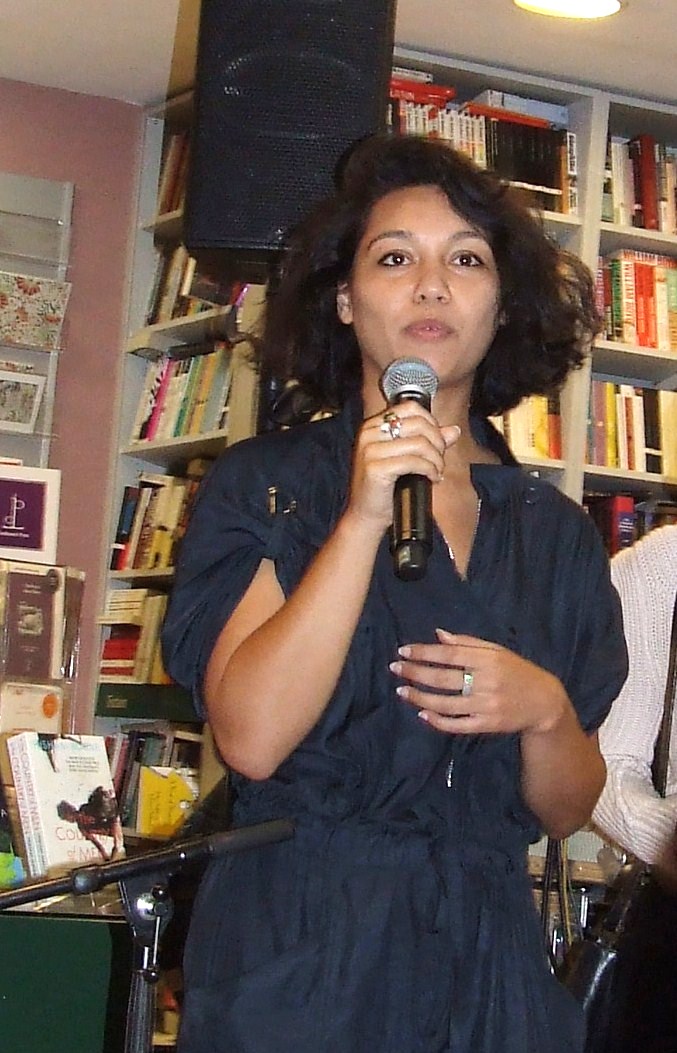
The second half of Pop-Up Mathaf: Mapping Arab Literature in London, held at the London Review Bookshop, featured three Arab authors with strong links to London: prizewinning Libyan novelist and essayist Hisham Matar; Jordanian short fiction writer and advertising copywriter Ma’n Abu-Taleb (who, like Matar, lives in London); and Qatari-American writer, artist and filmmaker Sophia Al-Maria who describes London is one of her "two adopted cities".

The three appeared along with Margaret Obank, publisher, former editor, and co-founder in 1998 of London-based Banipal Magazine of Modern Arab Literature. 

Pop-Up Mathaf marked the beginning of Continuous City: Mapping Arab London, a series of talks, discussions and publications mapping relationships between London and Arab cities. Continuous City is being developed by Doha-based  Mathaf: Arab Museum of Modern Art  and the Serpentine Gallery's Edgware Road Project as part of Qatar UK 2013 Year of Culture.

The event was hosted by its guest curator Deena Chalabi, a New York-based writer and curator who grew up in London and was founding Head of Strategy at Mathaf, which opened in 2010. The evening was a tribute to the great Sudanese novelist Tayeb Salih (1929-2009) who for many years lived and worked in London. The British capital is the setting of crucial parts of his masterwork, the novel Season of Migration to the North.

The first part of Pop-Up Mathaf included an engaging conversation between Co-Director of the Serpentine Gallery, Hans Ulrich Obrist, and Salih's friend and creative collaborator, the Sudanese artist Ibrahim El-Salahi. The artist's major retrospective Ibrahim El-Salahi: A Visionary Modernist opened the day before the event took place and continues to 22 September.

The participants in Pop-Up Mathaf: Mapping Arab Literature in London spanned the generations. Ibrahim El-Salahi, is 82, and the Beirut-born poet and artist Etel Adnan 88. (Adnan sent from Paris a text on Salih which was read out at the event by Co-Director of the Serpentine Gallery Hans Ulrich Obrist.)

Six decades separate Adnan from Sophia Al-Maria who, at 29, has already made quite an impact with her writing and art, some of which is on concepts of  Gulf Futurism. Al-Maria's writing has appeared in publications including Harper's, Five Dials, Triple Canopy and Bidoun. Her acute, courageous and entertaining memoir The Girl Who Fell to Earth, published last November by Harper Perennial, has attracted much favourable attention.  

Sophia Al-Maria's memoir

Al-Maria studied comparative literature at the American University in Cairo (AUC) and aural and visual cultures at Goldsmiths, University of London. Her work has been exhibited at the Gwangju Biennale in South Korea, the New Museum in New York and the Architectural Association in London.

Al-Maria spoke on the background to her writing a memoir at the age of only 29. "Although I'm here in very amazing company to talk about Arabic literature, I write, speak and dream for the most part in English. And since this is an event that is supposed to be about mapping, I'm going to talk a little bit about the landmarks, the literary landmarks specifically that made it possible for me to write this book and to find my way here."

The project of Arab literature as she first read it at AUC seemed to be about "the internalisation of the post-colonial state - the narrativization of trauma from the safe distance of fiction - the speaking of things left too long unspoken.

"The books on my syllabus all occurred at least in part in London, this metropolis of Arab dreams or, as Tayeb Salih terms it, 'London, another mountain, larger than Cairo, where I knew not how many nights I would stay.' To Arabs through the 20th century 'Lenden' provided a sort of centrifugal point where the gravity of reputation, language and nationality is set to zero, if only for a brief moment, somewhere along the Edgware Road or, increasingly these days, the richer cousins in Knightsbridge.

The first pair of books to "make a serious dent in my nascent ideas about being Arab, and actually about writing", were published in the mid-1960s: Season of Migration to the North and Waguih Ghali's Beer in the Snooker Club. Both were "filled with antagonism and indifference and were set in the complex terrain of post-colonial and post -evolutionary states. They were stories encased inside the extremely subjective but also supremely fun to read experience - that of young philandering male narrators who travel to the West, or perhaps more accurately to the North or whatever."


Later, when the time came to write of her father's travels from the Saudi desert to the Pacific North West, where he met Al-Maria's mother, "these two books are the ones which paved the road. Like my father, both Ram and Mustafa like women and drinking, and both books talk quite explicitly about sex, specifically sex with foreign women - an act that seems in their hands to be a symbolic conquest sometimes or occasionally, more disturbingly, some kind of retrograde revenge for the rape of their respective countries."

While reading the books she had "moments of cringey discomfort in the thought of my American mother falling prey to my father, the young Arab student. Had he objectified her in this way? Had my father been as cynical?

"No, nor was he as educated or entitled, but he was like the protagonists of these novels in another way - because in the end he came to the same understanding: that the chasm between his home and this alien culture was too deep for him to cross. In the end he returned to the Gulf with the legion of others like him and started a second family with his cousin, my stepmother Flu."

Al-Maria asked "What happens to the offspring of these sojourns? Where does the story go with the narrative? This was where my mission picked up, this is where I hoped vainly to write something new and this is what turned my book into some kind of weird sequel to Season and Snooker -  at least in my mind - both of which circled my two adopted cities Cairo and London."

Many books gave Al-Maria "the courage/terrible idea to write from the experience of being a decentered Arab woman: Ahdaf Soueif's Aisha, Nawal El Saadawi's Woman at Point Zero and, more surreally, Fantasia by Assia Djebar."

Most of the time outside the syllabus of modern Arab literature was spent with SF, cult, weird fiction and comics. "I was wallowing in the Janus-faced literature and film born of binaries, the stories of mutts and half-castes and twins and trannies. The neither/nors with crossed eyes who spoke in doublespeak - forever possessive of their dispossession.

 Sophia Al-Maria

"In revisiting the only recently abandoned Atlal of my personal past I found my way as an extraterritorial extraterrestrial lost with nothing but a broken moral compass of these books and music and movies for a guide."

She said she couldn't talk about the beacons that led her to writing without talking about the over-arching theme of her book: "being lost". In writing her memoir "I had to have a clear destination and route in mind when I began or I'd end up hacking my way down the same old paths as my predecessors who are far better at writing anyway. .. navigating a narrative from my prehistory to my present without falling into certain traps of writing as or about being Arab and being female was going to be tricky. There were traps set out for the native informant not all of which I avoided successfully ... anthropological musings on Islam, tribalism, cultural mores, sexual proclivities and that sin of sins self-Orientalisation."

Al-Maria concluded: "The leaden personal geographies of north, south, east, west, here, there have in the 20th and 21st centuries provided a fine ballast to the literatures of the Arab world, and more generally post-colonial literature - but I'm not so sure any more.

"This approach - however wonderful and necessary at the time Tayeb Salih or Waguih Ghali were writing - has in this age of selfies started to seem really indulgent and has turned us into tail-eating ouroboroses, Golems lost to time isolated in our caves, muttering in schizophrenic debate about identity politics, when the world is waiting for a surprise and something shiny and new, something ... precious to emerge."

Ma'n Abu-Taleb reads All Things

In introducing Jordanian writer Ma'n Abu-Taleb to the audience, Chalabi said he was "determined to steer clear of identity politics" in his contribution.  In addition to his fiction writing Abu-Taleb is co-founder and editor of the online Arabic music analysis and criticism magazine Ma3azef.com. His story, All Things, was translated jointly by him and Egyptian Wiam El-Tamami, who in 2011 won the Harvill Secker Young Translators' Prize. Abu-Taleb's interests include philosophy and his story is introduced with a quote from Alexandre Kojève: "Except that the dog is here and now, while its concept is everywhere and nowhere, always and ever." Abu-Taleb works in communications and in his short fiction he has a talent for succinct writing and clarity.

The narrator of All Things is on a worldwide quest to recapature the experience of eating a wondrous chocolate ice-cream once given to him by a big, comforting hand in a strange street in which people are speaking a strange language. "In London, I thought I would find it. This is why I fell in love with that city: if there were five people in the entire world obsessed with one very odd and obscure thing, three of them would be in London - and will most likely have formed some sort of club.

"There, I got together with ice-cream lover; in fact, I joined a society for fans of my flavour, chocolate. Our monthly meetings were held in a pub called The Duck and Barrow and were usually attended by twelve or thirteen people, most in their forties. We would have a few pints, share stories about ice cream, and organize visits to ice cream artisans all over Europe I soon came to realise, however, that their obsession was not quite the same as mine..."


Hisham Matar''s debut novel

In the final session of the evening, Chalabi interviewed Hisham Matar and Margaret Obank. Like Sophia Al-Maria, Hisham Matar writes in English. His first novel, In the Country of Men (Viking, 2006), set in Libya, was shortlisted for the Man Booker Prize in 2006. His second novel Anatomy of a Disappearance also won accolades. Both novels have been translated to many languages. Matar writes for publications including the New Yorker magazine and the Guardian newspaper. 

Matar wrote the introduction to the New York Review Books Classics 2010 edition of Denys Johnson-Davies' 1969 English translation of Tayeb Salih's The Wedding of Zein, illustrated by Ibrahim El-Salahi.


 New York Review Books Classics edition of The Wedding of Zein, with an introduction by Hisham Matar

Matar said he had been deeply touched by Obrist's discussion with Ustadh Ibrahim El-Salahi about the artist's friendship and artistic collaboration with Tayeb Salih. "It was a wonderful portrait that you painted of two friends - I think you said coming to know one another perfectly - it made me think about whether I know anyone perfectly, I don't even think I know myself perfectly.

"I find it very difficult to imagine that Tayeb Salih wouldn't feel deeply grateful to you for this wonderful, generous portrait that you've painted tonight - generous towards him but also towards us. So it's an inspiration."

Matar thought it appropriate that Tayeb Salih had been chosen as the inspiration of a conversation about London. He remembered reading the line by Edward Said describing Season of Migration to the North as a Heart of Darkness in reverse. "That statement is for a Western audience - but for me in a sense Season of Migration to the North is a sort of Heart of Darkness not in reverse, in the sense that through it he managed to paint for us a sense of isolation that perhaps we were enduring and feeling but no one had articulated in this particular way."

Matar thought London was an interesting place to do that because "notwithstanding the usually stated assertion that London's wonderful qualities of tolerance and acceptance of outsiders it remains on some level a complicated place to be a foreigner. It lacks some of the social grace - for lack of a better expression - that eases the path, that maybe even helps to delude, the foreigner that he or she is not a foreigner.

London is an interesting and wonderfully appropriate place for an exiled artist to work because it offers an "abstracted existence where you are not socially obliged - in fact you are socially almost the opposite - in a sense that the abstracted space itself is on some level cruel, it needs to be cruel, and so for me personally it's a place that it's good to make work for that reason."


Asked by Chalabi whether, after all these years, he thinks of London as home, Matar said: "I never think of this question about home, until someone asks me. When I sit and make work I don't think about home, when I'm walking around I don't think about home. I think about incredibly mundane, specific things - who I'm going to see, where will I sleep, when do I eat, you know. It's home in the sense that I know how to do all of those things here, I know the good places to eat, I know where my friends are, and I know where to escape, which I think is a definition of home."

Chalabi said it is clear from Matar's books that he is able to function in a variety of cities. "I would be interested to hear you talk further about this idea of dislocation and of mapping cities onto cities and that process that occurs as a exile."

Matar replied that when he first came to London as a 15-year-old "I found that my most visceral experiences were happening with literature, and art, and film, and music. I didn't belong to an Arabic community that was somehow sheltering me. I felt very exposed to British culture for that reason.

"Being Libyan and from a family that's the wrong side of the dictatorship your immediate instinct when you hear a Libyan voice is to run in the opposite direction. So your own don't represent a sense of kind of a sheltering community, and my engagements were through art and literature."

Matar added, to audience laughter: “When I watch the quantity of Arabs that hover around Selfridges I think that maybe that is also a sort of engagement with the city. Perhaps the history of the Middle East would be entirely different if the amount of people that have been going to Selfridges from say 1948 - an interesting year - to the present had gone, say, to the National Gallery or the Serpentine Gallery."

Matar, who was born in 1970, said: "I think one of the things London does, to particularly the younger generation of Arabic artists and writers, is it becomes a sort of dreamscape, it becomes a space where to fantasise - particularly about conduct actually, not even identity, but ways of being. And so it becomes a space for experimenting with this. I think that's something that hasn't - for many good reasons - really come through work by writers from a previous generation. Not even from my generation. I think it's something that's happening more now."

Asked about the experience of having his work translated, Matar said "I don't really have much to say except that every time I am translated into a language I know it is a deeply painful terrible process, not marked by any pleasure at all." Even though he thinks very highly of his Arabic translator, with whom he works together, it is still "deeply painful".  He is not sure of all the reasons for this, but "one of the things we forget when we read a book in translation is that none of the words in there have been written by the author. If you are the author, it is slightly complicated. But as a reader I find it incredibly interesting... when I  read a translation, particularly a good translation. It's fascinating because what you're hearing is two writers working at the same time in a sense. And a good translation can conceivably be better than the original because you have two writers working on it. But when it's my own work I'm too close and too involved to be objective about it."

Chalabi said the landscape sounds very different from when Matar began, and "we see that in London with Shubbak as a festival, now in its second iteration." (Pop-Up Mathaf was one of the final events in the second Shubbak festival of contemporary Arab culture, which ran in London from 22 June to 6 July).  She said: "I think it's interesting to see that there is a certain generation of young Arab authors, artists etc who feel that this notion of the Other is no longer necessarily relevant". She asked Matar about the issue of "how does one conduct oneself, how does one position oneself, in terms of representation, in terms of acceptance by different places to which one is supposed to belong ." 

Matar said that one of the things that happens to you when you're Arab, or from anywhere in the world, and you go to a place that has very specific ideas about who you might be or the place you come from is that you are immediately confronted with history, that you have to engage with in a sense. At some level history is not only events but it is also assumptions. Britain has a ... very definite sense of the self which expresses itself in a kind of confident gesture such as criticising oneself, criticising the place, flirting with ideas of living here and there, buying places here and there, a kind of expression on one level of a sort of national confidence that invests a lot in certain readings of history.

"And if you come from a place like Libya or the Sudan, and you are a young man here, and you are not surrounded by your own, then you are in a sense in a very vulnerable historical place. I remember when I first came here and there wasn't a day I didn't hear something on the radio or read something in the paper that wasn't presumptuous about myself, or about my part of the world, or about my history. It had some sort of presumption that wasn't exactly accurate and that is something that you have to find a way to deal with. I think particularly as an artist."

Margaret Obank

Margaret Obank said that during the evening she had been remembering the various occasions on which she and her husband, the Iraqi writer and editor of Banipal Samuel Shimon, had met Tayeb Salih. She particularly recalled a conference in Nottingham. "When all of us who had been at the conference had nothing to do, Tayeb engaged us by reciting Mutanabbi the whole evening. Absolutely brilliant, word perfect".

She recounted how Banipal came to be founded in 1998. She knew many members of the Iraqi community in London and then met and married the Iraqi writer and journalist Samuel Shimon who was at that time a publisher of poetry in France, with the small press Gilgamesh Editions. She had been trying to learn Arabic at night school and so on "but never learnt enough  to read it. I've always loved poetry and literature myself." And so the idea was born of translating and publishing Arab literature in English themselves, and after discussion with some of their many Arab writer friends "we decided to do that. And we didn't know how it would happen but it did.

"We felt really the most important thing was the literature of the Arab world is part of the canon of world literature. We, I, felt a responsibility to bring it into the English language." She showed the audience the first issue of Banipal, with its cover illustrated by the Syrian aritst Youssef Abdelké showing the Arabic letter "ayn" and the letter "E" to symbolise the Arabic and English languages. The magazine started an A4 size but is now in a book format. Three issues appear annually and the 47th issue of Banipal, with a focus on Kuwait fiction, has just been published.

Obank said the magazine had received a lot of letters telling them they had made a mistake in depicting Banipal as a magazine of Arab, rather than Arabic, literature. "We said no, we haven't made a mistake. Arab authors write in many different languages, particularly with the growing diaspora.  So we publish Arab authors who write in any language, and even in English of course."

Many Arab writers do not know any English, and are very pleased to be translated into it. Obank noted the ways in which the world of translation has changed since Banipal started, including the introduction of new technology. When Banipal started, many people thought that translation from Arabic had to be carried out by a mother tongue English speaker with an English name. If a translator had an Arabic name some found this less acceptable - an attitude that still persists to a small extent. 

The teaching of Arabic, and of translation, has completely changed. Since 9/11 there has been a phenomenal growth of interest in the Arab world, and translation departments are massively over-subscribed. "Two or three generations of young students have come out who are  very keen and who have a completely different attitude from the older generation about the Arab world."


"We're always looking for ways to encourage people to read, to get across, because you've got in this country a massive media, you've got a massive state establishment, and you have an ideology which is actually full of stereotypes about the Other, particularly about the Arab world, considered to be full of camels." (When the Mayor of London Boris Johnson spoke at the Shubbak reception, he told a story about a camel and its drooling lips..)

 But on the other hand we want readers all over the world to enjoy contemporary Arab authors and to get into the heart and soul of those countries where they come from. And we really feel that it's through literature that you understand the other and you get this dialogue between cultures and, you know, when somebody reads a translation you read and you get involved in it and you have such an incredible experience - you are sort of living the life of the author, of the author's characters, and so for human beings this is incredibly important. to have an experience of other cultures.

Banipal receives many requests from the younger generation with BAs or MAs from top universities to work as interns at Banipal, and "so we have this continuous stream through".

In addition to the magazine, Obank felt ahamed that the field of Arab literature translation was so poor, and so every few years Banipal launches an initiative to increase it. One of its major initiatives was to start the first-ever prize, the annual Saif Ghobash - Banipal Prize for Arabic Literary Translation, for an Arabic literary translation published as a book.

This immediately put Arabic on the same level as languages such as French, Dutch, German, Spanish, Greek and Hebrew for which there are literary translation prizes administered by the Society of Authors and awarded at the annual awards ceremony.

Banipal has also organised tours of Arab authors, "bringing them over from different countries to travel around Europe, going to read in libraries and we came here to the London Review Bookshop." Then the London Review of Books started World Literature Weekends, which in 2011 included an Arabic Literary Translation Workshop run by Professor Paul Starkey.

Deena Chalabi said that one aim of Continuous City: Mapping Arab London is to try to map out archives in London that help to tell certain kinds of histories and stories about the Arab world. She asked Obank about the Banipal archive. "How accessible is it, and what are your plans for increasing its accessibility?"

Obank said "we haven't really thought about it being accessible unless somebody's doing a PhD or a study." She noted that the Banipal website carries every issue of the magazine, and information about the contributors, including authors and translators. There have been around 800 contributors so far.

Obank pointed out that although Banipal has many translators and authors all over the world, "in our little office is a very small team." And Banipal does not really get any support from the Arab world. "We always thought that we would once we started we would get major funding and would be able to employ somebody to create and look after an archive." But there is virtually no funding coming from the Arab world, and yet there are huge foundations translating into Arabic from other language.

Obank said the lack of respect for contemporary Arab literature is "a big problem in the Arab world." There are many prizes, and literary festivals, but "making sure that the rest of the world hears the voice of contemporary Arabic literature is not one of the concerns. And that's a problem for us - we have to rely on asking the Arts Council to give us some support" - which is tiny. "We'd love to have an archive, but we need the funds to create it. If anybody wants to come to our office, they're very welcome to visit."

Thursday, July 18, 2013

part 1 of pop-up mathaf: mapping arab literature in london

Tayeb Salih

Serpentine Gallery and Mathaf:Arab Museum of Modern Art map London-Arab links
by Susannah Tarbush
Part 1
(Part 2)
 
London has long been an important city on the world map of Arab literature, with Arab authors writing about it and sometimes making it their home. The Arab literary relationship to London was the focus of  Pop-Up Mathaf: Mapping Arab Literature in London, an evening event held recently at the London Review Bookshop. The event was part of Continuous City: Mapping Arab London, a series of talks, discussions and publications mapping relationships between London and Arab cities. Continuous City is being developed by Doha-based  Mathaf: Arab Museum of Modern Art  and the Serpentine Gallery's Edgware Road Project as part of Qatar UK 2013 Year of Culture.

The event was a tribute to the late great Sudanese writer Tayeb Salih (1929-2009), author of the acclaimed and pioneering novel Season of Migration to the North which was first published in Arabic in 1966. The novel was translated into English by Denys Johnson-Davies, and has appeared in around 30 other languages. Season of Migration is partly set in London, where Salih himself resided for a long period and where he was at one time head of drama for the BBC Arabic Service.


The gathering offered the audience the privilege of hearing from Salih’s 82-year-old close friend and collaborator, the Sudanese artist Ibrahim El-Salahi, a man of much wisdom, clarity and charm. His major retrospective Ibrahim El-Salahi: A Visionary Modernist , bringing together 100 works produced over more than 50 years, opened at London’s Tate Modern on 3 July and runs until 22 September.


Ibrahim El-Salahi

Pop-Up Mathaf: Mapping Arab Literature in London was hosted by Deena Chalabi, a New York-based writer and curator who grew up in London and was founding Head of Strategy at Mathaf: Arab Museum of Modern Art. This year she is guest curator of the two Pop-Up Mathaf programmes in London and Liverpool.

Chalabi said it had been "an absolute honour" to know El-Salahi since the opening of Mathaf almost three years ago. He was not only one of the artists in Mathaf's opening exhibition, Sajjil: A Century of Modern Art, but was also featured in the exhibition Interventions. "The work he has made in Doha before and since continues to be an inspiration to all of us."

Pop-Up Mathaf: Mapping Arab Literature in London was one of the events in the three-day Ehtifal Festival of art, literature, music and family events presented by the Serpentine Gallery and the Qatar Museums Authority (QMA) as part of Qatar UK 2013 Year of Culture. Ehtifal was also one of the final events in the Shubbak Festival of contemporary Arab culture from 22 June to 6 July.

Since opening in Doha in December 2010 Mathaf has explored various strategies for engaging with audiences in the Arab world and beyond. The Pop-Up Mathaf framework, developed by Deena Chalabi, aims to engage with international audiences through a “flexible, innovative and engaging cross-cultural platform for multiple voices on art and ideas.” This year Chalabi is guest curator of the two Pop-Up Mathaf programmes in London and Liverpool.

Deena Chalabi

Chalabi said the Continuous City project grew out of conversations she had with the Edgware Road Project, and during her upbringing in London with Arab relatives who were always referencing and thinking about other cities and places. Added to these conversations was “my exposure to the cosmopolitanism of Arab artists and writers in my work over the past five years with Mathaf”. Together, “they outline the importance of activating culture and memory, intergenerational dialogue, and engagement with place in different ways, as being crucial to each of us as we try and navigate our own space in the world.”

Jochen Volz, head of programmes at the Serpentine Gallery, explained that the Edgware Road Project is one of the Serpentine’s off-site initiatives. Since 2008 it has brought artists, thinkers, writers and researchers to the Edgware Road area. “Here we have worked with members of the community to chart histories and map relationships between London and the Arab world from a local perspective. It is in the spirit of this project that we are very happy to be collaborating with our great friends at Mathaf, the QMA and Shubbak to present this evening's programme"

Volz noted that he and the Serpentine’s Director Julia Peyton-Jones and Co-Director Hans Ulrich Obrist have worked with the QMA on many occasions. This collaboration included the commissioning of a public installation Rock on Top of Another Rock, by artists Fischli and Weiss, currently on display in Kensington Gardens.

Rock on Top of Another Rock in Kensington Gardens

Volz said: "It is with this idea of exchange in mind that this evening we will hear from writers and publishers who span generations of Arab literature in London. They will interrogate questions of time, place, memory and migration.”

He added that “Continuous City invites artists, writers, economists and historians to develop an atlas charting relationships between London and the Arab world. We will see the results of this research emerge through publishing initiatives, online and through events.”

Janna Graham

Janna Graham, curator of the Edgware Road Project, explained "we've been working on archives for many years connecting the Edgware Road to other places in the world. It was a great moment when Deena approached us and said what would it be like to do this in a broader way - to think about London, mapping histories of the relations between the Arab world and London, but not through a sociological or purely anthropological or purely journalistic perspective, but through all the kind of poetics and artistic strategies that have been developed over a number of years. We're really happy to be launching this year of work together, which complicates this question of what it is to do a mapping to begin with, because we all know histories of mapping are not always the best histories to refer to."

Amal Khalaf

Amal Khalaf, assistant curator of the Edgware Road Project said Continuous City is “a really great opportunity for us to put out all of the research, the studies, the stories that we've been collecting on the Edgware Road with artists and people from the community, from the cafes, from the community centres and cultural centres.”

Deena Chalabi said the Pop-Up Mathaf event was "just the beginning of the Continuous City project which will feature research on many different aspects of Arab London. The publication will hopefully include many expanded versions of the conversations and readings this evening." The contributions during the ever would be “teasers for what will come later" in Continuous City. “Each of our writers and artists has tremendously varied experiences of the world and this particular world city we're in and we're delighted to have them all with us.”

Serpentine co-director Hans Ulrich Obrist screened a short section of a two-hour interview he conducted with Tayeb Salih at his house in Wimbledon in 2006 as part of the gallery's first Marathon event. Obrist cited Eric Hobsbawm “who always said we need an urgent memory moment”. Obrist added that “memory may be in our age of the internet even more urgent than before: because we have more and more information there are more memories. Maybe as Rem Koolhaas said there is much amnesia in the centre of this information age.”

His interview with Salih included discussion of mapping, memory and Season of Migration to the North. The novel is "an inspiration not only to so many writers but also to many architects we work with, and to many visual artists. So we felt it was very important to do an event in memory of Tayeb Salih."

He discussed with Salih what Hobsbawm had told him about living in an age of increasing amnesia and that he thinks we should somehow protest against forgetting. Salih responded “I also claim that I'm trying to do that because in the things which happen to a country like the Sudan and the changes and the coups and the new ideology, the various ideologies, often people think they are doing something new but they are not.

"If only they could go back 100 years, 200 years, 500 years they will realise that they are not doing anything new, they are merely repeating, in a slightly different way. And a great deal of time is wasted because people imagine they are innovating, they are pioneers, they are doing something new, they are not. So awakening memory is very important."

Salih compared the writing of a novel to carrying out archaeology. "In my writing I hanker after something impossible: to keep the world I knew and loved the same. And of course I know very well that is impossible, but there is no harm in trying. Many architects are now trying to do the same, and poets and painters and so on.”

Obrist asked Salih about Season of Migration and issues of transition, migration and being out of place.  Salih said "when you read Season of Migration with reference to an earlier novel called The Wedding of Zein – in which the community I grew up in is more or less intact - then you see the trauma which befell the community in the end.

a photograph of the young Tayeb Salih (R) displayed during Pop-Up Mathaf

“There is a stranger coming from the outside - and then the place undergoes a very extreme trauma with double murder in the village and things the like of which never happened before. It’s almost a Shakespearean idea or Greek idea. Shakespeare [Hamlet] says ‘Time is out of joint’. And the time comes out of joint in Season of Migration.”

Obrist read out a message which the legendary 88-year-old Beirut-born poet, writer and visual artist Etel Adnan had sent to the event from Paris.  Obrist said many of Adnan's paintings had been shown in the last Documenta in Germany and that she had often talked to him about Salih and his notion of time being out of joint.

Adnan's text began: "I am writing you a letter, dear Tayeb, as where you are computers haven't reached yet... " She recalled meeting him in Beirut in around 1973. “You were radiant. A beautiful human being. I had to interview you for my newspaper. I had such a love for your writings that I couldn't say much. I still can't.

“You brought Africa in Arab literature - of course the whole of North Africa is African but that didn't really enter our consciousness. We have a serious reality problem, we are mainly Africans, and because of you we may start to belong to that continent that is still to be discovered by its own people... you brought - with the immense expanses of the Sudan and the incredible majesty of the Nile - a modernity and an elegance of style that no one in Arabic had ever achieved."

She wrote that Salih "spoke of our new nomadic lives, the caravans nowadays not following the Silk Road, but always North. I remember that your voice over the radio had the humming of a drum, and your thinking the originality of wild life."

Hans Ulrich Obrist interviews Ibrahim El-Salahi

After the screening of the excerpt from his 2006 interview with Salih, Obrist recalled that during the interview “I asked him about art and his answer was very short: he said for him art is Ibrahim El-Salahi."

In conversation with Obrist, El-Salahi spoke captivatingly about his creative friendship with Salih whom he first met at secondary school in Omdurman. "I remember him very well indeed. He was a little bit shy, kept to himself, he was a bookworm. He read a great deal and he learnt and recited Arab poetry and colloquial local poetry.” As far as Arabic classical poetry is concerned he was “in love till his last days with Abu Tayeb al-Mutanabbi”.

At secondary school "we grew really close to each other and I understood him fully during our fourth year and that was in 1948, a long time ago." Tayeb loved chatting and getting together. But it was only years later that he found out Tayeb was a writer: “he was secretive, almost shy” about his writing.

"The first time that I knew he was a writer was in the early 60s. I was contacted by Tawfiq Sayegh, the Lebanese publisher, who ran the magazine called Hiwar - Dialogue - and he said to me 'Tayeb Salih says that you have to illustrate this book', which was The Wedding of Zein, with the seven stories in it. So I read the material .... I was puzzled, I said to him when I met him later, Tayeb Salih, you have all this wealth of literature and creative work and you never tell me about it? He said it's very simple, there's nothing much at all about it. He was very humble about his work, as if he wasn't sure in the beginning of the strength and power in his work." Working on illustrations for The Wedding of Zein was "when I realised what a powerful writer Tayeb Salih is."


This period "coincided with a time when I returned from Europe and for many reasons had to change my style and my work and get down to simplify form. So I did the initial illustrations for him - many people who saw it, I remember, thought that ‘this chap can't draw’ because it is simplified almost to the backbone. And I used to work on something which is representational and so on in detail with perspective, and anatomy, everything - but this was bare."

El-Salahi said when he had heard Salih's voice in the extract from Obrist's filmed interview it "made me a little bit sad not to see him here with us. But he speaks about the past, the wealth of the past in Sudan, long before the time of Kush, and the kingdoms we had. And he always evokes the past in such a lively way.

 “I know he cared a great deal about my work as a picture maker, as a draughtsman, but I think of him as a real artist because he can create with words the essence of the scene and makes it so alive that it's fantastic - he's a painter."

Ibrahim El-Salahi spent time as a political prisoner in Sudan in the 1970s. Tayeb Salih helped him during this difficult period. "He was at that time working as a director of information in Qatar and he sent two telegrams to get me out of Sudan to Qatar with the pretence of helping in the process of creating a department of culture - which was there before. It was just a kind of a trick to get me out."

In Qatar he was asked by  Doha magazine to illustrate Salih's story Maryud (which was published in  English translation by Denys Johnson-Davies, together with the story Dan al-Beit, as Bandarshah). "That was something I enjoyed enormously because here with all the characters which are in it and all of them who evoke the past and the riches of the life we had before - I never know what happened later on - that's the kind of work I did in The Wedding of Zein and all the seven stories which are involved in that book and with Maryud. I used to call him Maryud because I saw in him the flag of our history, the flag of our dignity, as Sudanese - a mixture of Arab and African and Nubian."


Obrist told El-Salahi he had been reading during the previous couple of weeks "this incredible book which Salah Hassan edited,  Ibrahim El-Salahi: A Visionary Modernist , which is actually in a different form and different cover the catalogue of your Tate exhibition." The book includes an interview with  Ulli Beier on his collaboration with Tayeb Salih in Qatar, and the illustrations to his work made for Doha  literary magazine. "You said how important they were because they led you to something more surreal, more colourful. They were  somehow the trigger for you, for many many works you did after, larger designs with calligraphy elements. I think it's so interesting this dialogue between you as an artist and him as a writer, which was much more than illustration - it triggered something."


El-Salahi said Salih was "always interested in seeing how I developed my work. I remember that when I came back from Europe I changed into a style which was manifested first in his books which I illustrated. I cared about two elements which I found valuable as far as aesthetics are concerned: Arabic calligraphy and African motifs and sense of decoration, which also takes me back to my childhood. I remember I was sent to school at the age of two and there whenever we learnt certain verses of the Koran we decorated our wooden slates with a sense of decoration that we called sharafa - sharafa means the honoured one - and we honour what we learn and what we believe in.

"I took those two elements - Arabic calligraphy, and the sense of decoration -  and I put them in a melting pot to see what I could derive from them, what I could get out of this combination of two elements - an abstract form, an abstract design. And that's how it worked in the beginning. In  the early 60s in the Sudan I was working in  collaboration with other artists who were there at the same time and had the same notion of the identity of the Sudanese in Northern Sudan - and this was called later on the 'School of Khartoum'." It was the painter and art critic Denis Williams who gave this title to the art movement in Northern Sudan.

Self-Portrait of Suffering by Ibrahim El-Salahi 1961
Iwalewa-Haus, University of Bayreuth, Germany © Ibrahim El-Salahi

The artists in this movement were "trying to create a new alphabet, a new idiom, a new pictorial idiom, which can relate and join up with the people, because we cared very much indeed not to be artists who are separate and living in a vacuum, but to bridge a gap between the artist and the public. I find that the artist has three entities to address: the first is the self, and the second is others around in society, and the third is all, which is the human being wherever it might be. If an artist can hit those three birds with one stone he will make it.

"Tayeb Salih was very keen and always asked me to show him what I am doing.  He used to say to me  sometimes - because I had some times when I managed to break the form of the letter to see the components and what is in it - other things came out - plant forms and animals forms and spiritual shapes - he used to say to me, 'all those devils you create, you'd better control some of them, otherwise they will overpower you.' I'll never forget him saying that."

Obrist asked him about unrealised projects. "We can see five decades of your work at Tate Modern, so much of your realised work, books in collaboration with Tayeb Salih are also in the exhibition... are there projects you still have not realised? What are the unbuilt roads of Ibrahim?"

"There are many of them," El-Salahi said. "I keep working continuously, until now. I am 82 years, I am going to be 83 soon, in September, I keep working daily - I only stop now because there is an exhibition. But I work about 12 hours a day seven days a week - I find it is something which has to keep going on. I have works comes to me as ideas as sort of a sperm of an idea kind of a germ, a small thing. By working at it continuously it grows and develops.

"Right now I have masses of canvases which are still blank, and I'm just waiting for this exhibition to finish to start working on them. The thing is that there's a child within me - 82 years, 83 years, but I still have a child which has never grown and therefore never leaves me alone at all, and reminds me that there is a lot to be done before it's time to say goodbye."