Tuesday, September 26, 2006

john reid's speech to muslims

John Reid


The address by Home Secretary John Reid to Muslims in East London last Wednesday was always bound to be controversial, with his call for Muslim parents to be vigilant over signs that their children are being “brainwashed” by extremists.

But after Reid was heckled loudly and at length by a well-known extremist, Abu Izzedeen, there were accusations from some quarters that Reid’s team had “engineered” the interruption so as to enable the Home Secretary to say it showed how dangerous the views of extremists are.
In his address Reid said: “There is no nice way of saying this. These fanatics are looking to groom and brainwash children, including your children, for one thing: to kill themselves in order to murder others.” He told Muslim parents to “look for the tell-tale signs now and talk to them before their hatred grows and you risk losing them for ever.”

Izzedeen, a Jamaican convert whose original name was Trevor Brooks, interrupted to ask how Reid dared “come to a Muslim area when over 1000 Muslims have been arrested. You are an enemy of Islam and Muslims, you are a tyrant. Shame on all of us for sitting down and listening to him.” Izzedeen was escorted out of the meeting by police, whereupon his associate Anjem Choudary stood up and said: “Muslims do not need British values. We believe Islam is superior, we believe Islam will be implemented one day.”

There was anger among some Muslims at the amount of coverage the media subsequently gave Izzedeen and Choudary, both of whom are marginal, fringe figures, while moderate mainstream Muslims struggle to get their voices heard.

The Respect MP George Galloway wrote in a letter to Reid that Abu Izzedeen is “a well-known and violent extremist from an organization your own government has proscribed. Yet he was allowed within punching distance or the British Home Secretary. How? Why?”

The organization to which Galloway referred is the Al-Ghurabaa group of which Abu Izzedeen was a spokesman and which has been banned under anti-terror legislation. Galloway said Abu Izzedeen is the same man who led “a group of fanatic thugs in the brief ‘hostage-taking’ of myself and my daughter and several innocent members of the public during a general election meeting last year. This is well known to the Special Branch and senior police officers in East London – the very people in charge of your security today.”

Galloway noted that Abu Izzedeen praised the terror attacks of 9/11 and those in London July 7 last year. The MP claimed there were only two conceivable explanations as to how he had been allowed to “hijack” the meeting. Either the police and security services are fantastically incompetent, or “someone somewhere wanted to engineer precisely this confrontation to show you in a certain light and to portray the Muslims of Britain in the most aggressive violent and extreme way possible, as a justification for the utterly counter-productive policies you are following.”

Reid’s call for Muslim parents to monitor their children upset many in the Muslim community. Ahmed. Versi, editor of the Muslim News newspaper, claimed in a press release that Reid was calling for parent to “spy on the behavior of their sons as suspected terrorists” and “trying to divide Muslim families”.

There was widespread outrage when Abu Izzedeen was invited onto the BBC Radio Four Today program on Friday to be interviewed by presenter John Humphrys. He was given a 12-minute interview in the 8.10 am interview slot, which is normally reserved for a cabinet member or other top politician. The decision of the BBC to give Izzedeen such a prime slot to expound his extreme views was condemned by many newspapers and commentators.

Susannah Tarbush
Saudi Gazette 26 September 2006

Wednesday, September 20, 2006

man booker shortlist

When the judges of this year’s £50,000 Man Booker Prize announced last week their shortlist of six novels, only two of which are by well-known writers, one might have expected them to be praised for choosing the finalists solely on the quality of their writing rather than on the basis of their pre-existing reputations.

Instead, literary critics and the media expressed astonishment and some chagrin at a shortlist that excluded the bookies’ top favorite “Black Swan Down” by David Mitchell.

They seemed to forget that some reviews of the novel, though admiring Mitchell's writing, had expressed disappointment that his canvas in this "boy comes of age in an English village" novel had shrunk in comparison with his earlier books, particularly "Cloud Atlas" shortlisted for the Man Booker in 1994.

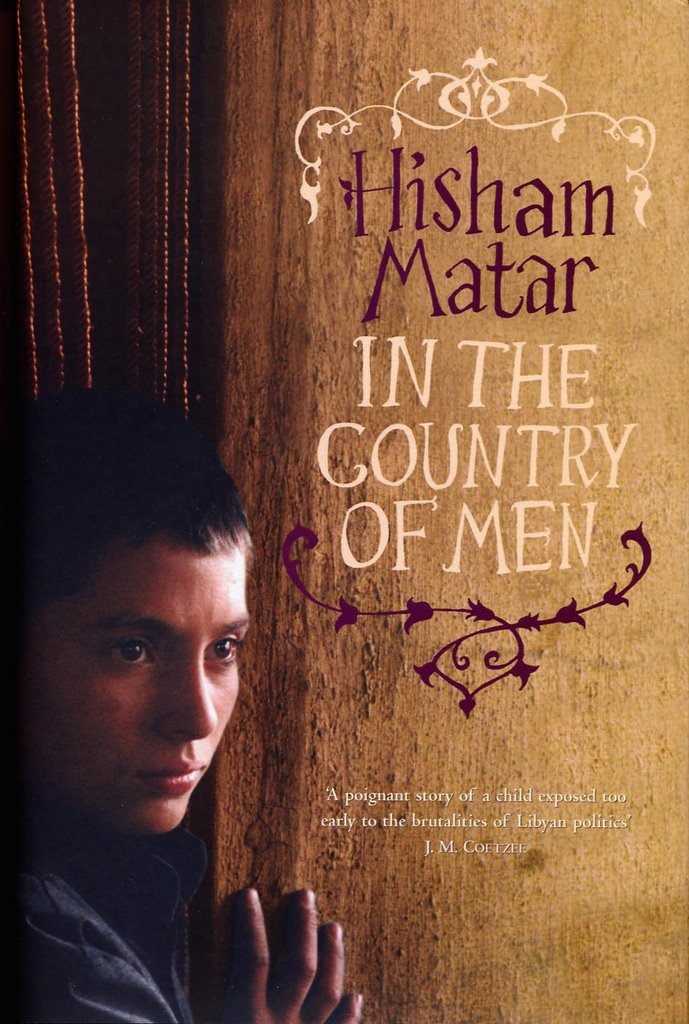
Nor had some of the other excluded books received unanimously positive reviews on publication. Whereas for example "In the Country of Men" by Libyan Hisham Matar, which is on the shortlist, received widespread critical praise (an exception being a bafflingly ungracious review by Palestinian writer Samir El-Youssef in the New Statesman).

When the bookies give their odds, they perhaps attach too much importance to the bigness of the authors' names, and too little to the merits of their novels. Other favorites from the longlist of 19 books who failed to make the shortlist were Australian Peter Carey (already two times winner of the Booker) for “Theft: A Love Story” and Scottish Andrew O’Hagan for “Be Near Me”. Nor did South African Nobel laureate and previous Booker winner Nadine Gordimer or Jewish comic writer Howard Jacobson appear on the list.

Professor John Sutherland, the chairman of last year’s Man Booker judges, said he was “gobsmacked” by the shortlist, adding that the “bizarre” list may show “we are seeing a turning of the tide, the older generation giving way to the new.” Many of the press reports of the shortlist announcement, referring to the upset over bookies' odds, resorted to racing metaphors. Nearly all the favourites had "fallen at the penultimate fence" wrote Lousie Jury in the Independent.

The only longlisted favorite to appear on the shortlist is “The Night Watch” by Sarah Waters (above), set in London during the Second World War. Waters is now favorite to win, with odds of 2/1 from bookmakers William Hill. "Apart from Sarah Waters, it's a field of dark horses, any one of which has a chance of winning", according to Robert McCrum, literary editor of the Observer,

The other widely-known finalist is the Australian Kate Grenville, shortlisted for “The Secret River”, about a criminal transported to Australia in Victorian times. The novel has already won the Commonwealth Writer’s Prize. Fellow Australian woman novelist, M J Hyland, is a finalist with “Carry Me Down”, about a 12-year-old boy growing up in Dublin.

Hisham Matar's novel “In the Country of Men” is set in Libya in 1979. Matar was the only debut novelist on the longlist, and to be included on the shortlist against most expectations is an extraordinary achievement. The Indian Kiran Desai is on the list with her second novel “The Inheritance of Loss”. She will be hoping for better luck than her mother Anita Desai, who has been shortlisted three times for the Booker but has never won it. Edward St Aubyn is a finalist with “Mother’s Milk”, whose protagonist Patrick Melrose is trying to cope with middle age haunted by a wretched childhood.

The chairman of the judges Hermione Lee, professor of English literature at of Oxford University, said: "Each of these novels has what we as judges were most looking for: a distinctive, original voice and audacious imagination that takes readers to undiscovered countries of the mind, a strong power of storytelling and a historical truthfulness."

The winner will be announced at a prizegiving dinner on October 10. Lee’s fellow judges are poet Simon Armitage, novelist and reviewer Candia McWilliam, actress Fiona Shaw and writer and reviewer Anthony Quinn.

For those who still take notice of bookies' odds, or delight in seeing how poorly predictive they sometimes are, the odds cited in last Sunday's Observer were 2/1 for "The Night Watch", 3/1 for "Mother's Milk", 4/1 for "The Secret River", 5/1 for "Carry Me Down", 6/1 for "In the Country of Men", and 7/1 for "The Inheritance of Loss".

Susannah Tarbush

Saturday, September 16, 2006

palestinian women writers launch 'qissat' in London

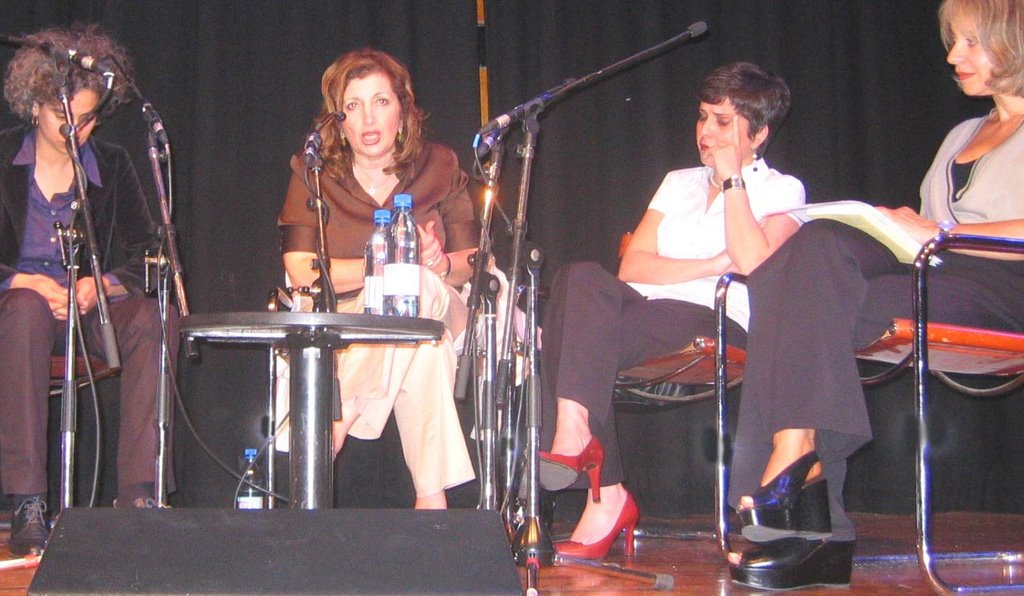
( L to R: Adania Shibli, Liana Badr, Huzama Habayeb and Jacqueline Rose)
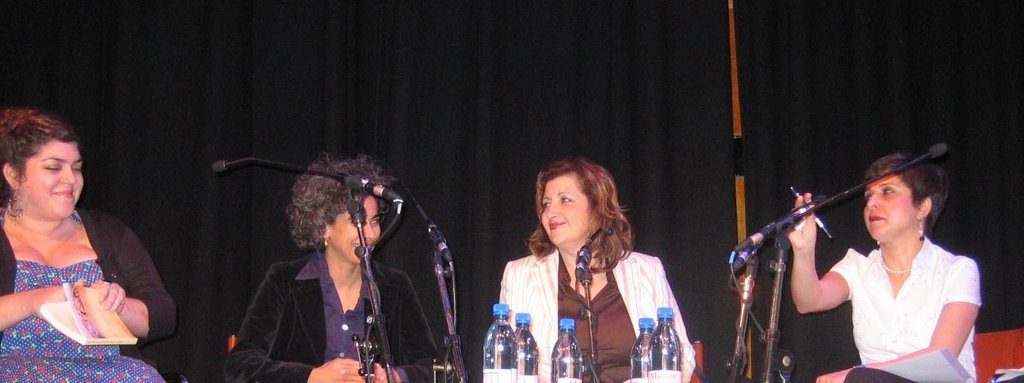
The publication of ‘Qissat: Short Stories by Palestinian Women’ was celebrated on Thursday night at an event in the Purcell Room, part of London's South Bank Centre, featuring four of the writers included in the anthology. The evening was spirited, thought-provoking and often humorous, thanks to the stories and lively contributions from the four Palestinian writers and the empathetic yet gently provocative chairing by Jacqueline Rose. Rose, a Jewish scholar and writer, is professor of English at Queen Mary's College, London University. Her books include the 1995 work The Question of Zionism, a reply to Edward Said's The Question of Palestine.

The anthology of 16 short stories translated into, or originally written in, English is edited by journalist and radio producer Jo Glanville and published by London-based Telegram Books. The writers are from a wide range of backgrounds, ages and locations. But for all of them Palestine and the Palestinian experience are an ever-present concern and inspiration.

Some of the writers in 'Qissat' are from the younger generation, including Samah al-Shaykh who was born in Saudi Arabia in 1980 and now lives in Gaza and Basima Takrouri who was born in Jerusalem in 1982. Two are deceased: Samira Azzam died in 1967 and Nuha Samara in 1992.

The four writers on the platform of the Purcell Room had travelled from far-flung parts of the world. Liana Badr had come from Ramallah, Huzama Habayeb from Abu Dhabi, Randa Jarrar from Detroit and Adania Shibli from Berlin. The writers read from their own work in English or Arabic, and English translations were vibrantly rendered by the renowned British actress Diana Quick.

Randa Jarrar's story Barefoot Bridge centres around a trip made by a family to Jordan and then the West Bank for the burial of the grandfather. In a text shot through with wit the child first-person narrator observes the tense process of crossing the border. ("First my land, now my Guccis! God damn it" exclaims a trendily-dressed young Palestinian women after an Israeli soldier 'mislays' her shoes which have been removed for security reasons). Later, the child sits with her grandmother Sitto and imbibes her magical tales and recollections.

Adania Shibli's story May God Keep Love in a Cool and Dry Place brilliantly dissects the disintegrating relationship of a woman in love for the first time and living with her lover. Her "tolerance of his mistreatment of her has run out." The pair had first met at the fiftieth anniversary of the Palestinian Nakbbah, the Catastrophe. The details of preparing and eating a meal evoke wider resonances, and the viewpoint shifts between the man and the woman.

In Other Cities, Liana Badr takes the reader on a hazardous journey by service taxis from old Hebron to Ramallah, through Israeli-occupied territory littered with military checkpoints. The journey is made by Umm Hasan whose children have implored her to take them to Ramallah. "Little by little, the idea had begun to take hold in her mind. To actually go to Ramallah. To thumb her nose at Israel, and go - whether her husband, Abu Hasan, liked it or not. " The journey takes on epic proportions, and is a journey of self-discovery for Umm Hasan herself. At one point the narrative shifts to the thoughts of an Israeli captain, when Umm Hasan has the guts to march up to him to tell him that her baby is sick and that he should let the cars through. "For an electrifying moment he felt that he was only punishing himself, out here in this hostile wilderness."

Huzama Habayeb's story A Thread Snaps has earned a certain notoriety in Jordan for the frank way in which it handles a girl's growing awareness of her bodily desires. The story is set in a Palestinian refugee camp in Jordan, as the girl does the family washing by hand, and Habayeb told the audience in the Purcell Room that it shows the economic, social and sexual suppression experienced by men as well as women in this environment. There is a sense of blockage: "even the water is blocked." The issue of Al-Katiba magazine in which the story was first published was banned in Jordan, as was the collection of her stories in which the story subsequently appeared.
In her introduction to 'Qissat' Jo Glanville says that when she began looking for stories for the anthology, she wanted to find work by young, emerging writers to add to stories by some of the most distinguished and established Palestinian women writers. She also felt it important to look for writers not only in Palestine but also in the disaspora.

The four writers invited to London for the launch represent a cross-section of the roster of contributors to the collection. Liana Badr, who is married to Palestinian politician Yasser Abd Rabbuh, is the writer with the most direct involvement in Palestinian national politics. She lived in Beirut during the Lebanese civil war, and her early published works reflect the Palestinian predicament during that conflict. She is a filmmaker as well as a fiction writer, and was from 1995 to 2003 General Director of Arts at the Palestinian Ministry of Culture in Ramallah.

Randa Jarrar was born in Chicago to a Palestinian father and Egyptian mother, grew up in Egypt and Kuwait, and is now a single mother living in Austin, Texas. She has received the Million Writers Award for best short story, and her first novel will be published in 2007. Adania Shibli, born in Palestine in 1974, has twice won the Young Writer's Award from the A M Qattan Foundation. Huzama Habayeb was born in Kuwait and has never set foot in Palestine. She won the short story prize at Al Quds Festival for Creativity in 1993 and the Mahmoud Seif El Din Al Irani prize in 1994.

Glanville notes that in the past few years there has been in increasing appetite for Palestinian memoir. While such memoirs are powerful testimonies, "there is also a danger that so long as the world outside limits its interest to factual accounts, then Palestinians will only ever be viewed in terms of the conflict, while culture, the wider society, remains unseen." Her collection certainly succeeds in fulfilling the aim of offering "the chance to engage with a broader perspective - through the literary imagination."

Susannah Tarbush

(L to R: Randa Jarrar, Adania Shibli, Liana Badr and Huzama Habayeb)

Tuesday, September 12, 2006

british muslims five years after 9/11

British Muslims, five years on from 9/11

In the five years since the terror attacks in the US on 9 September 2001 – and particularly following the suicide bombings in London on 7 July last year – British Muslims have been under coming under increasing pressure and, sometimes, suspicion. At the same time, they have become more assertive and organised, and are exploring questions concerning their place in British and European society.

The British Muslim community is estimated at between 1.6 million and 2 million people, and is very diverse. The majority are from Pakistan and the rest of the Indian sub-continent, but there are substantial numbers from Arab and other Middle Eastern countries and elsewhere.

In the attacks on the London transport system on 7 July last year, four suicide bombers killed themselves and 52 other people. Unlike the 9/11 attacks, these attacks were carried out by Muslims who were born in the country they were attacking. A shocked Britain asked itself: how is it that young British-born Muslims have become so radicalised that they are prepared to kill themselves and large numbers of their fellow citizens?

Two weeks after the 7/7 attacks there were failed attempts to carry out four more suicide bombings in London. Government officials and the police frequently warn that further terror attacks in Britain are inevitable.

The US magazine The New Republic even claimed recently that Britain now presents a greater security threat to the US than do Iraq or Iran because its Muslim communities are a breeding ground for violent extremism. The magazine said that after the latest security alerts and arrests it can be argued “that the biggest threat to US security emanates not from Iran, or Iraq or Afghanistan, but from Great Britain, our closest ally.”

The government has introduced increasingly stringent anti-terror legislation since 9/11, aimed mainly at Islamic radicals. Ordinary Muslims feel the new laws and powers are disproportionately used against them, and human rights activists, the legal profession and many politicians are alarmed at the curbs on individual freedoms in the name of security. There have been some cases of wrongful arrests of Muslims, including two brothers suspected of being suicide bombers who were arrested by 200 officers in Forest Gate, East London, in June. One brother was shot in the shoulder during the arrest, but no evidence was found against the two.

Almost every day brings news of security alerts, plots or arrests. On August 10 the Home Secretary John Reid announced that a plot to blow up a number of aircraft travelling from the UK to the US had been disrupted. By September 7, 17 Muslims had been charged in relation to the alleged planned attacks. They included recent British converts to Islam.

In a separate case, police arrested 14 people on September 1 in raids on a Chinese restaurant in London and other addresses. They searched an Islamic school in the county of East Sussex, which they suspected might have been used for the training of Islamic militants.

Peter Clarke, head of the Metropolitan Police’s anti-terror branch, says that police are currently monitoring “thousands” of British Muslims on suspicion that they are involved in terrorism. Some British Muslims have gone to fight in Iraq, where a few are known to have become suicide bombers. The intelligence services and police worry about the security threat those radicals who return from Iraq may pose in the future.

Prime Minister Tony Blair and members of his cabinet repeatedly insist that the terror attacks and the threat from Islamic extremists has nothing to do with foreign policy, including the war on Iraq. Instead, they blame a historic struggle within Islam, and a battle with Western “values”.

These denials of a link between foreign policy issues and security threats have little credibility. British foreign policy in Palestine, Afghanistan, Iraq and now Lebanon, and Blair’s close adherence to the policies of US president George Bush, is fuelling Muslim anger.

In a most unwelcome development for the government, on August 12 three Muslim Labour MPs, three Muslim members of the House of Lords, and 38 Muslim groups signed an open letter to Blair calling for “urgent” changes in UK foreign policy to show that the UK values the lives of civilians.

The signatories of the letter warned that British policy is putting civilians at increased risk in the UK and abroad. It pointed to the “debacle” of Iraq, and the UK’s stance over the Middle East crisis. Sadiq Khan, a Labour MP who signed the letter, said British foreign policy is seen by many British Muslims as unfair and unjust. “Whether we like it or not, such a sense of injustice plays into the hands of extremists.”

Home Secretary John Reid was furious about the letter, describing it as a “terrible misjudgement”. He insisted that no competent government would remain in power if policies were “dictated by terrorists.”

The terror attacks in London and the perceived threats from Islamic extremism have thrown into doubt the concept of multiculturalism, which was for decades the basis of British government policies towards ethnic communities.

An opinion poll conducted by the Pew organisation found Muslims in Britain to be the most anti-Western in Europe. It is increasingly argued that multiculturalism has encouraged a dangerous separateness of communities, and there is a new emphasis on the need for a shared sense of “Britishness”.

Ruth Kelly, the Secretary of State for Communities and Local Government, has called for a “new, honest debate” about rooting out extremism, and said it is “not racist” to discuss immigration and political asylum.

There are deep divisions within the British “talking classes” over Islamic radicalism. Melanie Phillips, a pro- Israeli author, newspaper columnist and broadcaster, has written a book entitled: “Londonistan: How Britain is Creating a Terror State Within”. Phillips claims that “under the noses of the British government, parliament, intelligence services and police, Britain has become the European hub for the promotion, recruitment and financing of Islamist terror and extremism.”

Phillips’ views are echoed by some other influential figures in the British media and political establishment. Such people used the term “Islamofascism” years before US President George W Bush uttered the word in a speech.

There has been a campaign in some quarters against the Muslim Council of Britain, the umbrella organisation of 400 Muslim mosques and organisations founded in 1997. One reason is its refusal to attend the annual Holocaust Memorial Day, which was introduced by Tony Blair’s government. The Council explains this is not to dismiss the Holocaust, but because it believes all genocides, and not only the Holocaust, should be commemorated by such a day.

The political editor of the liberal weekly magazine New Statesman Martin Bright has written and broadcast criticisms of the MCB, saying it has links with the Muslim Brotherhood. He presented a Channel 4 TV programme in July on the alleged “love affair” between the British government and radical Islam.

Martin Bright and others have also targeted Egyptian cleric Sheikh Yusuf Qaradawi. Qaradawi has been encouraged by the British government, which regards him as a moderate. His critics claim some of his opinions, including his support for Palestinian suicide bombers, mean he is not moderate.

There has been some criticism of the alliance between the British left, particularly the Socialist Workers party, and Muslim groups such as the Muslim Association of Britain, in for example setting up the Stop the War Coalition which organises demonstrations and other activities against the Iraq war. In addition the Respect Party founded by MP George Galloway, after he was kicked out of the Labour party for comments he made about the Iraq war, has a strong Muslim component.

After the attacks of July 7, the government made some efforts to publicly engage the Muslim community, by inviting is leaders to Downing Street for talks and setting up a task force. This Muslim task force made 64 recommendations, but the government has in practice adopted very few of them.

There have been efforts recently to encourage new bodies as a so-called “moderate” counter to the Muslim Council of Britain. One of these bodies is the Sufi Muslim Council, which was launched in mid-July at a reception in the House of Commons, attended by Ruth Kelly. Leaders of this group claim to represent a “silent majority” frustrated with slow progress since the 7/7 bombings.

The group has formed a partnership with the British Muslim Forum, which represents 300 mosques in central and northern England. The British Muslim Forum helped set up the Mosques & Imams National Advisory Board launched this year to improve standards at British mosques.

Susannah Tarbush
published in Arabic translation in Al-Hayat newspaper 12 September 2006

Monday, September 11, 2006

saqi publishes 'lebanon, lebanon'

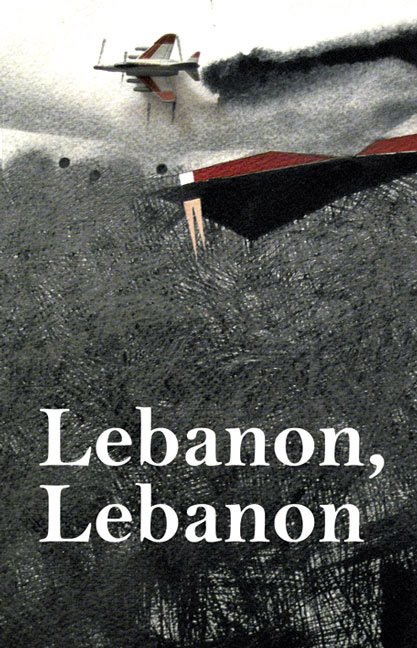
In a remarkably quick turnaround time for the preparation and publication of a new book, Saqi Books of London will shortly publish “Lebanon, Lebanon”, a 229-page book responding to the war in Lebanon.

The proceeds of the book will go to children’s charities in Lebanon, as will the proceeds from an evening of readings, music and performance to be held on 27th September, at New Player’s Theatre in central London. The evening is being organized by Saqi together with Pen, Open Democracy, and Index on Censorship.

The book, edited by Anna Wilson, has texts from 50 writers, ranging from poetry and stories to memoir and reportage. There are pictures from 25 artists, and from displaced Lebanese children.

Among the Lebanese writers featured are Hanan al-Shaykh, Hoda Barakat, Abbas Beydoun, Hassan Daoud, Zena El-Khalil, Nada Awar Jarrar, Mai Ghoussoub and Alexandre Najjar. From the Australian-born publisher Carmen Callil there is the memoir “Lebanese Washing Stories”.

Palestinian poet Mahmud Darwish is represented by the elegiac sequence “Diaries”. Jean Said Makdisi writes poignantly in “The Little Girl with Gold Earrings” of a dead child who reminds her of her own granddaughters.

British novelist Margaret Drabble writes of her long-standing friendship with the Lebanese writer Rachid El-Daif and of her dream of visiting his hometown of Zgharta. Owen Sheers recalls a meal he had with his girlfriend in a Lebanese restaurant in an Irish village, after three weeks spent watching the Lebanon war on TV. Argentinian-born Jewish writer Alberto Manguel depicts the Beirut he now sees and the city he remembers. The Jewish cookery writer Claudia Roden relives “Mezze in the Bekaa Valley”.

Judith Kazantzis’ “found poem” entitled “The Refugee” is taken verbatim from the English translation of a UN witness statement. In “Too Black, Too Strong”, Malu Halasa recalls coming of age in America and the Middle East as someone of part Jordanian, part Filipino heritage.
There are stories from Pakistan-born writers Aamer Hussein and Kamila Shamsie, and contributions from Doris Lessing, V S Naipaul, Moris Farhi, Toby Litt, Arnold Wesker, Harold Pinter, Adrian Mitchell, Turkish novelist Orhan Pamuk and Moroccan writer Tahar Ben Jalloun. Among the journalists represented are Britons Robert Fisk of the Independent and Brian Whitaker of the Guardian, and the American Charles Glass.

Susannah Tarbush

gaddafi: a living myth

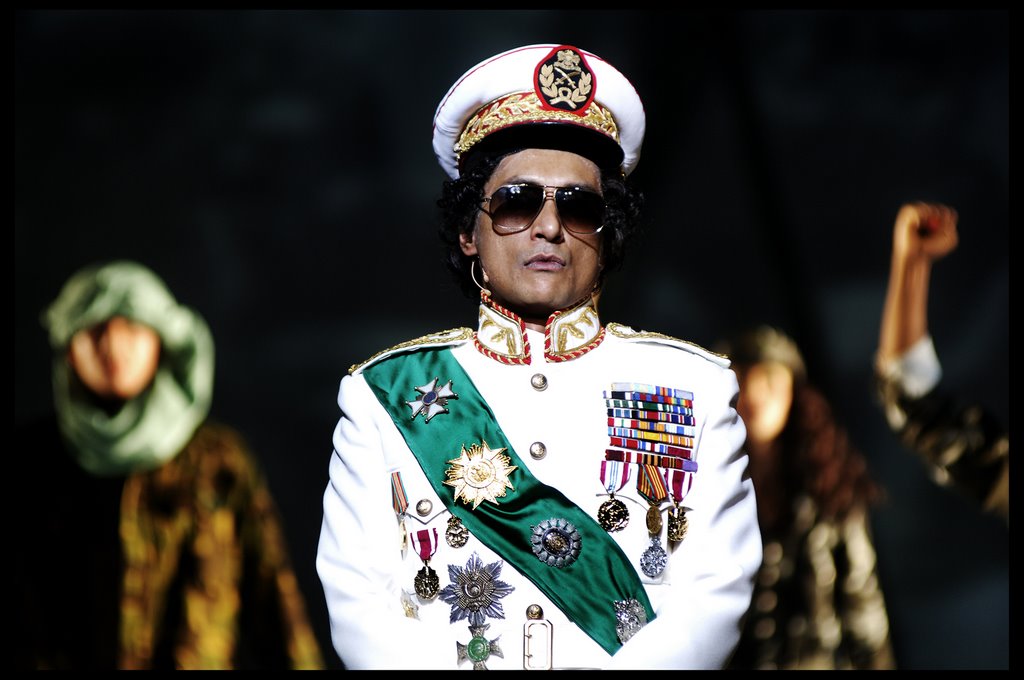
The show “Gaddafi: A Living Myth”, which burst last week onto the stage of the Coliseum Theatre in central London, has left critics perplexed.

Is the show a questionable glorification of a dictator with much blood on his hands? Or is it a commendable experiment in political theatre, mixing the music of the electro-rap band Asian Dub Foundation, Middle Eastern musicians and the ENO orchestra with rap and dance in order to elucidate the contradictory aspects of a leader who has survived for 37 years through a series of extraordinary volte-faces?

Critics have also tied themselves in knots trying to decide whether the piece, directed by the Australian opera director David Freeman, is an opera, a musical, a hybrid of both or a new form. The text of the libretto by Shan Khan is mostly shouted over the music rather than sung like opera.

The show was initiated by Asian Dub Foundation member Steve Chandra Savale who has long been fascinated by the Libyan leader. It had a three-year gestation period and is receiving only six performances. The show is certainly a spectacle, with its its rousing, churning sound track and its gyrating female bodyguards in camouflage uniform performing robotic and kick-boxing dance routines.

Actor Ramon Tikaram struts the stage as an intense, energetic Gaddafi (even if somewhat lacking in the height department). Film, photographs and graphics projected onto a screen behind the actors depict major political events.

The opening night last Thursday received generally poor reviews. The Guardian gave it only one star out of five and said it was “never more than a hodgepodge of musical and cultural influences”. The Evening Standard gave it two stars, describing it as a “bizarre theatrical experiment”. Bloomberg critic Warwick Thompson was angered and depressed by the piece and its “tiresomely predictable” anti-Americanism.

When I went to see the show on Saturday night I found it an interesting theatrical and musical event, despite its flaws. The auditorium was packed, partly because some tickets (which normally cost £32 to £49) had been made available at the bargain price of only £10 through special offers such as those from the Guardian, and the London Middle East Institute. The audience seemed to enjoy the show and its humor, and applauded it enthusiastically.

Shan Khan’s spoken libretto has been criticized for the quality of its rhymes and its lack of subtlety. But it suits the sloganeering talk of Gaddafi (as in his Green Book) and of his opponents, including President Ronald Reagan who described him as the “mad dog of the Middle East.” And it is debatable how much fine detail is possible in an evening of two hours that covers Libyan history from the brutal Italian occupation to Gaddafi’s abandonment of his weapons of mass destruction programs in 2004, and his meeting in Tripoli with British PM Tony Blair.

The production depicts the different phases in Gaddafi’s political career, and his frequent changes of image and costume. He is shown variously as a Bedouin, a revolutionary, a dictator, an instigator of world terrorism, and an unstable depressive who retreats to the desert for long periods. During Blair’s visit he declares: “If I wasn’t here you’d need an actor to play me”, and there are cries of “Gadaffi Superstar”. At the end, his face projected on stage is left blank.

Opponents of Gaddafi in Britain are unhappy about the production. Outside the Coliseum a polite Libyan man handed out leaflets headlined “The Truth of the Living Myth”, which said: “Gaddafi is a tyrannical dictator who destroyed a country and its people. He has robbed Libya of its assets and its dignity.” It was signed by the Libyan National Committee in the UK.

Susannah Tarbush

naeem murr's 'the perfect man'

When it was announced that Naeem Murr’s novel “The Perfect Man” was on the longlist of 19 books for the £50,000 Man Booker prize, some commentators assumed he was Indian-American (“the Desi-American author” as some US-based websites described him).

This supposition arose from Murr’s name, and from the fact that the central character in his novel is a half-Indian boy, Rajiv Travers. In fact Murr is half Lebanese. He has lived in the US for many years, and his novel is set in Pisgah, a small town in Missouri.

Rajiv is the son of an Indian mother who has been abandoned in India by his English father. The novel begins in 1947 when Rajiv’s father brings him from India to London to be looked after by his uncle and his wife. By 1954 Rajiv’s uncle’s wife can no longer tolerate uncontrollable, witty Rajiv who is a brilliant mimic. Her husband takes Rajiv to America to spend the summer with another of the boy’s uncles, Olly. But shortly before they arrive Olly commits suicide and Rajiv is left with his girlfriend Ruth.

Ruth makes her living writing romantic novels. As Olly said in a letter: “We have a great time choosing people in this small town for her to transform into the heroes and heroines of these tawdry worlds.”

Rajiv remains in Pisgah with Ruth, and becomes close friends with four other children. The novel tracks them as they grow into adolescence and beyond. As in his previous two novels “The Boy” and “The Genius of the Sea”, Murr is interested in exploring the impact of an outsider on others.

The dense, complex novel is lit up by Murr’s striking use of language and gift for drawing memorable characters, and is a most pleasurable read. Successive chapters move backwards and forwards in time. A key event took place in 1952, when the autistic brother of one of Rajiv’s friends, the troubled Lew, died in mysterious circumstances. The secrecy around the death is set to detonate years later.

Murr may not be Indian, but another longlisted writer is. She is Kiran Desai, longlisted for her second novel “The Inheritance of Loss”. Kiran is the daughter of Anita Desai, whose novel “Fasting, Feasting” was shortlisted for the Booker in 1999.

The Man Booker shortlist of five books will be announced on September 14 and the winner on October 10. There is a good chance that India will feature on the shortlist, through an author, or a character in a novel, or both.

Susannah Tarbush
Saudi Gazette September 5 2006

Thursday, September 07, 2006

campaign against israeli exhibit in venice

There is a growing international and Palestinian campaign for the organizers of the 10th International Architecture Biennale in Venice to cancel the exhibition in the Israeli pavilion. The Israeli exhibition is entitled “Life Saver: Typology of Commemoration in Israel.”

Fifty countries are participating in the Biennale, which runs from September 10 to November 19 and is one of the most important events on the international architectural calendar. Egypt is the only Arab country taking part in the Biennale, the title of which is “Cities, architecture and society”.

The exhibits in the Israeli pavilion comprise plans, models and full architectural details of 15 memorials built between 1947 and 2006, some commemorating dead soldiers or intelligence officers, others the Holocaust. The Israeli Defense Ministry is at the top of the list of the organizations that gave “generous support” for the exhibition.

The international pressure group Architects and Planners for Justice in Palestine (APJP) has sent a petition to the organizers of the Biennale saying it is “dismayed and concerned” that the Biennale agreed to host the Israeli contribution.

APJP requests the Biennale Committee to consider withdrawing the Israeli entry as being “provocative and counterproductive to the aims of the Biennale, and particularly distasteful in the context of the aftermath of an ugly and unnecessary war in neighboring Lebanon, and a continuing one-side war in Gaza.”

At the same time four Palestinian organizations have sent a joint letter to the organizers asking for the Israeli exhibition to be cancelled. The Palestinian organizations are the Palestinian Campaign for the Academic and Cultural Boycott of Israel (PACBI); the Palestinian Engineers Association – Jerusalem Center; the Society of Palestinian Architects; and RIWAQ – the Centre for Architectural Conservation.

The four Palestinian organizations say: “It is inconceivable how the Venice Biennale, an international celebration of art and architecture, of civilization and the progress of humanity, can provide a venue for such a blatant justification for and commemoration of genocide, war and bloodshed.”

APJP says Israeli pavilion, funded by the Israeli government, “totally excludes the Palestinians who are the target and real victims of the seemingly unending series of wars being memorialised, and awards Israeli the sole position of victim and victor.”

It notes “there are no memorials in Israel to the Nakba, the Palestinian tragedy of displacement and dispossession where the intention of transfer and exclusion led to the destruction and elimination of 580 Palestinian villages, towns and cities.”

The 21 signatories of the APJP petition include Palestinian, Israeli and British/Jewish architects and also the eminent British architect Ted Cullinan, and the distinguished architectural critic and writer Charles Jencks.

Their APJP petition quotes Dan Daor who writes in the exhibition catalogue that the message of memorial structures is that “there are no heroes – all there is, is the eternity of Israel, all of the country is the front, and all of us are victims.”

The letter from the four Palestinian organizations says the Israeli exhibition should be cancelled because it is supported by a state that continues against all international laws and UN resolutions to occupy the West Bank and Gaza, to deny the right of return for Palestinian refugees, and to wage a daily war against the Palestinian children, men and women their homes and livelihoods.

The letter says that the Israeli state is still engaged in a war with Lebanon, “that has resulted in the killing of over 1,000 Lebanese, the destruction of infrastructure, roads, buildings, bridges, electricity power plants, and thousands of homes, and the denial of the right of education of thousands of Lebanese children who cannot attend a new school year because their schools have been destroyed.”

The Palestinian organizations note that the exhibition contains models of memorials commemorating both the victims of the Holocaust, and those killed in Israel’s wars since 1948. “The history of the Holocaust and its Jewish victims is thus confused with that of Israel’s colonial history and the death of soldiers killed while invading, occupying and annexing Arab lands.”

Both the APJP petition, and the letter from the four Palestinian organizations, strongly condemn the role of Israeli architects. The Palestinian organizations say: “Israeli architects, engineers and planners are fully engaged in the planning and implementation of a system of oppression and control that began with the appropriation and confiscation of lands since 1948, and continues today in the West Bank and Gaza Strip in the form of illegal settlements building, bypass roads and the construction of the Apartheid Wall.”

The APJP says that the “eminent Israeli architects” represented in the exhibition “are being used as tools of Israeli propaganda, and consequently would be deemed to be complicit in the agenda of excluding the Palestinian narrative.”

The APJP petition and the letter from the Palestinian organizations both quote the statement by the curator of the exhibition, Tula Amir, in her introduction to the exhibition. Amir writes: “The justification of Israel’s wars legitimates the loss of life in the past and its possible loss in the future; the continuation of unconditional cooperation between the country’s military and defense establishment and its individual citizens; and an unequivocal understanding that this struggle is the only means for Israel’s survival.”

The Palestinian organizations say that while this paragraph can be read as a critique of this type of architecture, “the fact that it is being displayed at this level little over a month after Israel has just gone through another of its cycles of destruction is a celebration of it. The attempt to dissect it and analyse it in an abstract manner from an architectural point of view is not convincing.”

They add that “nowhere in the quotations from the curator is the exhibition presented as a way to examine Israel’s past or to try to learn from all its bloody history. The entire exhibition accentuates Israel as “a victim state constantly under attack and in danger.”

While the title of the Biennale is “Cities, architecture and society,” the theme is Cities of the Future, with the aim, the organizers say, of “presenting a manifesto for the cities of the 21st century.

The Biennale has several sections. In the 300-metre long “Corderie dell’Arsenale” space, there are videos, photography, film and thee dimensional graphics presenting the urban experiences of 16 world cities in four continents, including Cairo, Istanbul, Barcelona, Caracas, Los Angeles and Mumbai.

In addition, each of the 50 participating countries has its own pavilion. The content of the Israeli pavilion is in marked contrast to the pavilions of other countries, which look forward to cities of the future.

To take just a few examples of how other countries exhibitions are approaching the theme of the exhibition, the exhibition in the US pavilion is entitled “After the Flood; Building on Higher Ground”, the UK exhibition explores the issues facing Britain’s regional cities, the exhibition, the republic of Slovenia’s pavilion has the title “Formula New Ljubljana”, and the Romanian exhibition is dubbed “Remix! Urban drama for nine cubes and many players.”

Susannah Tarbush
Al Hayat September 7 2006

Sunday, September 03, 2006

apjp petitions venice biennale over israeli exhibition

A week before the opening of the 10th International Architecture Biennale in Venice, the international pressure group Architects and Planners for Justice in Palestine (APJP) has sent a petition to the organizers asking them to consider withdrawing the Israeli contribution.

In its petition sent on September 2, APJP says it is “dismayed and concerned” that the Biennale, which opens on September 10 and runs until November 19, has agreed to host the Israeli contribution entitled “Life Saver: Typology of Commemoration in Israel.”

APJP says the exhibition in the Israeli pavilion, funded by the Israeli government, “totally excludes the Palestinians who are the target and real victims of the seemingly unending series of wars being memorialized. In this exhibition, Israel has the sole position of victim and victor.”

It requests the Biennale Committee to consider withdrawing the Israeli entry as being “provocative and counterproductive to the aims of the Biennale, and particularly distasteful in the context of the aftermath of an ugly and unnecessary war in neighboring Lebanon, and a continuing one-side war in Gaza.”

The 21 signatories to the petition include Palestinian, Israeli and British/Jewish architects. Among them are the eminent British architect Ted Cullinan, and the distinguished architectural critic and writer Charles Jencks.

The Israeli contribution comprises exhibits of 15 memorials built between 1949 and 2006 to commemorate Israeli military war dead or the Holocaust. The Israeli Defense Ministry provided substantial support for the exhibition.

Israel is one of 50 countries participating in the Biennale, which is regarded one of the world’s most prestigious architectural events. The only Arab country taking part is Egypt.

APJP says that whatever the committee may decide to do about the Israeli participation, it would like the organizers “to consider asking for a Palestinian contribution, highlighting the historic and ongoing displacement of the Palestinian people.”

The petition says that the “eminent Israeli architects” represented in the Israeli entry are “being used as tools of Israeli propaganda, and consequently would be deemed to be complicit in the agenda of excluding the Palestinian narrative. Significantly, the Israeli organization ‘Zochrot’, which deals with remembering the Nakba, has been omitted from this exhibition.”

APJP notes there are no memorials in Israel to the Nakba, the Palestinian tragedy of displacement and dispossession, in which “the intention of transfer and exclusion led to the destruction and elimination of 580 Palestinian villages, towns and cities.”

It adds: “Even today, this dispossession and humiliation goes on in Gaza and the West Bank, with the destruction of their heritage in the historic cities of Jerusalem, Nablus, Hebron, Bethlehem and Jericho. This is particularly ironic when the subject of the Biennale is the celebration of cities.” (The title of the Biennale is ‘Cities, Architecture and Society.’)

The military memorials exhibited in the Israeli pavilion include the Ammunition Hill Memorial for the Six Day War, the Negev Brigade Memorial, the Nitzanim Memorial building, the Palmach History Museum, Bet Yad Labanim, the memorial for soldiers from Tel Aviv University, and the National Memorial in Honor of the Fallen of Israel’s Intelligence Community.

Among the Holocaust-related memorials are the Holocaust Museum and the Hall of Remembrance of Yad Vashem, Yad LaYeled Children’s Museum, and the Ghetto Fighters’ House.

The curator of the Israeli exhibition, Tula Amir, writes in the exhibition catalogue: “The justification of Israel’s wars legitimates the loss of life in the past and its possible loss in the future; the continuation of unconditional cooperation between the country’s military and defense establishment and its individual citizens; and an unequivocal understanding that this struggle is the only means for Israel’s survival.”

But commenting on Amir’s statement, APJP says: “It has been evident that the wars and tragedies engulfing Palestine/Israel since 1948 have been due to Israel’s intransigence and refusal to negotiate a peaceful resolution to the conflict.”

Amir does briefly mention the omission of the Palestinian narrative when she writes: "It is important to note, at this point, that this exhibition focuses upon this phenomenon as it is expressed in Israel's Jewish sector, which comprises approximately eighty per cent of the country's population. The approach to remembrance and commemoration within Israel's Arab-Palestinian minority represents a completely different narrative, which is given almost no architectural expression in Israel."

Amir fails to point out that while there are over a thousand memorials in Israel, no such expression is permitted to the Palestinians. Zochrot is the only Israeli organization that attempts this, by erecting signs of destroyed Palestinian villages, which are immediately taken down by the authorities.

APJP was founded in February 2006 as an independent international pressure group of design professionals who seek international support for an ethical and just practice for their professions in Palestine and the Occupied Territories.

Its website states: "We hold all design and construction professionals involved in projects that appropriate land and natural resources from Palestinian territory to be complicit in social, political and economic oppression, and to be in violation of their professional ethics."

APJP seeks to raise awareness within the planning, design and construction industries of how these professionals "are central to the occupation of Palestinian land and to the erosion of human rights." It acts as a channel to disseminate news and information relating to the built and natural environment in Israel/Palestine, "in particular highlighting ways in which planning, architecture and other construction disciplines are being used to promote an apartheid system of environmental control."

The group forges links with Israeli and Palestinian professionals and other solidarity groups "committed to non-violent resistance to the Occupation and to the establishment of a just and lasting peace."

APJP calls on Israeli and international architects, planners and those in the construction industry to express their concern in each and every instance of unjust action in annexing Palestinian land, and the projects to be built on them. "The future security and justice, in both Israel and Palestine, are at stake."

Susannah Tarbush

Monday, August 28, 2006

arab weekend at v and a


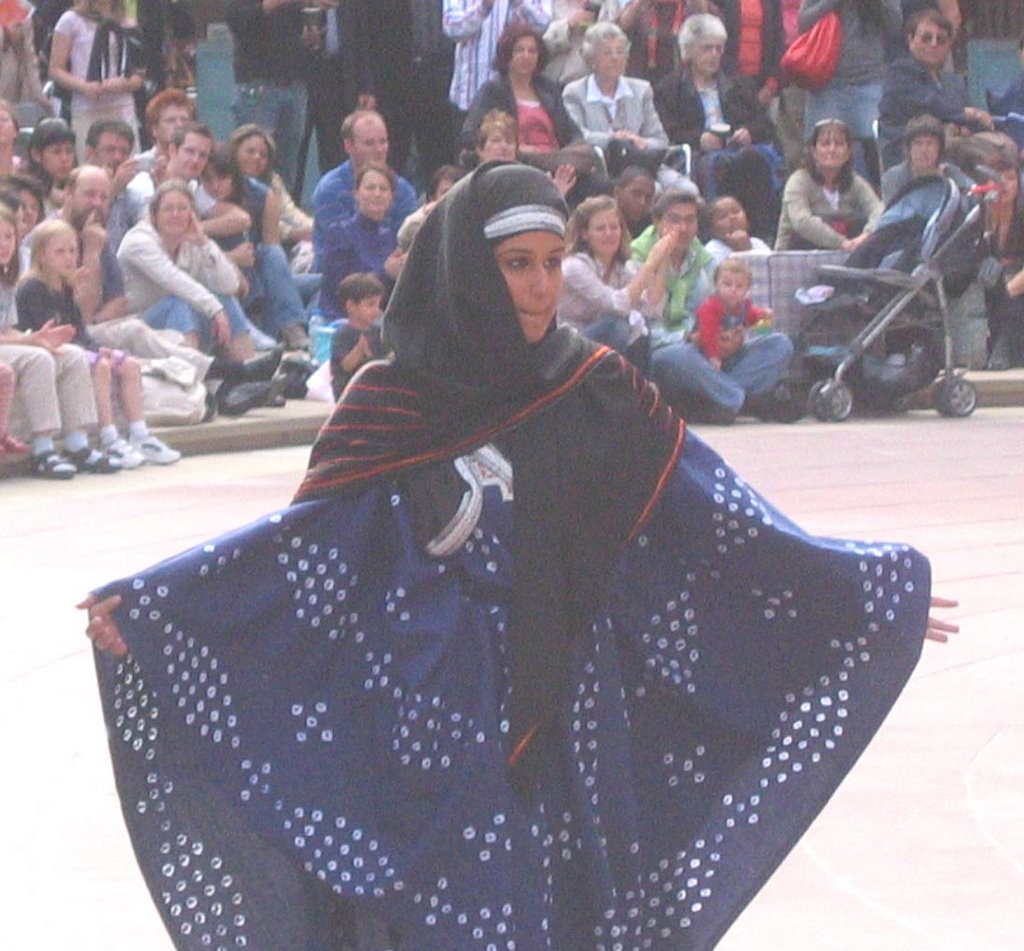
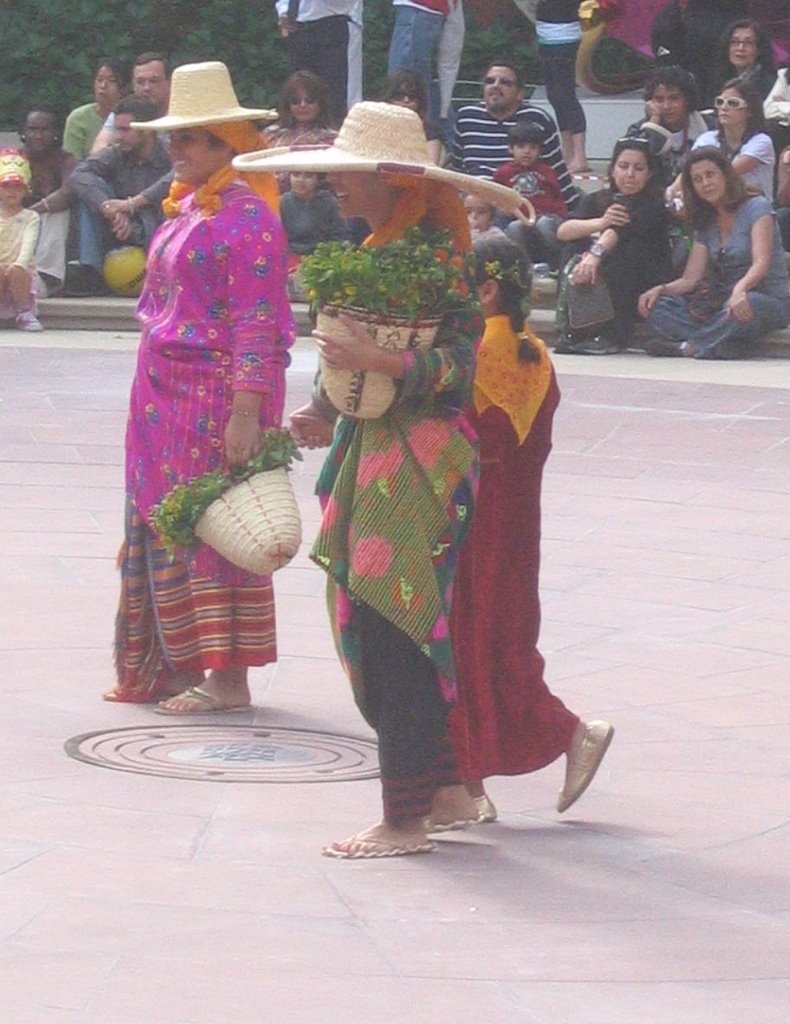
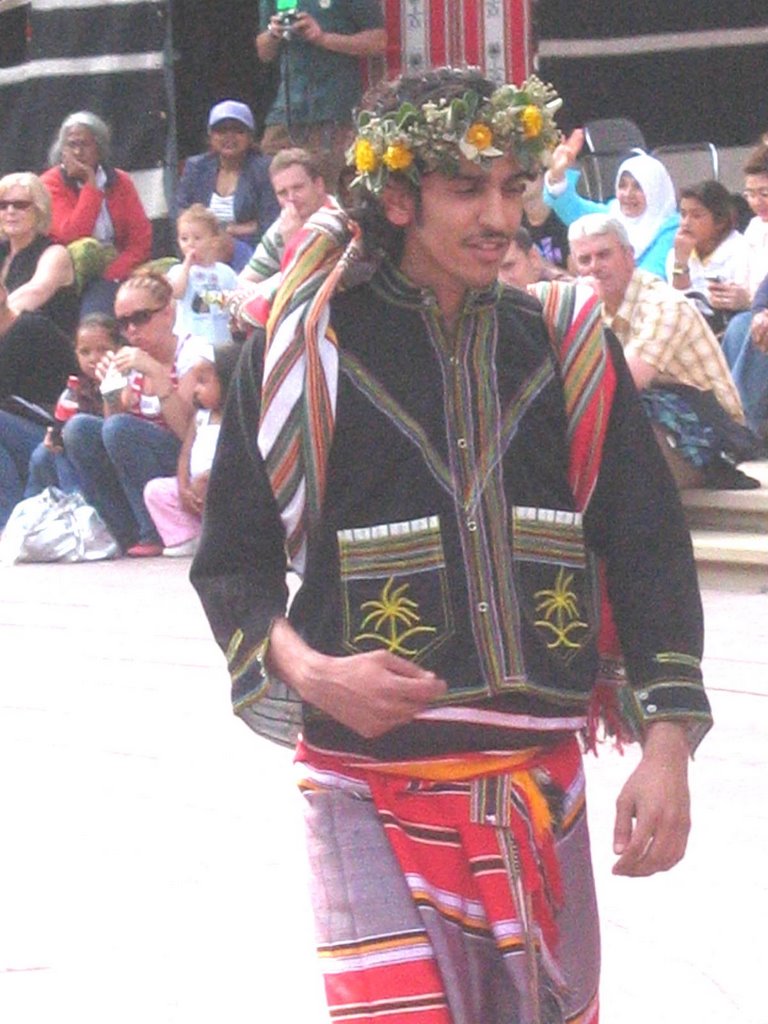
Colourful displays of traditional Saudi costumes modelled by young Saudis were on show in the Italianate central courtyard, known as the John Madejski Garden, at the Victoria and Albert Museum in South Kensington, central London, last Saturday and Sunday.

The parades of costumes were part of the “Souq, Scripts and Soundbites” Arab Weekend held at the museum to celebrate the opening in July of the Jameel Gallery of Islamic Art. The opening of this magnificent gallery is the culmination of a three-year renovation and redesign project made possible by a donation from the Jameel family of Jeddah.

In all, three weekends have been organised to mark the opening of the gallery. On August 5-6 there was a Turkish weekend, “Tulips, Tiles and Coffee Culture”, and on September 9-10 there will be an Iranian weekend, “Poetry, Picnics and Persian Pastimes.” As a prelude to the Arab Weekend, the late night opening of the V&A on Friday was devoted to Arab culture under the title “Arabise Me.”

The displays of Saudi nomadic tribal outfits were organised by the Mansoojat Foundation, a UK-registered charity set up by a group of Saudi women with “a passionate interest in the traditional ethnic textiles and costumes of Arabia.” The parades were complemented by a video on tribal costumes shown inside the museum.

The John Madejski Garden was transformed into an Arab souq, café and entertainment area for the weekend. In the eating area, the air was filled with the aroma of water pipes.

There was a multiplicity of events, including calligraphy workshops from the Amman-born calligrapher Nassar Mansour, screenings of the film “Le Grand Voyage”, tellings of Arabian stories by Joshua Gaillemin, and, on Sunday, readings and discussion from the Egyptian novelist and writer Ahdaf Soueif.

On Saturday there were performances by the Iraqi oud player Ehsan Emam, and by the Palestinian singer Reem Kelani and her three supporting musicians. The performances were due to have taken place in the John Madejski Garden, which would have provided an ideal venue, but for some reason the location was switched at the last minute to the Raphael Room. The echoey acoustics were far from ideal for music performances, but the outstanding talent of the performers shone through.

The timetabling of the weekend left something to be desired. The distinguished Lebanese-Syrian food writer Anissa Helou was scheduled to give a talk on Middle Eastern Street Food in the lecture theatre on Saturday at 12.30, but the time was abruptly altered to 11.30am. Not surprisingly, those planning to attend at 12.30 did not know about the change and the talk in the lecture theatre was therefore not as well attended as it should have been. Helou made her displeasure over the sudden rearrangement known by deciding not to give the talk scheduled for Sunday.

Susannah Tarbush, Saudi Gazette August 29 2006


Sunday, August 27, 2006

'in the country of men' on guardian shortlist; arabic version in december

There is further good news about Libyan writer Hisham Matar's novel In the Country of Men, following its longlisting for the £50,000 Man Booker Prize (it is the only debut novel on this year's longlist of 19 novels). The London-based Guardian newspaper has announced that In the Country of Men is among the ten books longlisted for the £10,000 Guardian First Book Award. In addition, there will be an Arabic version by the end of the year, published by Dar al-Muna of Sweden.

The Guardian prize is open to all genres of writing, fiction, poetry and non-fiction. The other fiction works on the longlist are by women: they are Everyman's Rules for Scientific Living by Carrie Tiffany Australia), Harbor by Lorraine Adams (USA), Poppy Shakespeare by Clare Allan and A Thousand Years of Good Prayers by Yiyun Li (China). The shortlist will be announced in November, and the winner in December. Wikipedia calls the Guardian First Book Award "the oldest and best-established of the awards sponsored by a newspaper."

As for the Man Booker Prize, the shortlist will be announced in mid-September and the winner at a dinner on October 10.

Meanwhile, a publishing deal has been reached under which Dar al-Muna, the Stockholm-based publishing house, will publish the Arabic translation of In the Country of Men. Publication is set for December. Before the Arabic rights were sold, rights had arleady been sold in 13 other languages. The novel is being translated into Arabic by the Lebanese writer Sukaina Ibraheem.

Mona Henning, who was born Zureikat in Amman, Jordan, established Dar al-Muna after moving to Sweden (she is a pharmacy graduate of the American University of Beirut).

Henning says Dar Al-Muna was keen to publish the Arabic edition of In the Country of Men "because of its artistic value and the sincere and honest human touch in it. The child is trying all the time to remember the innocence part of his childhood in spite of all the sad experiences. The author describes incidents, places, so vividly that you feel as if you are around all the time." She adds: "It is the child in In the Country of Men who makes you enter his own world of hopes, suspicion, longing, love and hate. Children are genuine in nature and this makes the story so near to the reader from the very first page."

Dar Al-Muna has specialised in translating world-famous works by Scandinavian authors into Arabic. The authors who have been translated include Astrid Lindgren (who wrote Pippi Longstocking), Jostein Gaarder whose translated works are Sofie's World (Alam Sofie), the Orange Maid (Fatat Al Burtuqal) and a few days ago The Kabal Mystery (Sir Al Sabr).

Mona Henning points out that Gaarder has recently been much mentioned in the Arabic press because of his article critical of Israel published in the Norwegian newspaper Aftenposten.

Dar Al-Muna has published many children's books, and in 1999 Henning was awarded by Swedish Authors' Union prize for her efforts to spread reading among children. This year she was among the nominees for the Astrid Lindgren Memorial Award.

"For the moment we are doing it the other way round, and translating Mahmoud Darwish into Swedish," Henning says. Dar Al-Muna is producing three of his works simultaneously in Swedish translation - Halat Hisar, Sarir Al Ghariebah and Why Did You Leave the Horse Alone?

Susannah Tarbush

Tuesday, August 22, 2006

banipal live young arab writers' tour


The fallout from the war in the Middle East has inevitably had some effect on the Banipal Live 2006 Young Arab Writers’ tour held from 14 to 20 August. Four writers from the Arab world were scheduled to travel to Britain for the tour, which was organised by Banipal magazine of modern Arab literature, the British Council and The Reading Agency.

One of the writers, the Lebanese journalist, poet and translator Joumana Haddad, was trapped in Lebanon by the war. But she sent a recorded message which was played at the tour’s welcome reception held at Mary Ward House in Bloomsbury, the traditional heart of literary London. In the message Haddad read her exuberantly passionate poem “The Panther Hidden at the Base of her Shoulders”, translated from the French by Marilyn Hacker.

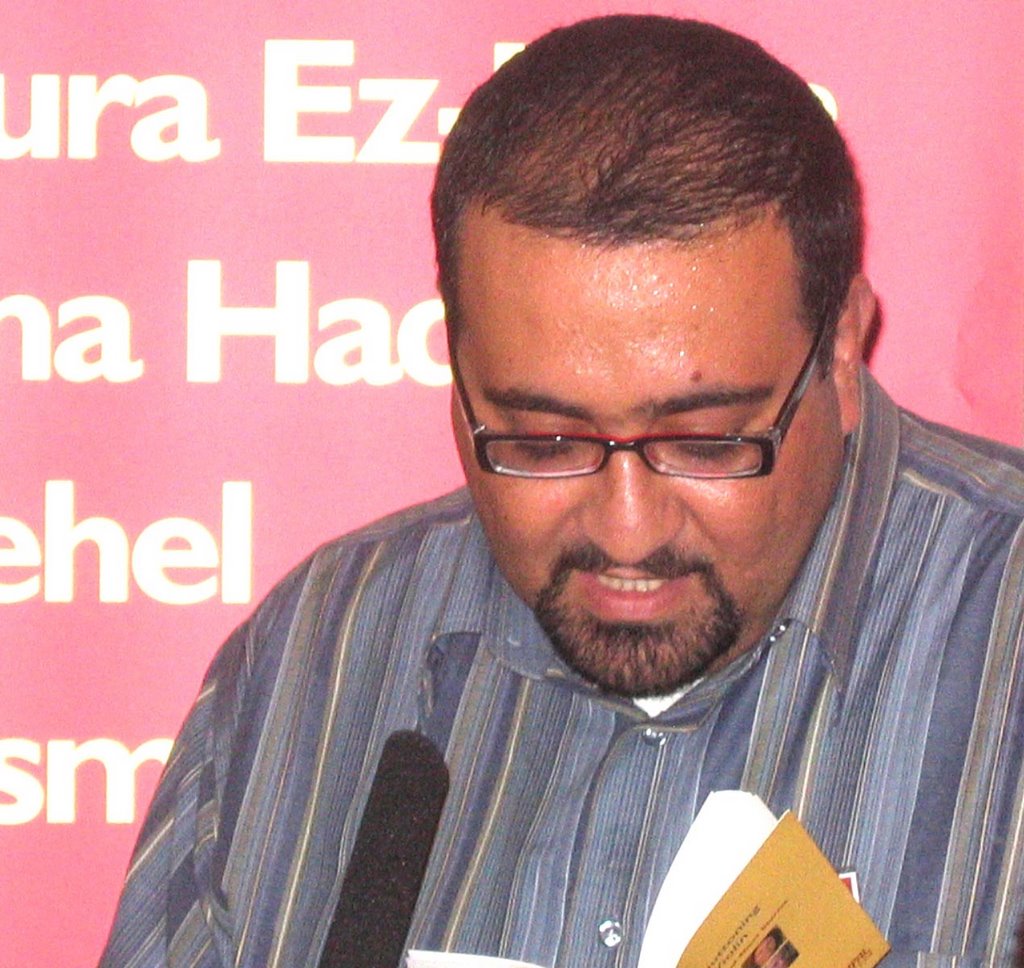
The work of Palestinian writer Ala Hlehel (above right), who lives in Acre, Israel, was given new urgency and relevance by the conflict. At the reception he read from his prescient short story “War”, translated by Anthony Calderbank. In this characteristically sharp, satirical story Hlehel tells of attacks on Haifa seen through the eyes of a Palestinian.

The Syrian poet Abed Ismael (above left) read his self-translated poem “A School Hobby”, and “A Mere Ghost” translated by Issa J Boullata. Mansoura Ez-Eldin of Egypt read from her short story “Conspiracy of Shadows” translated by Paul Starkey. Starkey has described Ez-Eldin's first novel as "remarkable, not only for its freshness of vision but also for its prevision of language - a truly original creation."

To accompany the tour Banipal Books published “Unbuttoning the Violin”, a 122-page anthology of poems and short stories by the four authors. The four have also posted contributions to a tour blog on the British Council website.

The tour included London, Chesterfield, Derby, Manchester and South Shields. The finale took place on Sunday, at the Edinburgh Book Festival in Scotland. The tour producer, Banipal editor and publisher Margaret Obank, pointed out that alongside the tour “we are doing a pilot project with public libraries to encourage people to read Arab authors in translation.”

The tour attracted considerable interest, partly because of recent events in the Middle East, and in last Sunday's edition of BBC Radio Four's Open Book, the popular presenter Mariella Frostrup interviewed Hlehel and Ismael. Ismael, who teaches American literature at Damascus University, is a translator as well as a poet and said in his experience as a tranlslator into Arabic, Latin American writers are still more popular than their European counterparts.

Asked by Frostrup which authors they would recommend to those wishing to explore Arab literature further, Hlehel said: "Let's start with Samuel Shimon, he's a great writer. He wrote An Iraqi in Paris; I think it's moving and a very courageous book. Writers like Raouf Masad should be read, I think he's a great writer." Ismael recommended Iraqi poet Saadi Youssef. "His poetry is characterised by simplicity, he puts a lot of passion in it, let alone the fact that he doesn't have a problem in transcending all taboos."

Sarah Ewans, British Council regional director for the Near East and North Africa said in her address at the welcome reception that the tragedy happening in the Middle East was “really bad news for relationships between people and countries…from our point of view it makes projects like this even more important, to link writers and artists from the region to the UK.”

Ewans said that British Council experience and research in the Near East and North Africa has found that young people in the region “really want the opportunity to convey their ideas and experience to their counterparts here in the UK, and it is very important this is on their own terms, and not on anyone else’s.”

Susannah Tarbush (shorter version published in Saudi Gazette, 22 August 2006)

----------------------------------------

A SCHOOL HOBBY

The boy – who killed his father –
is still running

As he runs
fields, clouds and nights run with him

shadows run with him
and the house he left behind

The river is running,
as is his note-book
and his exam.

The boy is running
and memory runs with him
The midnight mirror,
the birds flying in his sleep
things and names also run.

in his fancy a blade shines
the cry itself shines
the sun emerges from the cry
and blood is running…

At his footsteps shines a blade
in his fingers which grasp the wind
a blade is running…

a blade endlessly running in his blood.

Abed Ismael
(translated by the author from his collection Sa’at Ramil. Translation first published in Banipal No 23, Summer 2005)


Tuesday, August 15, 2006

hisham matar and naeem murr on man booker longlist

This year's longlist for the Man Booker prize includes two novels by authors of Arab origin - Hisham Matar of Libya, and Naeem Murr (left) whose late father was Lebanese. Matar is longlisted for his debut novel In the Country of Men published in the UK by the Penguin Books imprint Viking, and Murr for his third novel The Perfect Man whose UK publisher is William Heinemann, part of Random House.

Coincidentally, both novels will be published in the US in early 2007 by Random House (Matar's by the Dial division).

The Man Booker, worth £50,000, is Britain's most prestigious literary prize. It is tempting to see the inclusion of two Arab authors on the 19-novel longlist as a major breakthrough for Arab diaspora novelists writing in English. But while Matar's novel is set in Libya, Murr, who comes from a famous extended family in Lebanon, has not directly drawn on Arab settings in his work, although he explores themes of migration, deracination and belonging. In the Country of Men and A Perfect Man have both received highly positive reviews in the Times Literary Supplement and other UK publications.

Murr and Matar are up against stiff competition from a longlist that includes David Mitchell's Black Swan Green (the bookies' favourite to win), two-times Booker winner Peter Carey's Theft: A Love Story, Sarah Waters' The Night Watch, Jewish author Howard Jacobson's comic novel Kalooki Nights, and South African Nobel prizewinner Nadine Gordimer's Get A Life.

The best known Arab contender for the Booker to date has been the Egyptian novelist Ahdaf Soueif (a longtime resident of London) who was shortlisted for her epic historical novel set in Egypt, The Map of Love, in 1999. The Australian novelist David Malouf, who like Murr is of Lebanese extraction, was shortlisted in 1993 for Remembering Babylon.

Murr's paternal family come from the town of B'tighreen in the Metn region north east of Beirut. Murr's father Samir met his Irish mother Eileen McGuinness while he was studying engineering in London, and Naeem was born in London in 1965. The following year his father died in a car crash in the desert in Libya where he was working as an engineer. Murr has lived in the USA since his early 20s and currently resides in Chicago. Murr's mother maintained the links with the Murr family in Lebanon, and when he was growing up Murr visited Lebanon for vacations and family weddings, and he spent several months living with his uncle in Beirut at the age of 10.

Hisham Matar was born in New York City in 1970 to Libyan parents. He grew up in Tripoli until 1979 (the year in which his first-person narrator novel is set), when the family had to flee to Cairo. He has been based in London since 1988. Matar has contributed essays and reviews to the Arab daily newspaper Al-Sharq Al-Awsat, and has had poetry published. In 2002 his poetry made him a finalist in East Anglia's Best New Talent Awards. His varied CV includes acting on stage and working as an architect, stonemason and university lecturer.

Murr’s first novel, The Boy, published in 1998, was New York Times Notable Book, won a Lambda Literary Award, and was translated into six languages. The Genius of the Sea followed in 2003. The Perfect Man was published in Britain in April.

Murr has received numerous awards and scholarships for his writing. He published a number of prize-winning stories, novellas and non-fiction pieces in literary journals. He was a Stanford University Creative Writing Fellow, and was recently awarded a Lannan Residency Fellowship. Murr has been a writer-in-residence at numerous universities, including the University of Missouri, Western Michigan University, and Northwestern University.

The chairman of this year's Man Booker judges, the Oxford Professor of English Literature Hermione Lee, said of the longlist: ""We have many regrets about some of the novels we've left off, and we could easily have had a long-list of about 30 books, but we're delighted with the variety, the originality, the drama and craft, the human interest and the strong voices in this longlist. "

She added: "It's a list in which famous novelists rub shoulders with little-known newcomers. We hope that people will leap at it for their late summer reading and make up their own short-list."

The 19 longlisted books were chosen from a list of 112, of which 95 were submitted by publishers. A further 17 were not submitted but were called in by the judges. The other judges are poet Simon Armitage, novelist and reviewer Candia McWilliam, actress Fiona Shaw and writer and reviewer Anthony Quinn.


Susannah Tarbush

Saturday, August 12, 2006

yasmina khadra's novel 'the attack'


There are some well-known examples of women writing under male pseudonyms. The 19th century English novelist Mary Anne (Marion) Evans wrote under the name George Eliot, so as to be taken seriously as a novelist. Some women fiction writers today prefer to use their initials rather than their full first name to try to avoid possible discrimination against women writers.

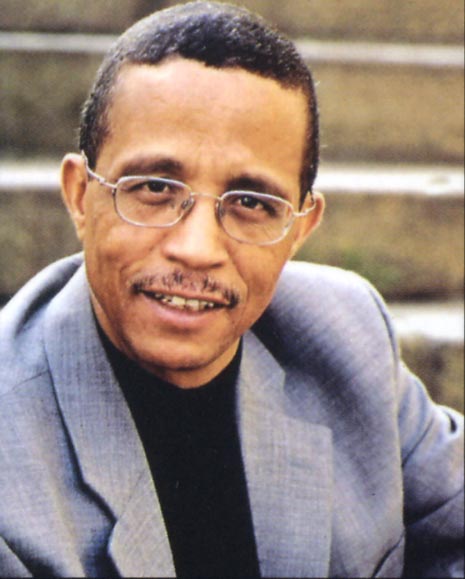
For a male writer to use a female pseudonym is rarer. The case of the Algerian writer who writes under the name Yasmina Khadra is particularly unusual. Khadra wrote police thrillers in Algeria, and has also written a string of political novels. Eventually the author was revealed to be a former Algerian army officer Mohammed Moulessehoul (pictured above left), writing under the name of his wife.

Moulessehoul writes in French, and five of his novels have been translated into English. He moved to live in France in 2001 and it was then that he “came out” and disclosed Khadra’s real identity. For some, his background casts a permanent shadow over his writing and his agenda. There have been accusations that in his novels chronicling the war of the radicals within Algeria, he documents the atrocities perpetrated by radicals while ignoring those allegedly carried out by the Algerian army.

In 2002 the International Parliament of Writers withdrew the protection it had accorded Moulessehoul and his family, after he defended Algeria’s army against accusations that it massacred civilians.

Khadra’s novels have done well, particularly “The Swallows of Kabul”, written from the point of view of an Afghan woman suffering under the Taleban. The novel was shortlisted for the IMPAC prize.

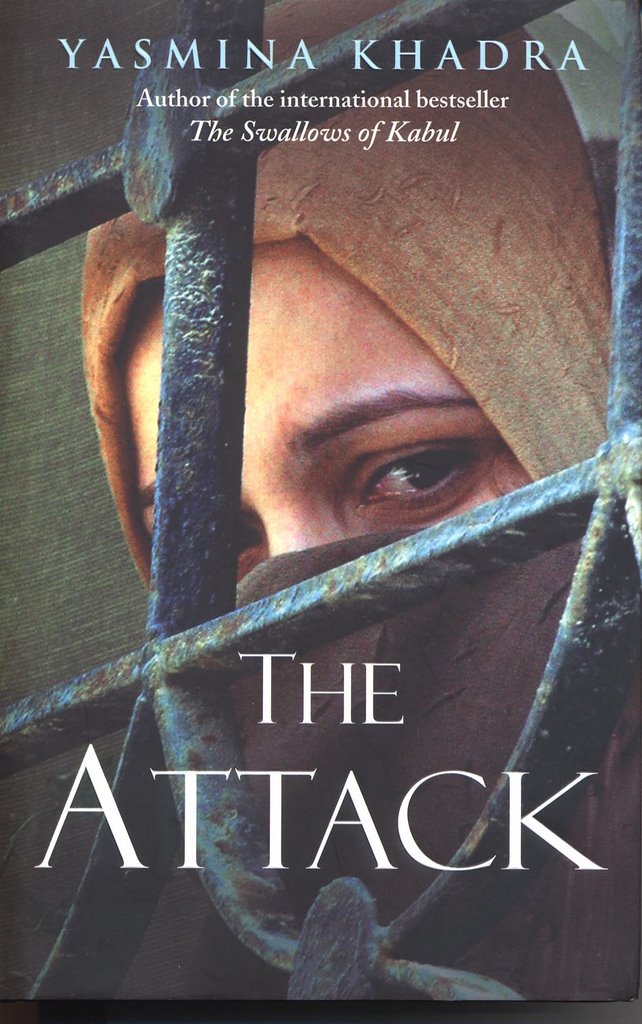
Khadra’s latest book, “The Attack”, won the Prix des Libraires in France, and was shortlisted for the Goncourt, Femina and Renaudot prizes. In Britain, where it was published recently by William Heinemann in English translation, it has been widely, and on the whole favourably, reviewed.

In “The Attack”, Khadra continues to explore the relationship between politics, violence and religion. The first-person narrator Amin Jaafari is an Arab surgeon practising in a Jewish hospital in Israel. Despite his Bedouin origins, he has succeeded in entering “the brotherhood of the highly educated elite”.

Jaafari has been married for 10 years to Sihem, in what he considers a happy union. He is devastated when she dies in a suicide bombing in a Tel Aviv restaurant which kills 19 people including 11 schoolchildren. His grief turns to disbelief when he finds she was the suicide bomber.

Jaafari sets out to discover why Sihem did what she did, and to uncover the lies she had told him. She had told him she was going to stay at her grandmother’s farm near Nazareth, but she was actually driven to Bethlehem before returning to Tel Aviv to carry out the bombing.
Although Khadra’s writing has power and clarity, Sihem remains an obscure figure and her motivation is not wholly convincing. Her husband’s investigations take him into perilous confrontations with certain family members and radicals in Bethlehem and Jenin. At the same time he is forced to review his position as an Arab who has done well within the Israeli medial establishment. One of the men he meets in the West Bank describes him as the “serviceable Arab par excellence” Driven to the edge of madness, Jaafari finds he is suspected by both Israelis and Palestinians.

Susannah Tarbush
Saudi Gazette August 8 2006

zoe rahman shortlisted for the mercury

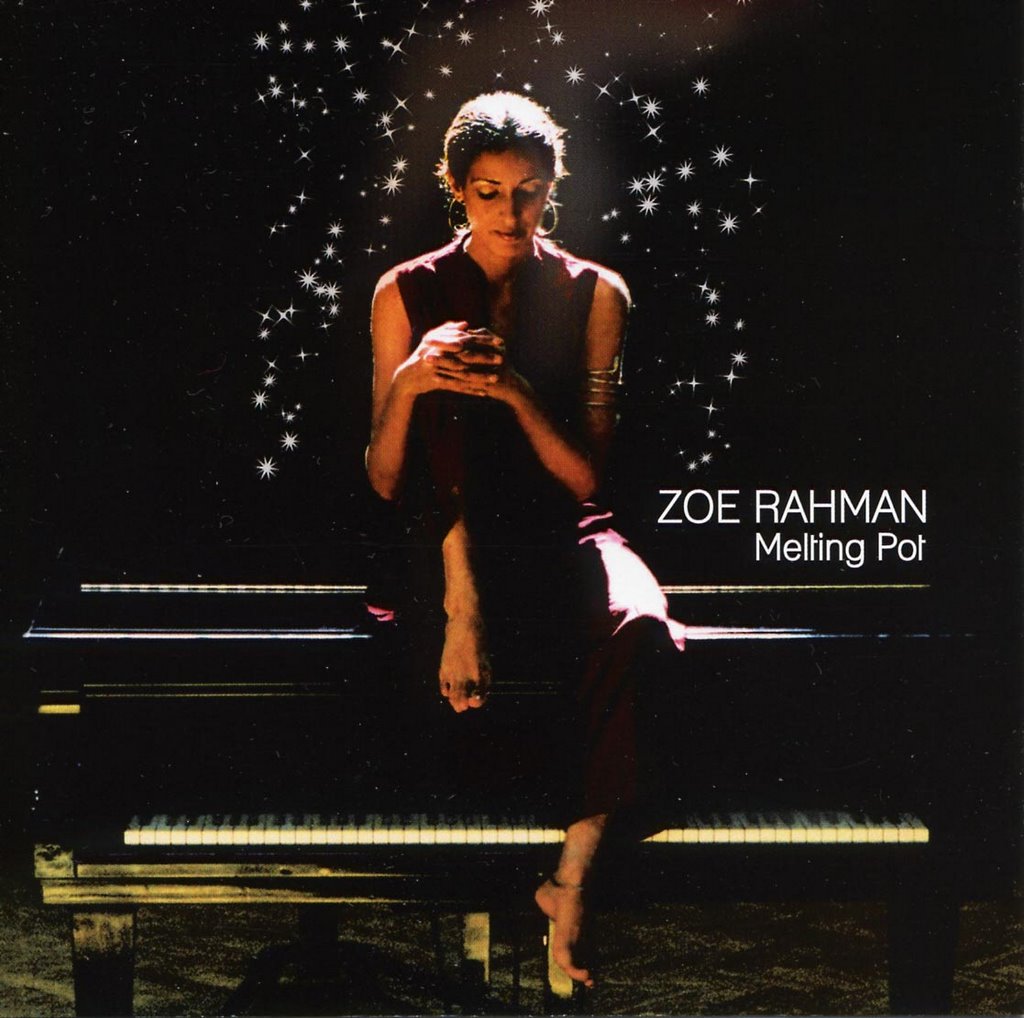
In the seven years since she was awarded the title ‘Perrier Young Musician of the Year’, the Bangladeshi-British jazz pianist Zoe Rahman has emerged as a leading figure on the British jazz scene. Now her profile has taken a further leap upwards, with the shortlisting of her second album, “Melting Pot” for the £20,000 Nationwide Mercury Prize. The winner of the prize will be announced at the awards ceremony on September 5.

To be shortlisted for the Nationwide Mercury is a major achievement for Rahman, who was born in Chichester, near the English south coast, and received her musical education at Oxford University and Berklee College of Music in Boston, USA.

“Melting Pot” is the only jazz CD on the shortlist of 12, which also includes the Arctic Monkeys with “Whatever People Say I Am, That’s What I’m Not”, Thom Yorke with “The Eraser”, Guillemots with “Through the Windowpane” and Editors with “The Back Room.”

The Mercury Prize was established 14 years ago in memory of Freddie Mercury, the late singer of rock band Queen. The Arctic Monkeys are currently favourite to win. Even if Rahman doesn’t win the prize, the shortlisting of “Melting Pot” has already led to an upsurge of media and public interest in her work, and is bound to lead to substantially increased sales of the album.

The Nationwide Mercury shortlist is the latest accolade for Rahman. Her debut album “The Cynic” was shortlisted for the BBC Radio 3 Jazz Album of the Year. In May this year, “Melting Pot” won the Album of the Year award from the All-Party Parliamentary Jazz Appreciation Group.

Rahman is from a musically gifted family. Her brother Idriss plays woodwind (including the clarinet on “Melting Pot”), and her sister Sophie is a classical pianist of note.

In addition to her own trio, Rahman regularly performs with other ensembles including Clark Tracey’s New Quintet, and her brother Idris’s group Soothsayers. She is one of the musicians on Palestinian singer Reem Kelani’s debut album “Sprinting Gazelle” which was released earlier this year.

Rahman has been preparing for a trip to Bangladesh to explore the country’s musical roots and to meet family members, and has been learning some Bengali from a “Teach Yourself” book. The one track on “Melting Pot” not written by her is the Bengali song “Muchhe Jaoa Dinguli” written by singer and composer Hemant Mukherjee. Rahman has added her reworkings of several other Mukherjee songs to her repertoire.

Rahman is undoubtedly a jazz performer with a great future ahead of her. Her many fans will be keeping their fingers crossed on the night of September 5 when the winner of the Nationwide Mercury is announced.

Susannah Tarbush
Saudi Gazette, August 8 2006

Saturday, August 05, 2006

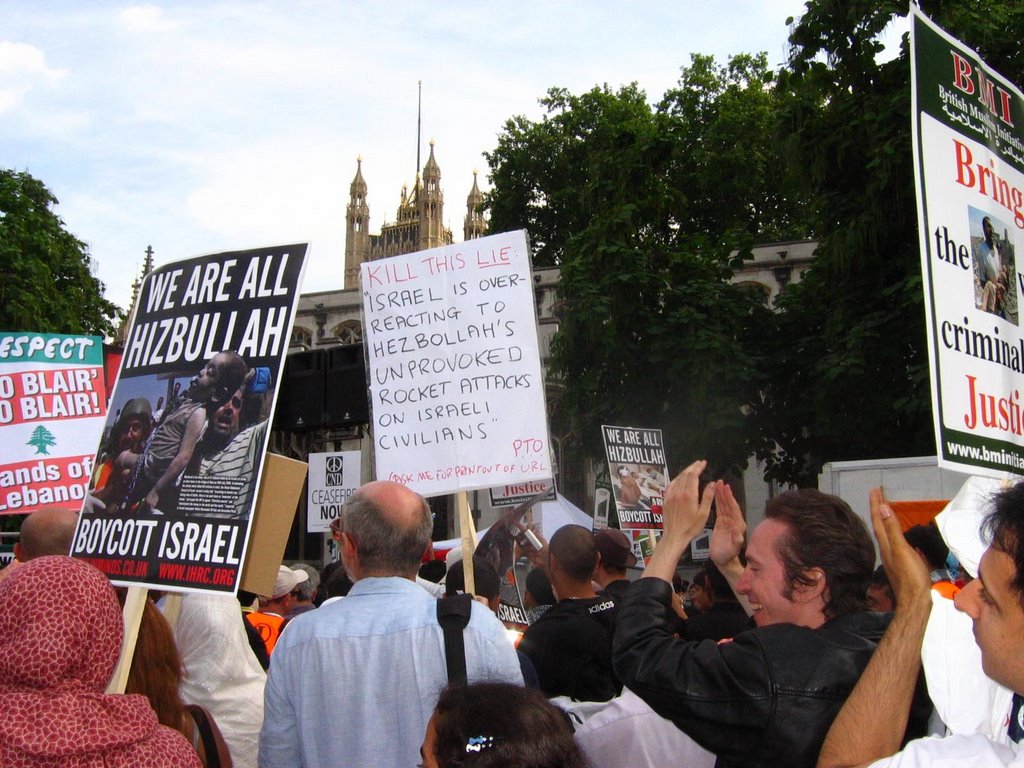
London demonstration on Lebanon and Palestine

London demonstration 5 August 2006


Friday, August 04, 2006

libyan novel: 'in the country of men'

In the Country of Men
by
Hisham Matar
Viking, London, 2006

This first novel by the Libyan writer Hisham Matar, who has lived in London for many years, has generated much excitement in publishing circles. The Bookseller hailed it as “the most highly prized literary debut of the autumn.”

Within a week of Matar’s literary agent submitting the novel to publishers, it was the subject of a highly competitive auction in the UK. The auction was won by the Penguin imprint Viking, which gave Matar a two-book deal. There were also auctions abroad, and the rights to the book were sold in 14 countries prior to publication.

The novel does not yet have an Arab publisher, but Matar regards the Arabic translation as “without a doubt the most important one for me out of all the translations.” The novel is currently being translated by the London-based Iraqi short story writer and literary critic Luay Abulilah.

Matar says: “I think he’s done a very good job; he’s managed to get under the skin of the language. The language is deceptively simple, but it’s got tones and colours and there’s something sensuous about it.”

Viking’s editorial director Mary Mount, editor of the novel, rates it as “a very rare find…the sort of book that makes publishing worthwhile.” Matar is “a very serious writer who puts an enormous amount into his writing” and editing with him was a “wonderful experience.” In her view he has “a huge future as a writer”.

Some novels fail to live up to their pre-publication publicity, but In the Country of Men fully deserves the accolades it received before publication from novelists of the calibre of JM Coetzee, Nadeem Aslam and Anne Michaels.

Matar has produced an accomplished and moving novel, at once accessible and mysterious. It is a literary novel, yet intensely readable. He has written poetry for much of his life, particularly focusing on it since the mid-1990s, and his gift for language is much in evidence in his prose.

In the involving, many-layered narrative, the first-person narrator Suleiman looks back to his nine-year-old self trying to make sense of the confusing family and political events that whirled around him in Tripoli in summer 1979, “that last summer before I was sent away”.

The novel is expertly paced, and the tension builds to an almost unbearable pitch as the net closes around Suleiman’s father and his associates, who are linked to a student democracy movement.

In the book’s concluding section Suleiman, now 24 years old, tells of the fifteen years that have elapsed since his parents sent him into exile in Cairo. Although he integrated quickly into Egyptian society, “I suffer an absence, an ever-present absence, like an orphan not entirely certain of what he has missed or gained through his unchosen loss.”

Matar was born in New York in 1970 to a diplomat father, and lived in Tripoli between the ages of three and nine. In 1979 the family was forced to leave Libya and moved to exile in Egypt after his father was threatened with interrogation and arrest during a crackdown by the regime.

Much worse was to come. In March 1990, while Matar was at school in England, his father Jaballah disappeared from the family home in Cairo. It is assumed that, like several other Libyan dissidents, he was abducted and handed over to the Libyan regime. To this day, despite representations to the Libyan leadership and the taking up of the case by human rights groups including Amnesty International, Matar and his family do not know whether his father is alive or dead.

Matar stresses that his novel is not autobiographical, although it is permeated by a sense of loss, exile and ambiguity. Nor does he see himself as a political writer. Rather, he is concerned with “how people change over time, how circumstances alter the human heart.”

Matar set the novel in Libya because of his interest in “certain themes that are very much to do with Libya. And I also feel that as far as the literary voice of Libya is concerned, it’s not a very vocal voice. It’s a silent country – at least that’s the impression the world has, I think with good reason.”

He adds: “The kind of literature that stands the test of time is the kind of literature that comes out of urgency, that comes out of a sense that it has to be written. In a way the book writes the author, and that kind of book doesn’t come by choice.”

The novel is intricately structured, but Matar did not start out with a plot outline. For him writing is exploration, and “what determined the structure was the voice. The voice really intrigued me, and it is what kept me interested and committed. It kept nagging at me.”

Matar spent the first phase of work on the novel trying to meet the technical challenges of writing in the voice of a nine-year-old. “What does it mean to be nine years old? How do you perceive the world? There is something quite unique about children, the present seems eternal and there isn’t really any experience of time passing. In many ways it’s quite a positive thing because a lot of them live in the moment and their living experience tends to be extremely intense.”

One theme running through the book is Suleiman’s anxiety over questions of masculinity and what it is to be a man. Suleiman is an only child, and when his father is away on business trips he is forced to become the man of the house and to look after his mother. She drinks the “medicine” (illicit grappa) that she covertly obtains from the local baker, and when she is drunk, or “ill” as Suleiman interprets it, she uses her son as the sounding board for her dissatisfactions. She recalls that “black day” when she was forced by her brothers to get married to a stranger at the age of only 14 after she was seen in a café drinking coffee with a boy.

Matar charts the boy’s ambivalence towards his mother. “I remembered the words she had told me the night before, ‘We are two halves of the same soul, two open pages of the same book,’ words that felt like a gift I didn’t want.”

In the novel’s opening scene Suleiman has been told that his father is away on business, but during a shopping trip with his mother he glimpses him in Martyr’s Square followed by his office clerk Nasser carrying a typewriter. His father enters a building, and Suleiman sees him at a top floor window hanging a small red towel on the clothesline.

The father is a rather distant figure; Suleiman wishes his father could be more like Ustath Rashid, his father’s best friend, or Moosa`, the Egyptian judge’s son who provides Suleiman with friendship and affection.

On their way home, mother and son are followed by a car carrying four men in dark safari suits. “I remembered so suddenly I felt my heart jump. They were the same Revolutionary Committee men who had come a week before and taken Ustath Rashid.”

Suleiman witnesses Ustath Rashid’s televised “confession”, summary trial and hanging in a sports stadium in front of a hysterical cheering mob. The televised execution of Ustath Rashid “… would leave another, more lasting impression on me, one that has survived well into my manhood, a kind of quiet panic, as if at any moment the rug could be pulled from beneath my feet.”

The novel depicts a society of informers and mukhabarat, where leaflets criticising the Revolutionary Committees circulate overnight, and where telephones are crudely tapped.

The world of boys and their games runs parallel to the adult world. Matar’s best friend Kareem is Ustath Rashid’s son and the arrest of Ustath Rashid affects the dynamic between the boys. Suleiman is caught up in betrayals and complicities and experiences the fleeting pleasures of the misuse of power.

The mother and Moosa burn the father’s books in order to protect him, but Suleiman hides one of the books. After the father is seized, the mother makes a humiliating appeal for his life to a neighbour who is a senior member of the mukhabarat. When Suleiman’s father returns home from his brutal ordeal, he and the mother draw closer and find a new mutual need and passion which tends to shut out their son.

After Suleiman is sent alone to live in Cairo, a series of decrees in Libya ruin his parents financially and his father goes to work in a pasta factory. Suleiman finds the Libyan embassy has a file on him as an “evader” because he has not returned for military service. When he is fourteen a decree is issued warning that all “Stray Dogs” who refuse to return will be hunted down. His parents are refused a visa to leave the country, “holding them hostage, as it were, until the evading Stray Dog returned.”

Suleiman asks: “Why does our country long for us so savagely? What could we possibly give her that hasn’t already been taken?”

In the Country of Men has a transcendent quality that lifts it above its often harrowing subject matter. As an adult, Suleiman learns what became of the people he knew as a child in Tripoli, and how they have adapted to their situation. The novel ends on a note of gentle and hopeful resolution.

Susannah Tarbush

Unedited version of review published in Banipal magazine No 26, Summer 2006

Tuesday, July 25, 2006

three women of herat

In republishing Veronica Doubleday’s book “Three Women of Herat: A Memoir of Life, Love and Friendship in Afghanistan” 18 years after its first publication, the London publisher Tauris Parke Paperbacks has brought to a new readership a classic on Afghan society and culture.

Doubleday writes: “It is my hope that the republication of this book will help to offset the misapprehensions and prejudices about Afghanistan that abound in the popular Western imagination. It is important for people to know about life there during times of normality, before the traumas and upheavals of invasion and war.”

Doubleday got to know the “three women” – Miriam, Mother of Nebi and Shirin – while she was living in the western Afghan city of Herat in the mid-1970s with her ethnomusicologist husband John Baily, who was researching Afghan music. At the beginning of each chapter of her book is one of her charming drawings of Herati people.

The book was first published by Jonathan Cape in 1988, and in a postscript Doubleday describes how in March 1994 she was able to return to Herat for the first time since the 1970s on board a UN plane. She and her husband made a further visit in spring 2004.

In the 1970s Doubleday and her husband spent two separate years in Afghanistan, with a shorter period in between. At the beginning of their second year, 1976, Doubleday decided to withdraw from public life and the world of men, in which she had been accepted an “honorary male visitor”, and to explore the world of women.

By then she could speak their Persian language, and by sharing and performing the women’s music she entered further into their sphere. She adopted the veil, and although she had mixed feelings about this she found it quite liberating in bringing a “welcome privacy”.

Doubleday gives a fascinating, detailed account of domestic life, family structures, relationships, marriage rituals, celebrations and traditional medicine. She builds up memorable portraits of the three women she got to know best.

Miriam was the daughter of a hereditary musician who was the authority on classical music in Herat. Mother of Nebi was a more isolated, troubled character. An accomplished performer of rural songs, she was intelligent and creative and had a reputation as a diviner. But Doubleday found her “chained and smothered by an ignorant, bigoted husband.”

Shirin, the most famous Herati female singer, had an all-woman band, and Doubleday first encountered her performing at a wedding. “She had a rippling, clear, light voice with a sweet sound that suited her own name, which itself means ‘sweet’.” Doubleday took music lessons from Shirin and became a member of her band, adopting the name Farahnaz. Some people were scandalised that Doubleday had joined the band.

To this day Doubleday continues to perform traditional Afghan music with her husband at concerts in Britain and beyond. Through her writing, performances and deep commitment she has made an essential contribution to the knowledge of Afghan culture.

Susannah Tarbush
Saudi Gazette 25 July 2006

furore over brick lane film


A storm of controversy has erupted in Brick Lane, the heart of London’s Bangladeshi community, over plans to film Monica Ali’s 2003 novel “Brick Lane” there. Filming is due to start in a few weeks in the famous street of curry houses, textile shops and other Bangladeshi businesses in London’s East End.

The row over the filming of “Brick Lane” is the latest example of a conflict between the freedom of expression and the sensibilities of a minority. Around 30 activists opposed to the film held a meeting last week and some have warned of possible violence.

“Brick Lane” tell of how a young woman, Nazneen, comes to England from Bangladesh to marry an older man living in the Brick Lane area, and eventually becomes involved with a young Muslim activist in the post 9/11 period.

Abdus Salique, the chairman of the Brick Lane Traders’ Association told BBC TV that he doesn’t think anyone like Nazneem exists in the community. He said Ali “has imagined that character”. Fellow businessman Mahmoud Raud, complained about the “negative portrayal of our community.”

Ali’s critics point out that she does not come from the Brick Lane community she portrays. Most Bangladeshis in Britain come from Sylhet, but Ali’s father was from Dhaka and her mother is English. Ali grew up in the north of England and went to Oxford University. Her critically acclaimed novel was shortlisted for the Man Booker Prize.

The film’s production company Ruby Films said: “Throughout the production process we’ve maintained constant contact with the community. When there’s a finished product to watch, we’ll be happy to open dialogue with anyone with any concerns.”

By no means all Bangladeshis are against the film. Asians in Media magazine quoted a local resident, Abdul Goffur, as saying the protest was “blown out of proportion. It’s a minority who are trying to make themselves known. But I live in Brick Lane and we’ve got a thousand guys in support of this. This film will be helpful in opening up our community and helping us progress as a community as a whole.”

International PEN, the worldwide association of writers, is so concerned about possible trouble that the deputy president of English PEN and five prominent PEN members wrote to the Guardian newspaper. They called on the police, with the full backing of the Department for Culture, Media and Sport to “stand squarely behind the film, its author and the right to free imaginative expression.”

One hopes that any protests will be peaceful. If the film is a success, it could help put Brick Lane further on the map and make it a tourist attraction, just as happened in West London after the release of the film “Notting Hill”.

Susannah Tarbush Saudi Gazette 25 July 2006

Wednesday, July 05, 2006

freemuse report on ME music censorship

Music censorship has become a topic of increasing interest in recent years, thanks partly to the efforts of the Danish charity Freemuse. Founded in 1998, Freemuse is the only global organisation that advocates freedom of expression for musicians and composers.

Freemuse's latest report, "All that is Banned is Desired", highlights some of the main issues of music censorship in the Middle East. The issues range from religious opinions on musical performance to curbs on heavy metal music in certain Arab countries, and the debate over Lebanese music videos featuring scantily clad women. Not all censorship is imposed by censors; self-censorship is widespread.

The report, prepared by British writer and journalist Trevor Mostyn, is based on the two-day conference that Copenhagen-based Freemuse held in Beirut last October in collaboration with the Heinrich Boll Foundation and the Irab-Arabic Association for Music.

In her opening speech to the conference, Freemuse's executive director Marie Korpe explained that the event was a result of, and a continuation of, the 2nd World Conference on Music and Censorship held in Copenhagen in September 2002. At that conference the famous Lebanese musician and composer Marcel Khalife had proposed that Freemuse arrange a similar conference in Lebanon.

Participants in the conference came from 14 countries, and there were testimonies from musicians, concert organisers and media professionals who had been censored in Iran, Pakistan, Lebanon, Syria, Bahrain and Morocco.

The conference offered much scope for lively anecdotes and cross-cultural comparisons. For example, the musician and associate professor Mark LeVine said that the young Iraqi firebrand preacher Muqtada al-Sadr fulfils many of the same functions - positive and negative - for his followers as young American rappers like NWA (Niggaz With Attitude) and Public Enemy fulfilled for their fans when they started out.

Mai Ghoussoub, the Lebanese founder of Saqi Books in London pointed out in her keynote speech that although censorship persists, it is becoming "almost impossible in the age of the internet, mass tourism and cheap flights to really suppress a book, a song or an image."

Bahraini singer Khalid Al-Shaikh, who has had some of his songs banned in Bahrain, said the best music is often produced in times of oppression. He noted the irony that although most of the singers and investors in entertainment in the Gulf are Saudi, Saudi Arabia has the strictest censorship.

Iranian singer Mahsa Vahdat described the ways in which since the 1979 Iranian revolution jurists have limited the freedom of music. Women in Iran can play musical instruments, but they may not sing to audiences that include men.

Several films were screened during the conference, including the documentary "The Rock Star and the Mullahs" featuring Pakistani guitarist Salman Ahmad of the Pakistani band Junoon. There was also the Middle East premiere of Syrian filmmaker Mohamad Malas’s film “Passion”, in which a woman is terribly punished for her innocent love of song.

Susannah Tarbush

Tuesday, July 04, 2006

losing arab hearts and minds

Lieutenant Commander Steve Tatham was the British Royal Navy spokesman during the invasion of Iraq. In his book “Losing Arab Hearts and Minds: The Coalition, Al-Jazeera and Muslim Public Opinion” he brings his experiences to bear on the question of how the Coalition handled the Arab media during the Iraq war. The book, published recently in London by Hurst & Company, has just been published in the US by Front Street Press.

Tatham is both a serving officer in the Royal Navy, and a corporate communications specialist. He was awarded an Iraq Campaign Medal in October 2004, but admits he has become “more and more opposed to the events of March and April 2003”.

His book is a lively, thorough and fair-minded account which ranges widely over its central themes. Among those he has interviewed are senior staff of Arab and Western TV channels, scholars, media practitioners and diplomats.

The Arab media were accused of bias (“the new four letter word”) during the Iraq war. But Tatham points out that the US media, particularly the ardently pro-war Fox Television, were hardly unbiased in their reporting.

Tatham asks: “How did the world’s most powerful country, which after the horror of 9/11 had the sympathy of the world, and its small coalition of military partners so convincingly lose the battle for Arab hearts and minds?” He notes that many observers believe that America had lost the battle for Arab hearts long before the Iraq conflict, especially over its policies towards Israel.

However, it was thought before the invasion that the battle for Arab minds might be worth fighting, given that “Saddam was generally seen by the Arab intelligentsia as a despotic and evil dictator. While his removal by force was unpopular, US ideals of democratic change for the region enjoyed some critical support”.

In contrast to the 1991 Gulf war, the Arab world had by 2003 a range of satellite TV channels, notably the pan-Arab Al-Jazeera, Abu Dhabi TV and Al-Arabiya. The US and Britain saw information campaigns and media coverage of their operations as vital in gaining support. But the Coalition’s Arab media campaign failed.

Rather than launch an imaginative and targeted media campaign, the Coalition was mainly concerned with its own domestic market, especially the “hugely patriotic” US market. The few Arab media that did embed with US troops left after a few days, complaining they had been cut out of the briefing process and put in danger.

“Not only were the Arab media hugely under-represented in comparison with their Western colleagues but it is clear that there existed a predisposition to be hostile towards them in general and Al-Jazeera in particular,” Tatham writes. This hostility “seems to have been based on perceived reputation rather than on personal experience.”

James Wilkinson, who was responsible for the overall US media strategy at the Coalition Press Information Centre in CENTCOM’s Qatar headquarters, admitted that the US had “no idea” how to communicate with the Arab world. He declared that Al-Jazeera was “absolutely biased” and broke contact with it after it showed images of dead and captured US troops.

Tatham points to the paradox that while the US at the outset led the effort to engage the Arab media, it appeared to give up as the conflict began and as the war continued. Britain, on the other hand, engaged poorly with the Arab media at the beginning, but as the war went on “many corners of the British government seemed to recognise that Al-Jazeera and other pan-Arab channels needed to be listened to.”

The relationship between the Coalition and the Arab media is as fragile as ever, Tatham says. The BBC and CNN have lost appeal and credibility in the Arab region as a result of the Iraq war. Al-Jazeera is now launching an English service, but Tatham predicts it will face a struggle in getting distribution across the US.

Susannah Tarbush
Saudi Gazette 27 June 2006